
DIETER VAN DER EYKEN: EVOLUTION!
We caught up with Dieter Van Der Eyken on the windswept shores of Tiree, Scotland at the end of last year, to talk about how coaching has evolved into both his passion and his profession. He opens up about guiding the next generation of riders, his recent successes on tour, his role as PWA Chairman and why he chose the Hebrides over Hawaii. Plus, he shares his secrets to mastering his signature move … the wave 360.
Photos: Carter / PWA, Protography and 7Pixels.
-
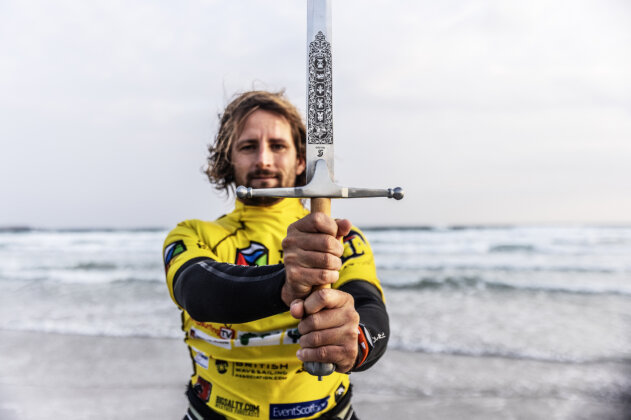
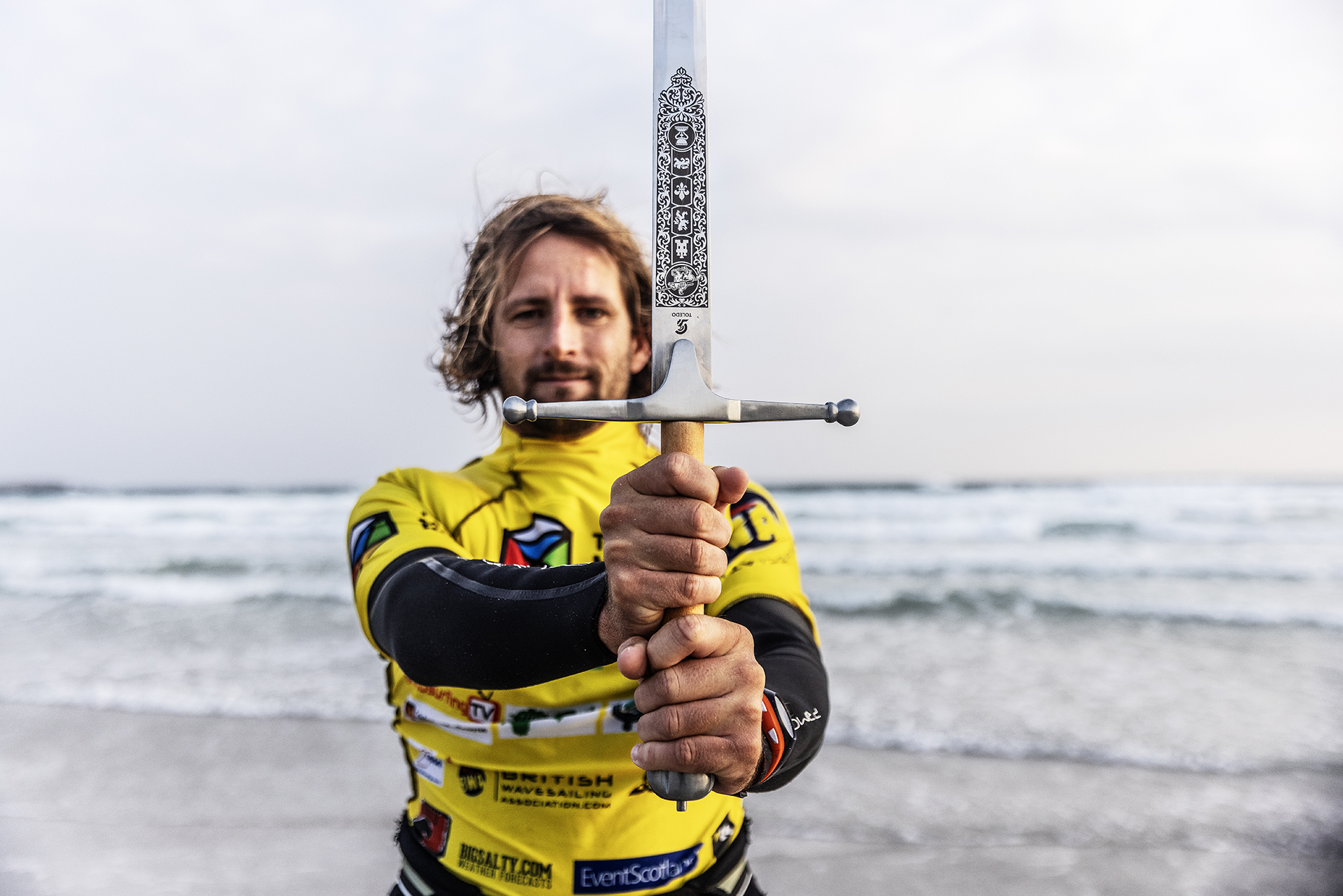
- Dieter ready to cut into 2026
WINDSURF: Let’s kick off with your training camps. How did you get the idea for starting them up and how’s it all worked out?
Dieter: “It actually started a very long time ago already. In 2012, I was in Brazil, and there was a French guy, Alex Duparc, who was a coach. He used to do some coaching camps, and he said, “Oh, you should get into it.”
-
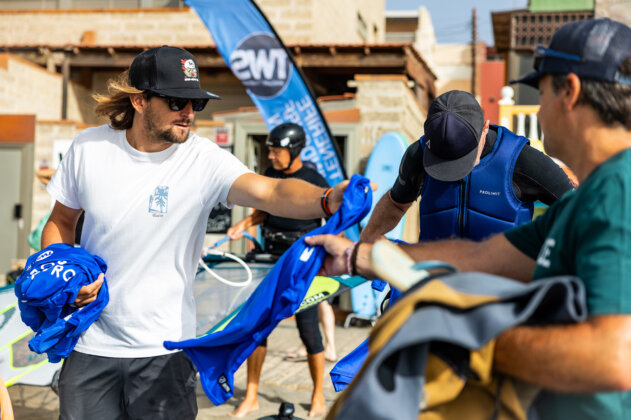
- Dieter in Tenerife at one of his coaching camps
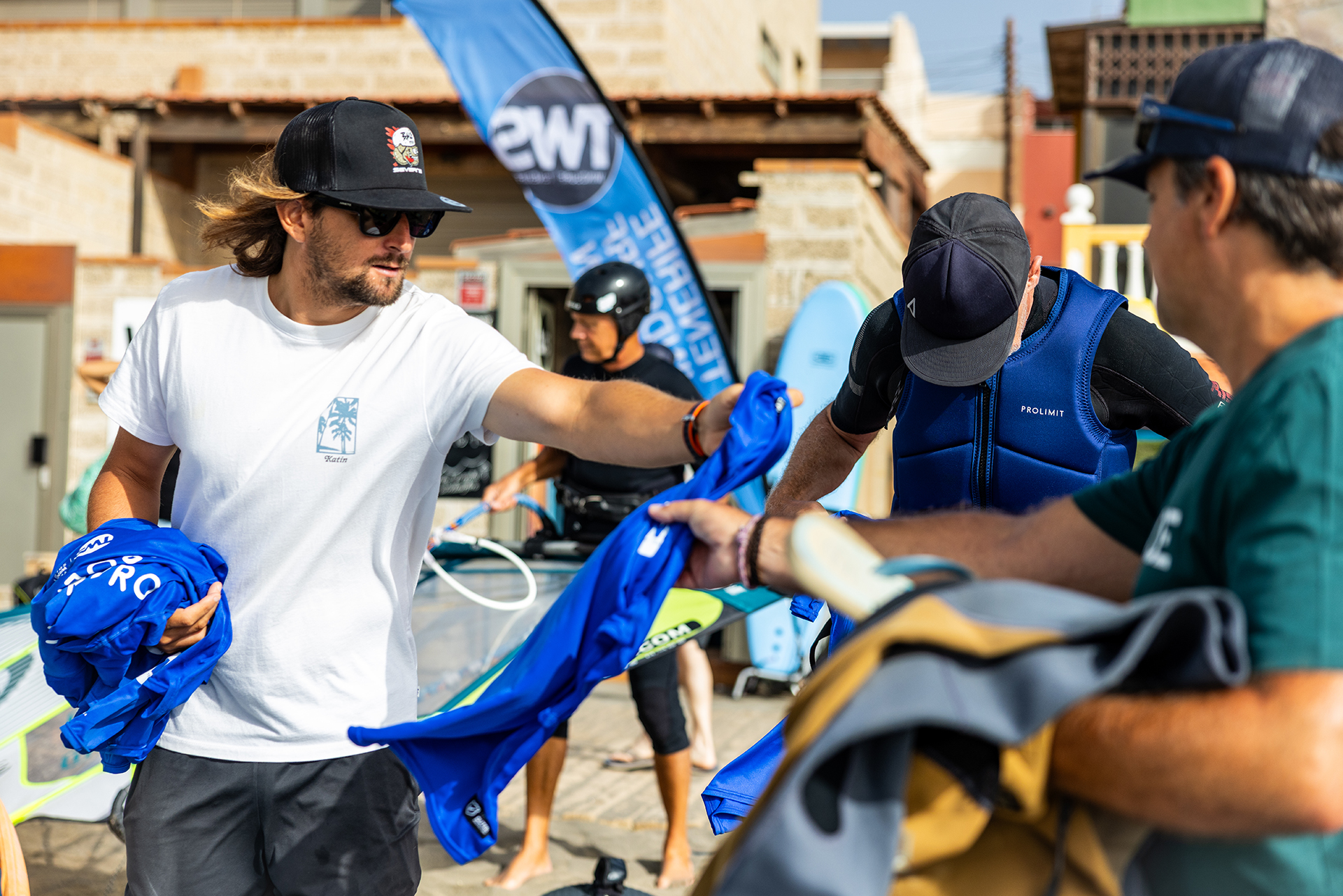
Maybe we could set something up together, and we did. We set up a youth camp called the Next Generation Project, and we ran two in Brouwersdam and two in Sardinia, in Porto Pollo. That was my first introduction to coaching.
Then, obviously, the tour started to go better for me, so I put all my effort into getting the best results out there and put the coaching on hold for a bit.
-

- Dieter Coaching
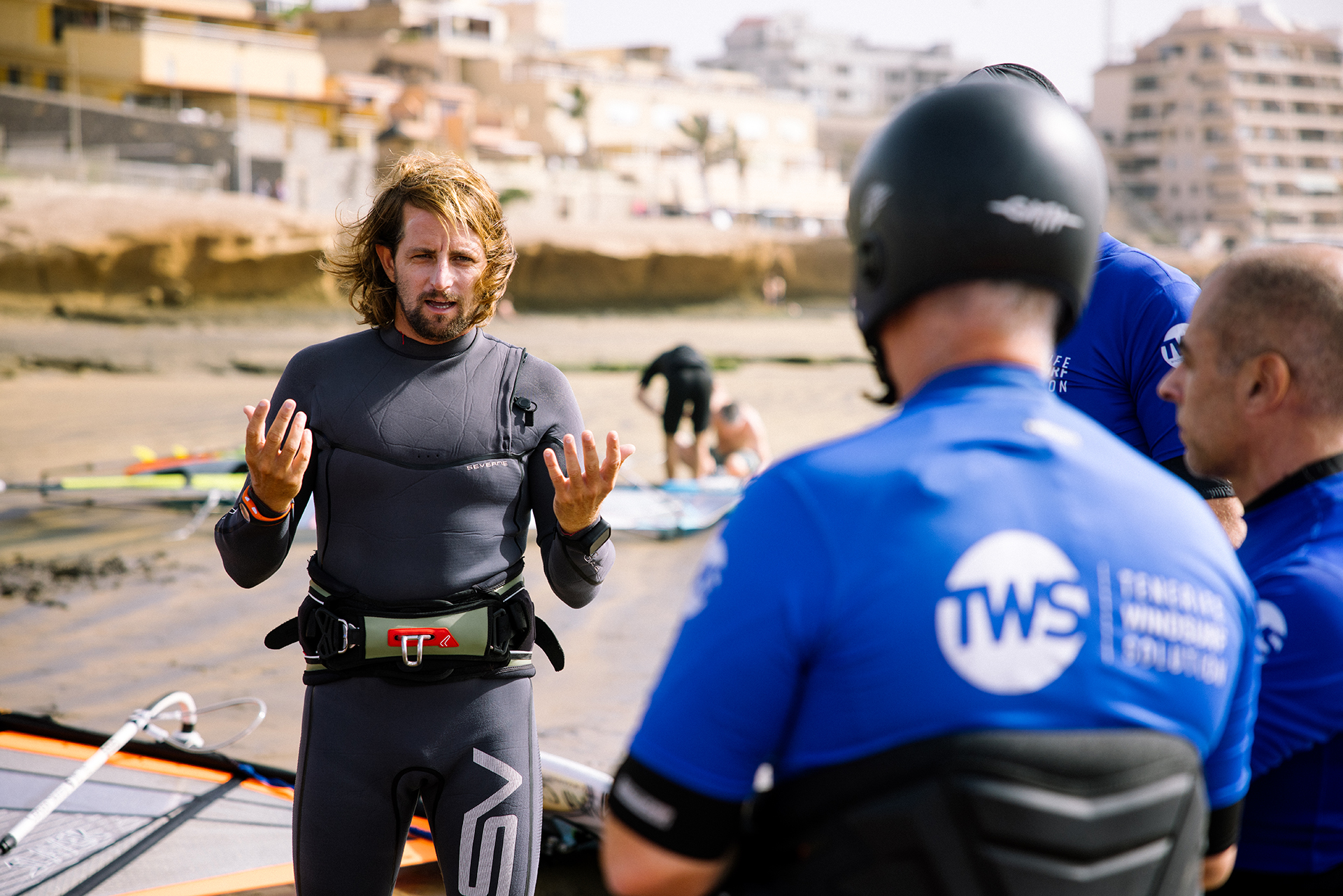
Since COVID, I had to find a new source of income…let’s say it like that. Wages went down and I started to do less work for Severne as well, so that freed up time to really invest back into coaching.
Since then, I started with maybe three or four camps a year, and now I’m up to ten. It’s kind of become a business. Probably 60% of my income now comes from coaching, if not more.
So yeah, it’s my business model basically.”
-
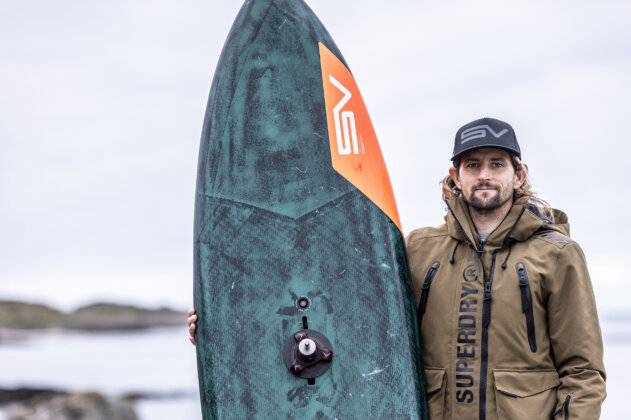
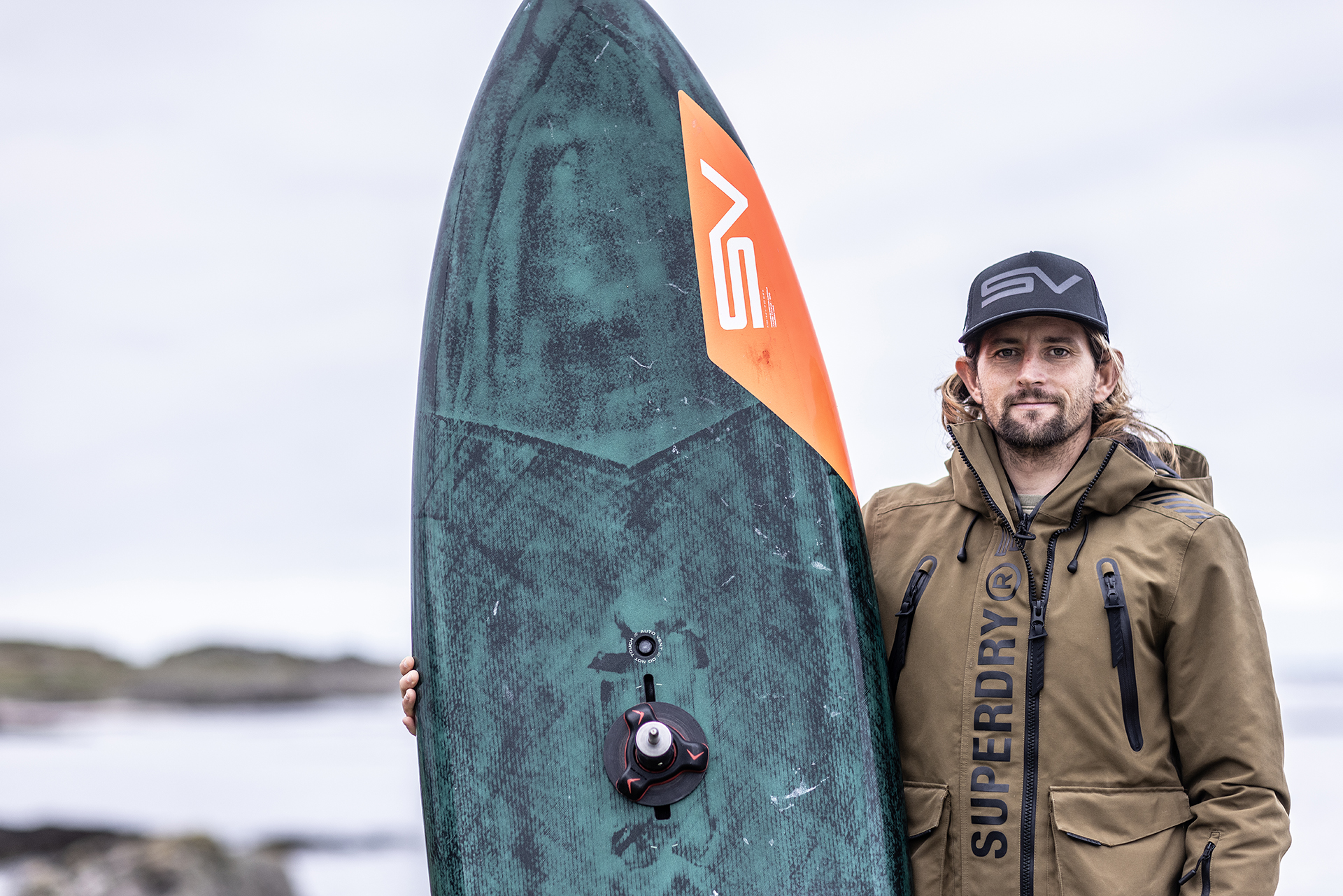
- Dieter Van Der Eyken
WINDSURF: Are your camps mainly wave-focused?
Dieter: “Yeah, the main thing is waves. I do a lot of introduction-to-wave camps…people coming from lakes who want to get into wave sailing on the sea for the first time. That’s definitely a big part of what I do.
-
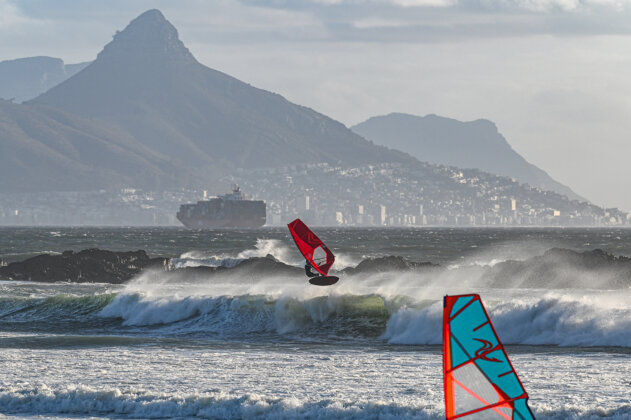
- Wave camp in Cape Town
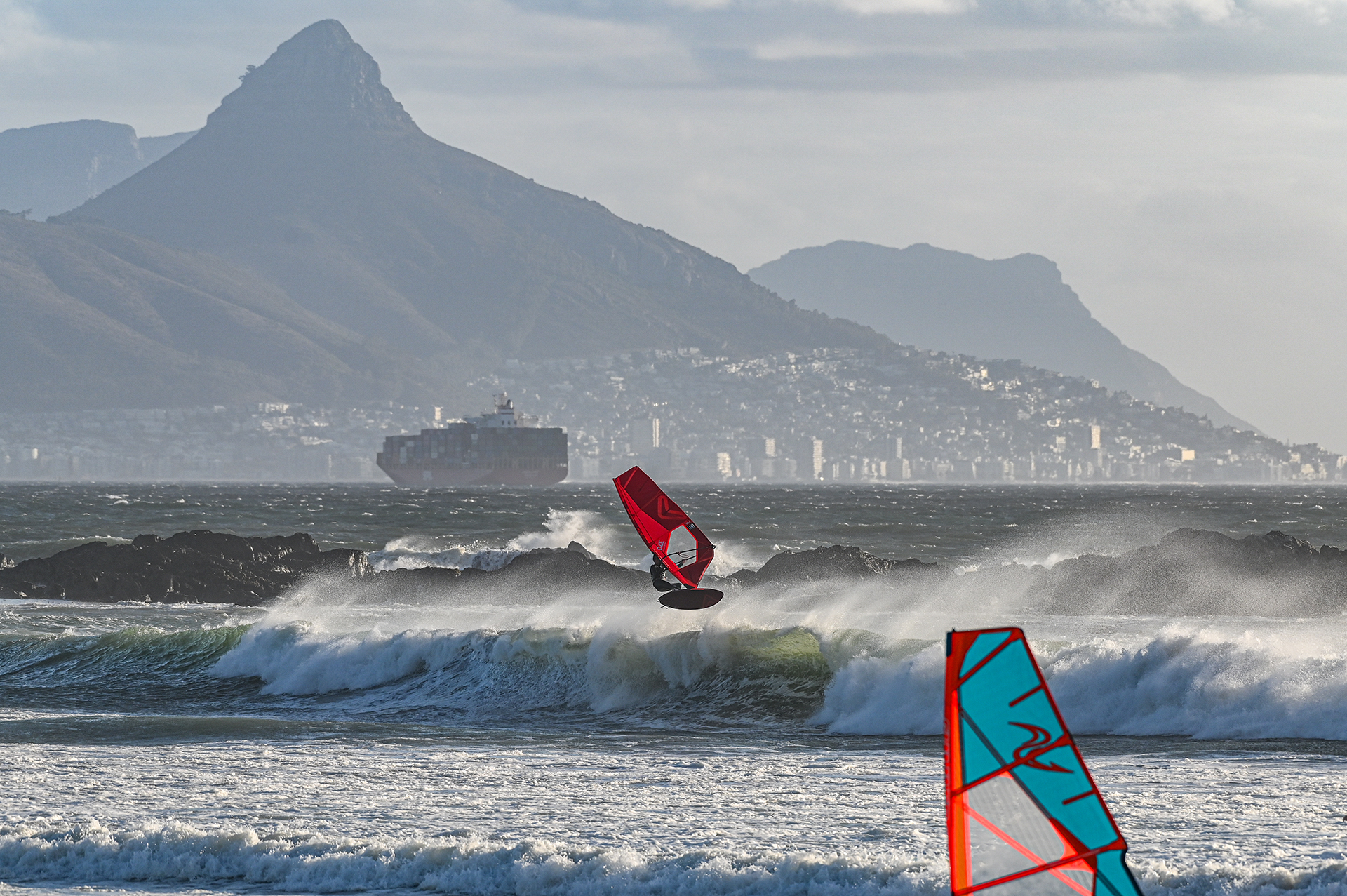
It helps that I’m very good in multiple disciplines. I can explain almost any move in windsurfing, whether it’s freestyle or wave. But I think what helps me most is that I’m very analytical.
Since I was young, I’ve always been like that…watching videos, comparing, breaking things down. That’s also how I coach.
-

- Passing the knowledge
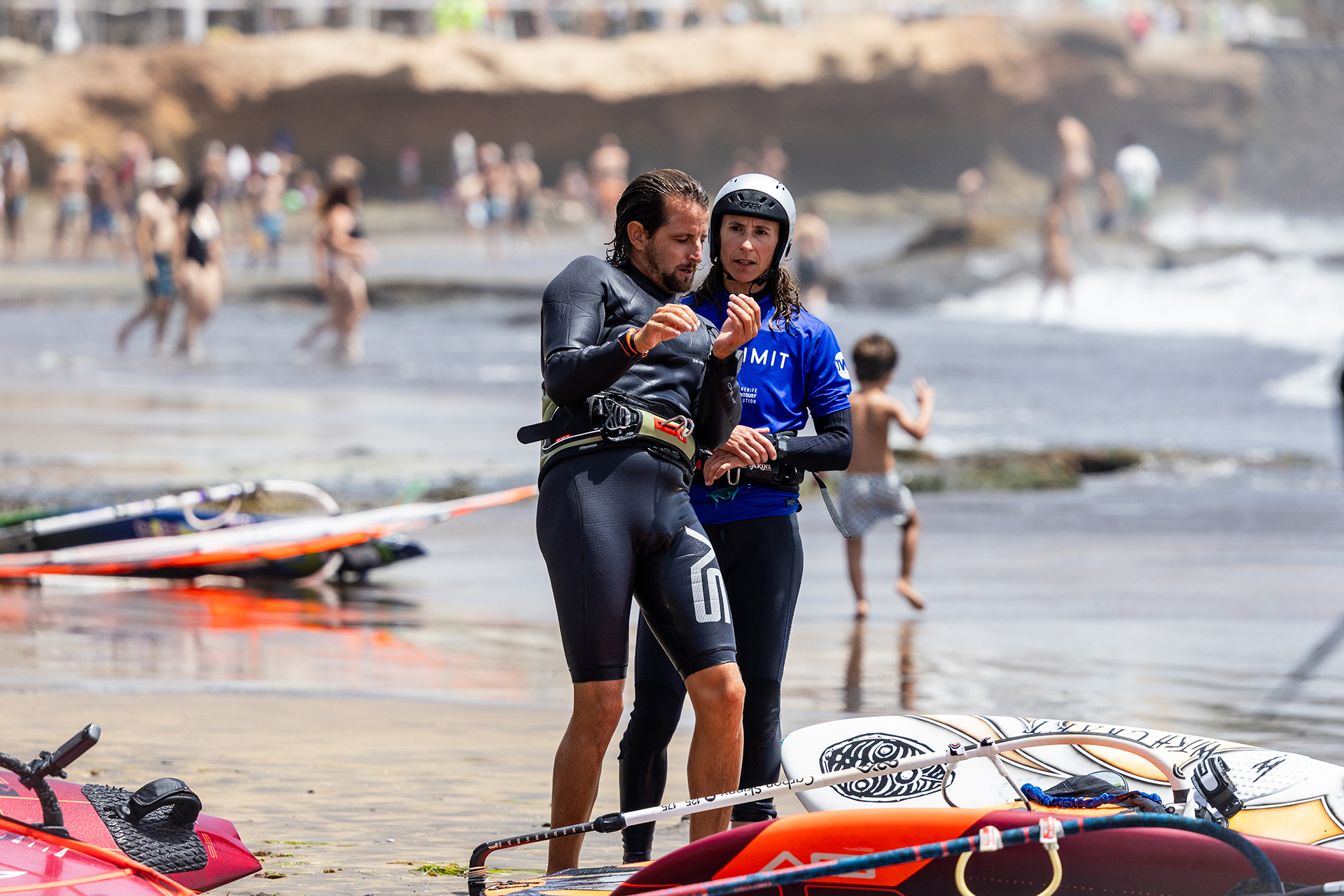
A lot of the time, I’ll get people on the water, film them, and then show them what to improve. Step by step, they really progress like that.
Thanks to my experience working for Severne, I’ve also learned how to organize everything better. It feels natural to do and it’s something I’m really passionate about.”
-
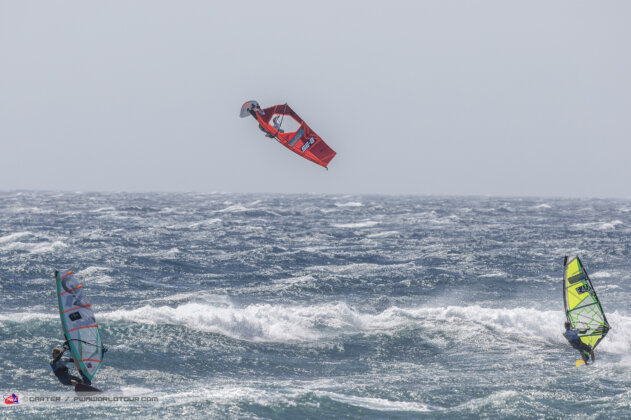
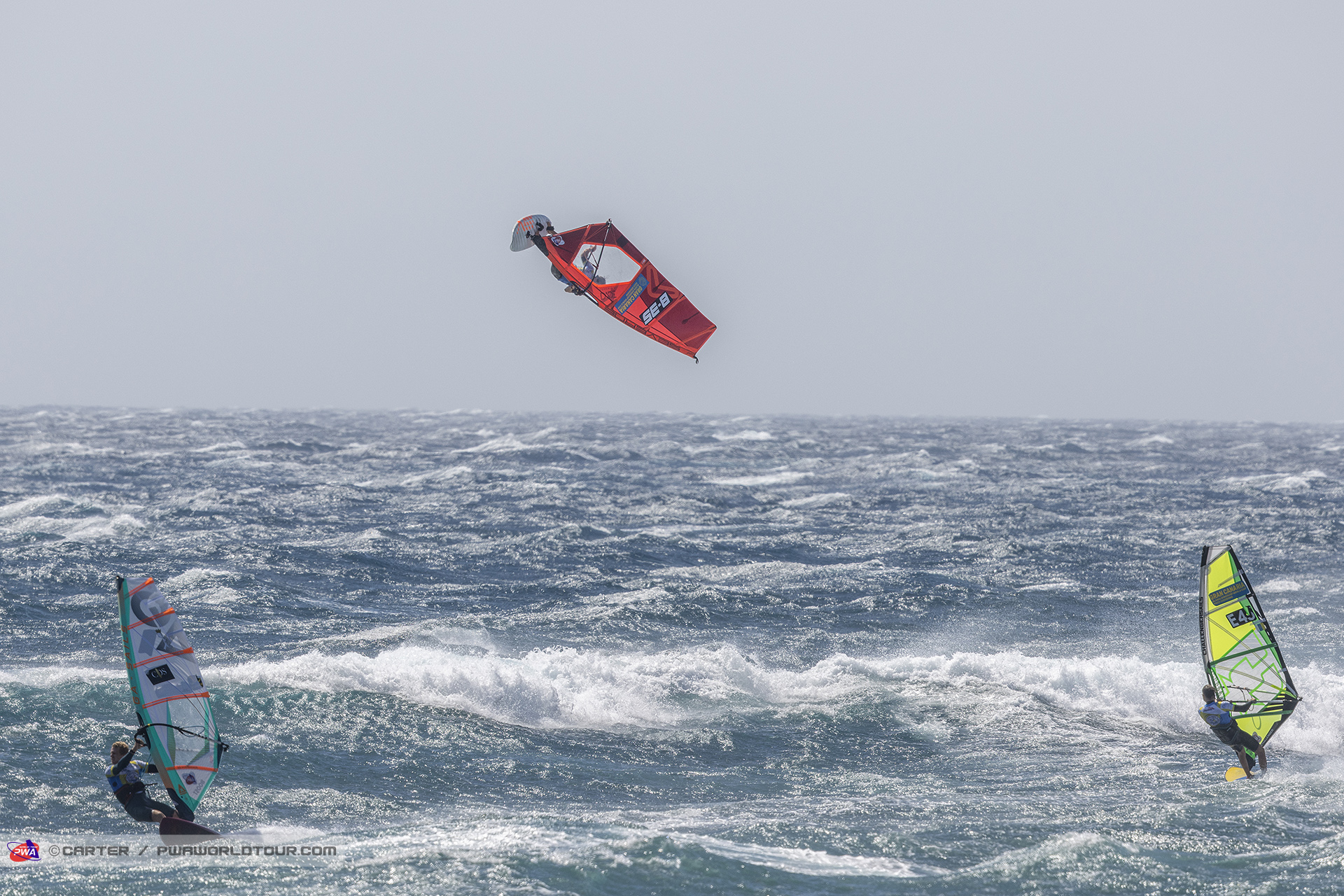
- Dieter Flying high in Pozo 2025
WINDSURF: Is there a lot of satisfaction seeing people improve…knowing you’ve helped them get there?
Dieter: “Exactly. When you see people improve over the week, it’s amazing. The most amazing thing is how energized and stoked they get about windsurfing again.
-
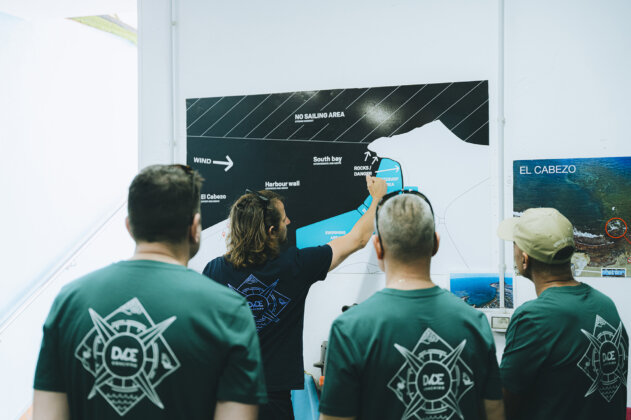
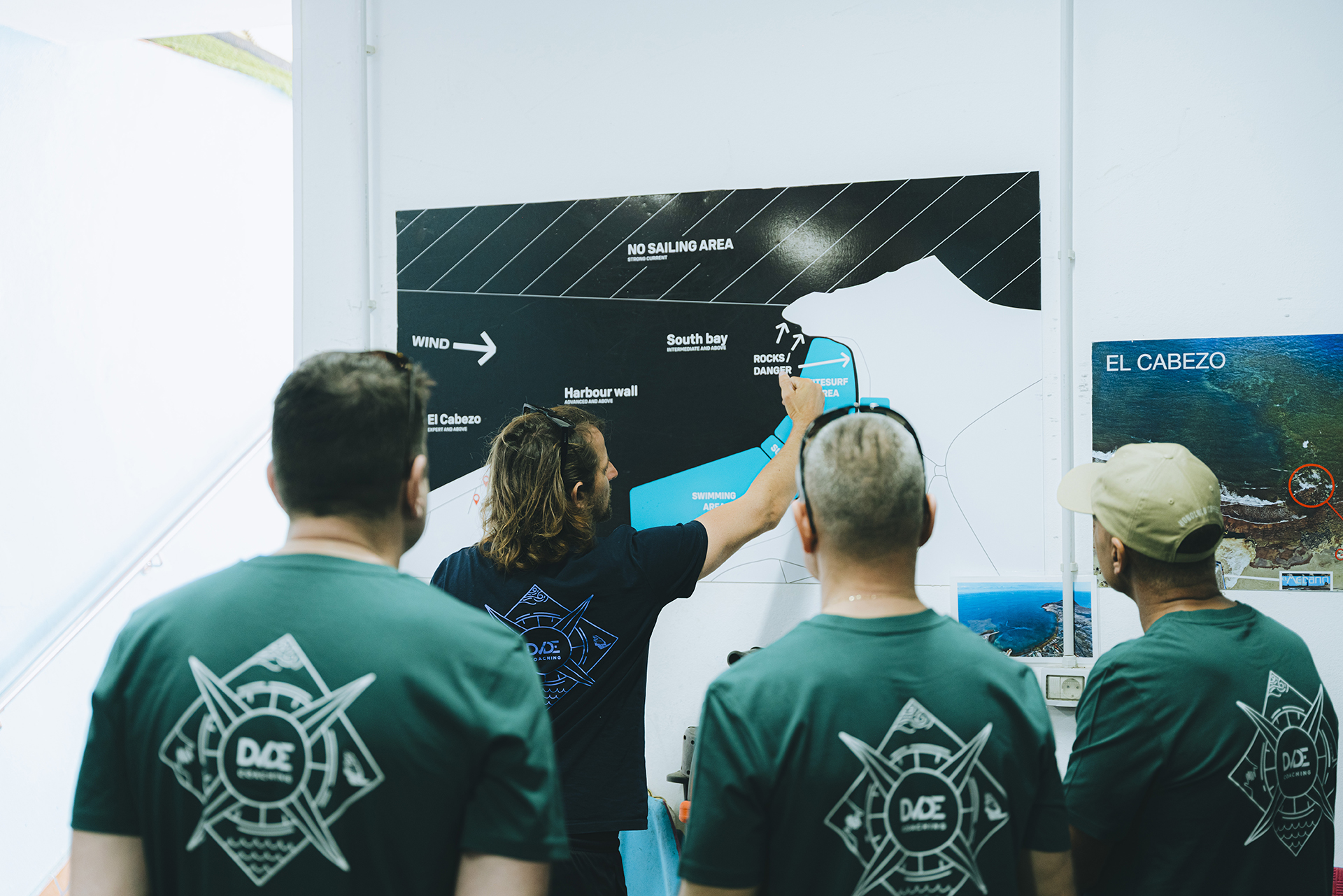
- Teaching time
My philosophy is that windsurfing is an individual sport, and for many years it was like, “You learn everything yourself.” But I think coaching really helps people progress. A lot of people lose motivation when they stop improving. They might have been windsurfing all their life, then got busy with work, stopped progressing and never took coaching.
-
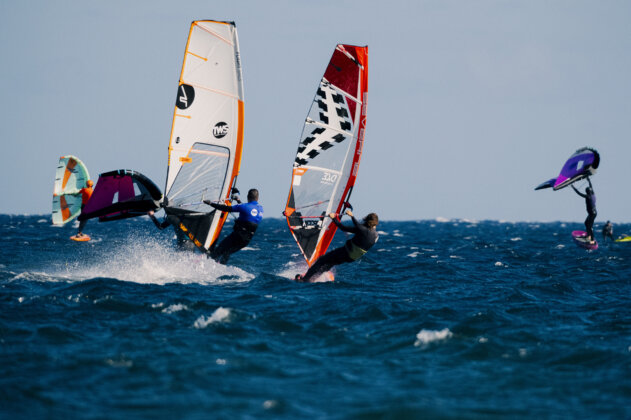
- On water coaching
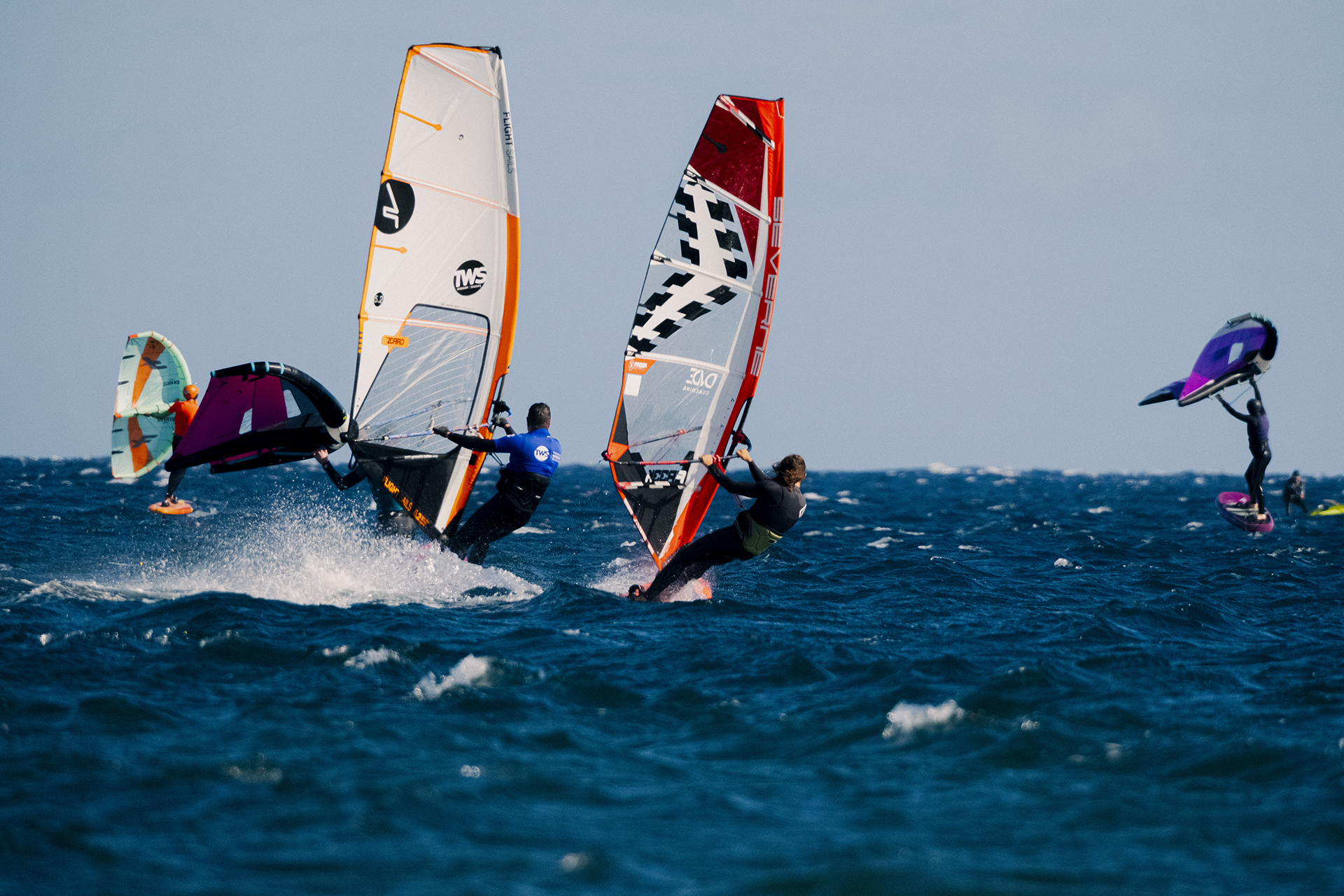
They start looking for new sports to get that feeling of improvement again, when actually a bit of coaching could reignite their progress and make windsurfing fun again.”
-
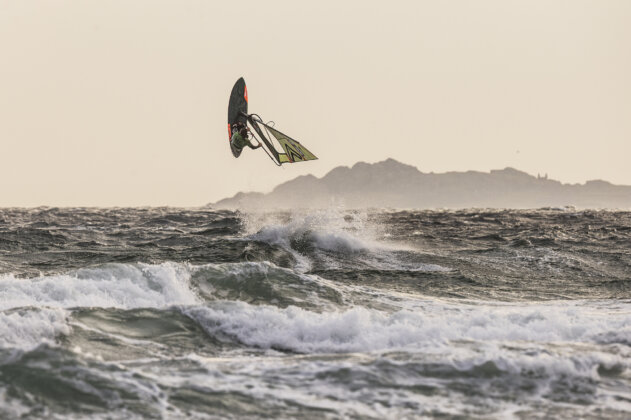
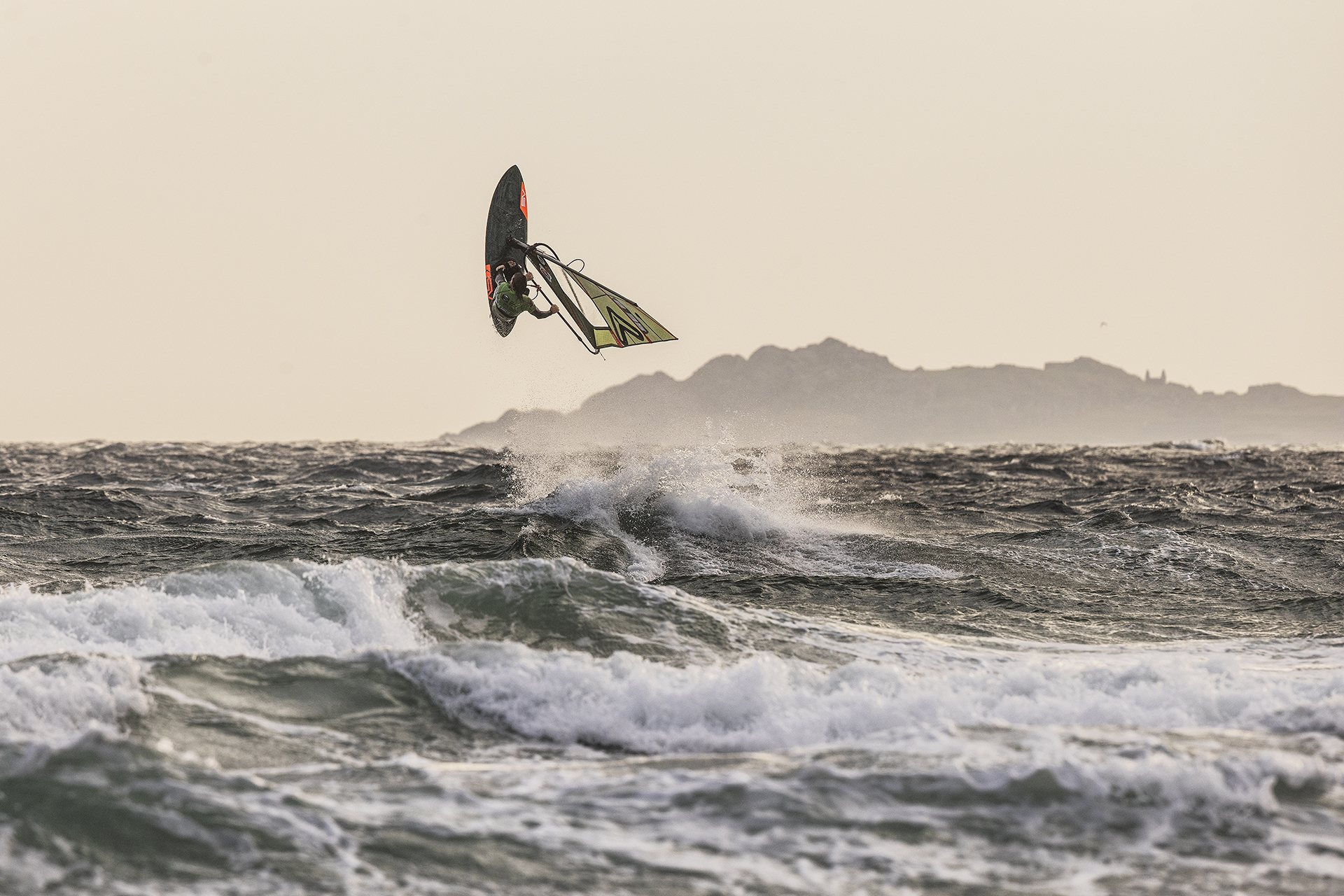
- Back loop from Dieter in Tiree
WINDSURF: What kind of people do you get on your courses?
Dieter: “It’s pretty broad, but most are between 30 and 50 years old.
A lot of them used to windsurf, stopped for 10–15 years and got back into it. They’ve been sailing again for five or six years, feel like they’re back to where they were but now they want to improve beyond that and get more out of their sessions.”
-
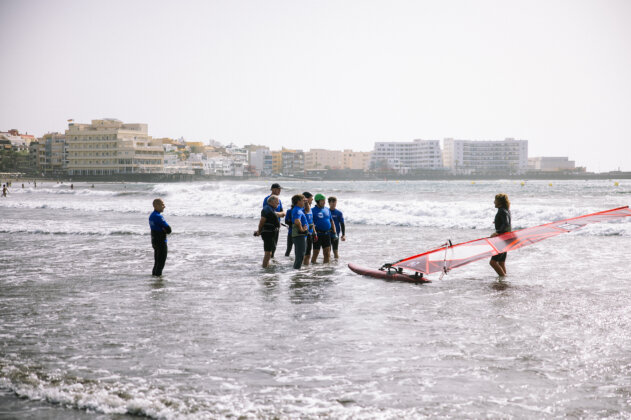
- Tenerife camp
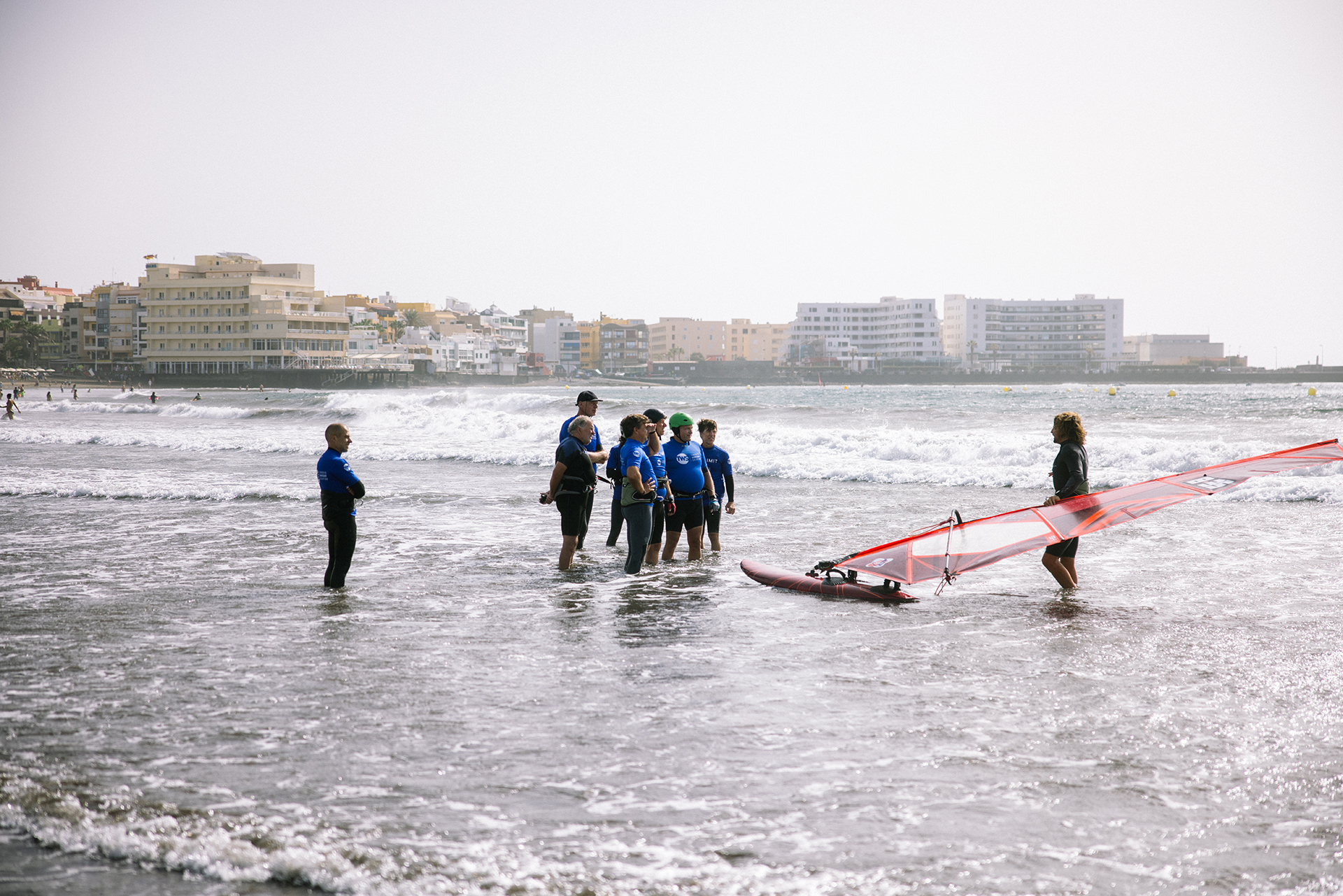
WINDSURF: What’s the most common thing people want to learn in wave sailing?
Dieter: “Most people write “front loop” on their forms! But we often end up working on positioning and wave riding. A lot of people discover they enjoy wave riding much more than they expected.
Often, I work on small things…hand positioning, stance and getting rid of bad habits that can totally change their sailing.
I always say…if you want to do a front loop, you need to be able to do a good jump first. So, we build from there. It helps them progress in ways they didn’t even know they needed.”
-
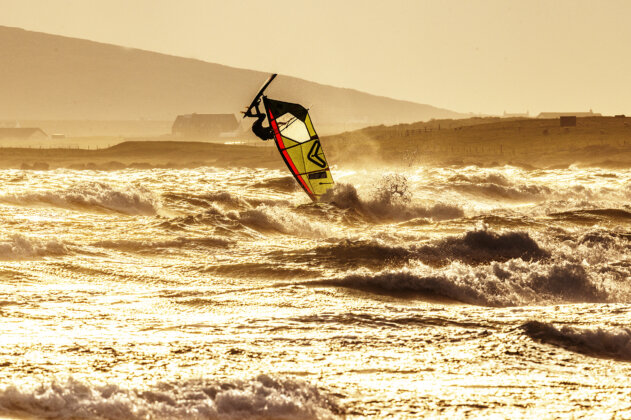
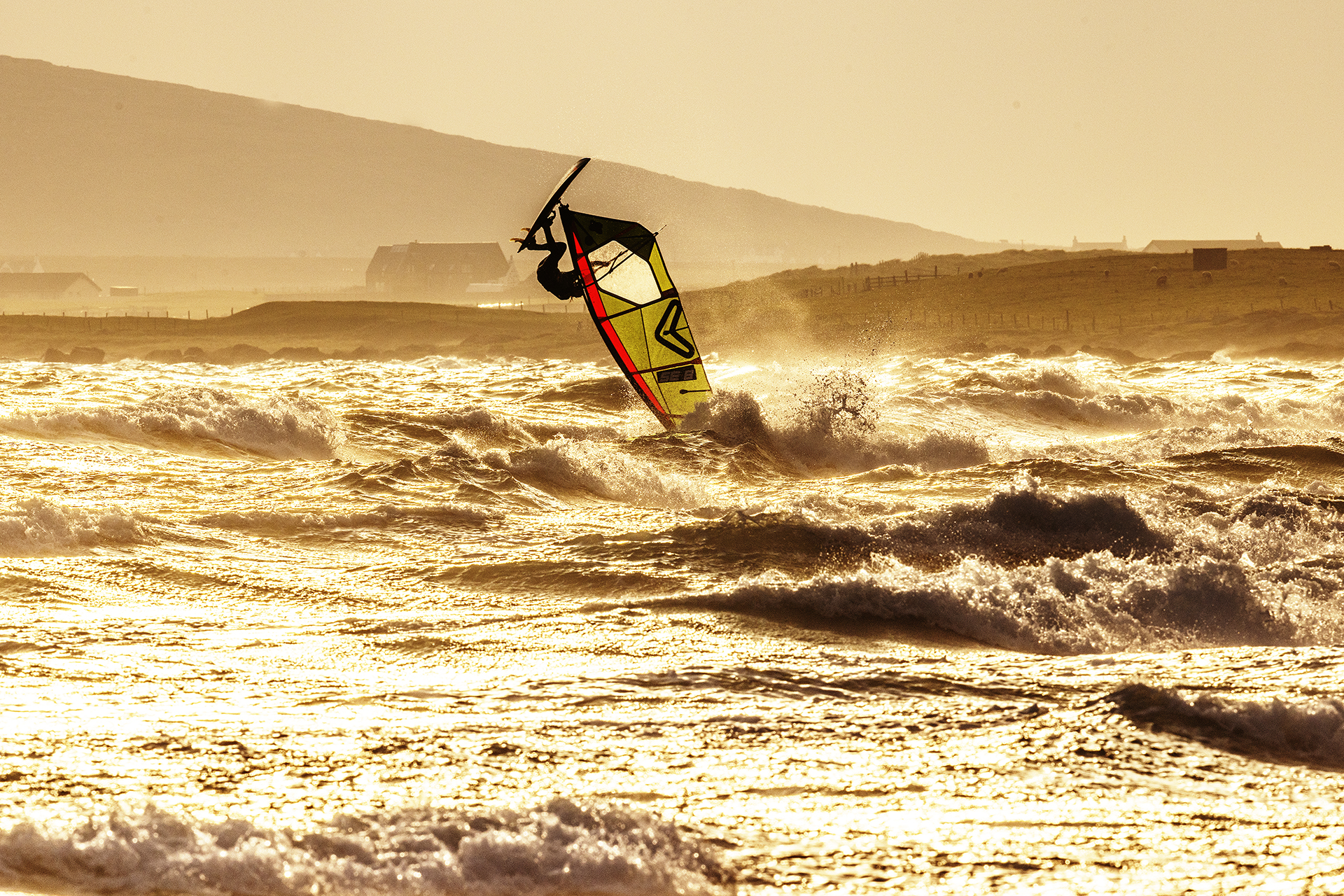
- Dieter Push loop in Tiree
WINDSURF: When you see someone go out on the water, can you immediately spot their problems?
Dieter: “Yeah, pretty much. The more you coach, the quicker you see it.
Common mistakes are things like not looking where they’re going…especially in jibes or tacks. Or sitting in the harness instead of leaning out with the shoulders. Those small details make a huge difference.”
-
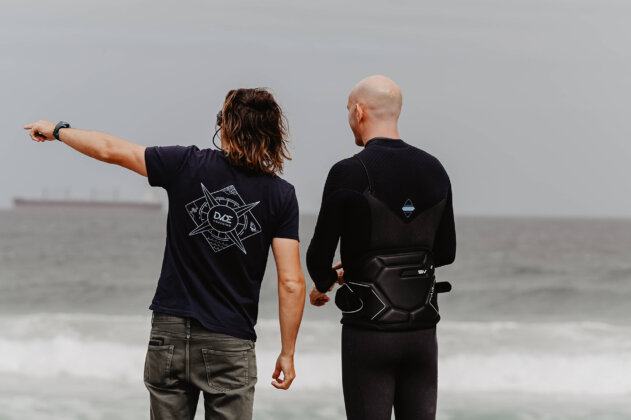
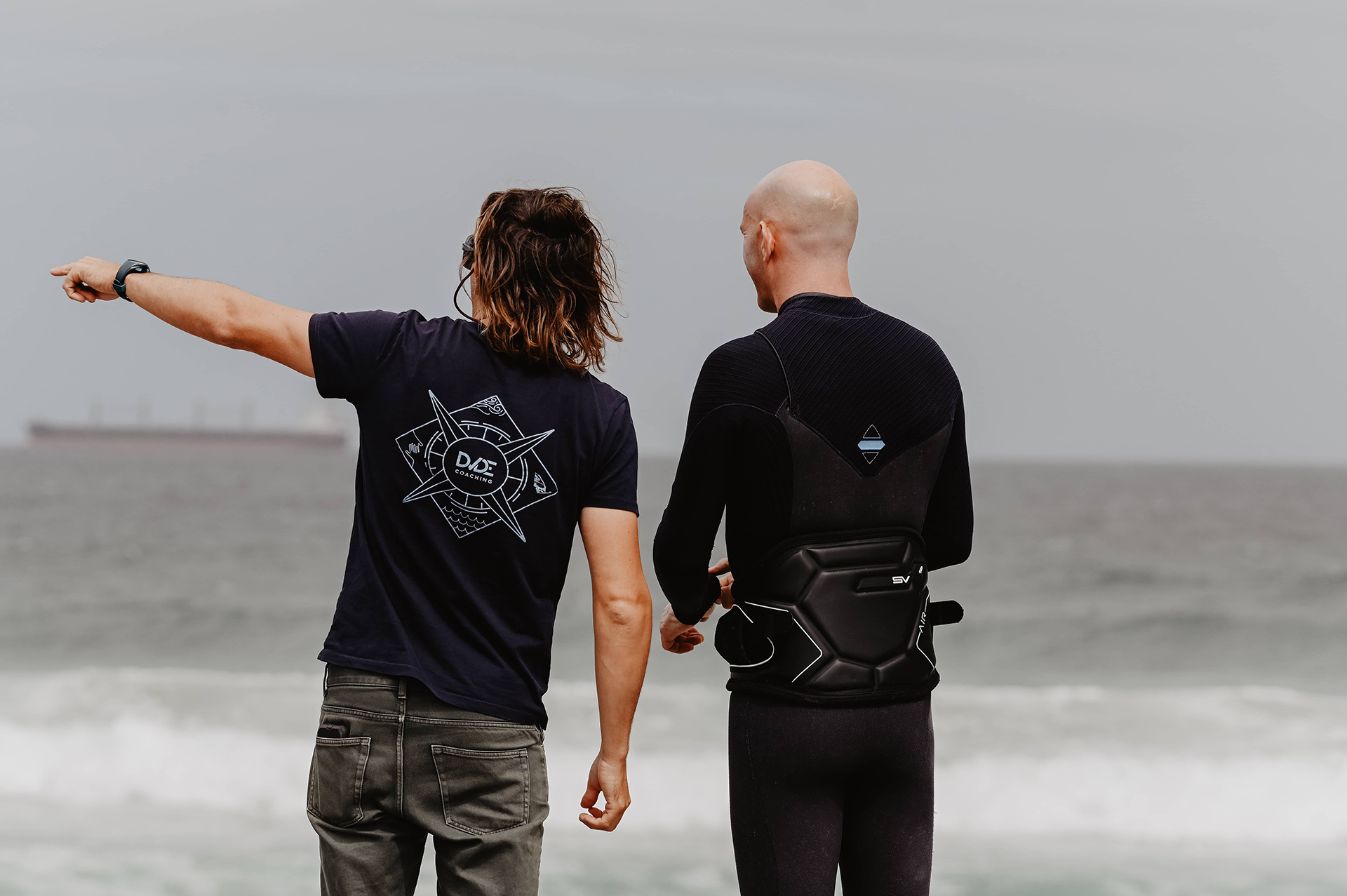
- Coaching time
WINDSURF: Do most people come just once, or do they return?
Dieter: “I’d say around 25–30% are repeat clients who do one camp a year. Some like to go to new places; others return to the same spot because it’s their usual holiday destination.
Then I have around 60–70% new people each year, and many of them come back after two or three years. That’s great, because the goal isn’t to come every year…it’s to go home with a to-do list of things to work on in your free sessions.
Once they’ve mastered those, they can come back and we’ll build from there.”
-
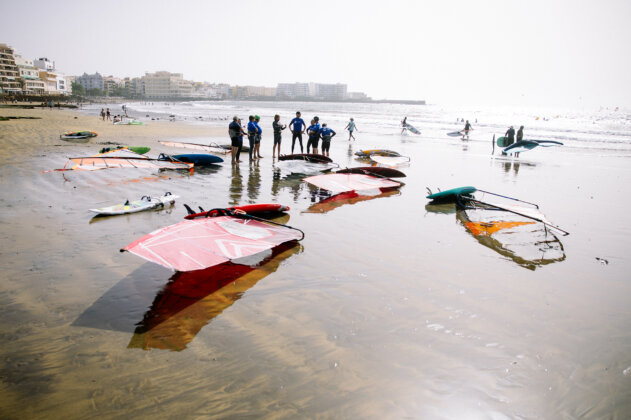
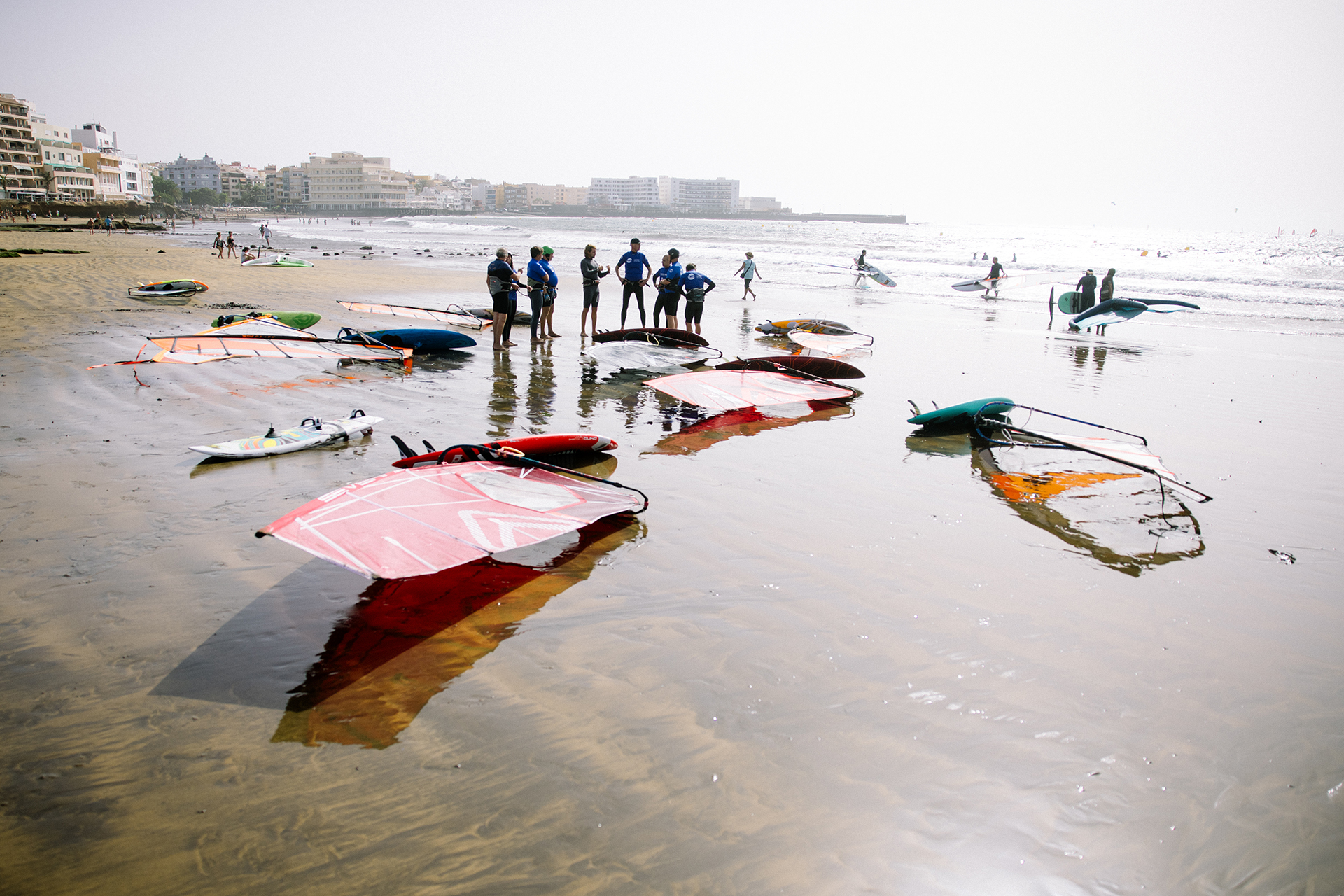
- Coaching Life
WINDSURF: How much logistics goes into organizing all the camps?
Dieter: “Quite a lot, but I’ve got it streamlined. I don’t handle accommodation in most places, just the coaching. I also partner with windsurf centres. Clients apply through my website and fill out a Google form. You can’t just register…you have to give info about your level. It’s important to have groups of similar ability, so everyone works toward the same goals. That also builds confidence…they see others trying and learning too.
So yeah, there’s a fair bit of admin, but I’m used to it from traveling for competitions. The hardest part is staying on top of emails while I’m competing!”
WINDSURF: You’ve also coached a few riders, right?
Dieter: “Yeah, I’ve been coaching Lina for two years now and Lucas Meldrum for about a year. Mostly reviewing their clips, helping them with mindset and setting focus points for competitions.
It’s remote coaching, which is harder to manage sometimes, but I’d like to grow that side…working with a few pro riders throughout the year helps promote my camps too. And it’s really satisfying. When Lina won Tenerife last year, it felt like a little victory for me as well.”
-
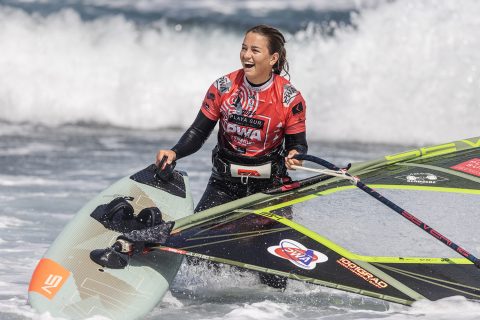
- Lina Erpenstein
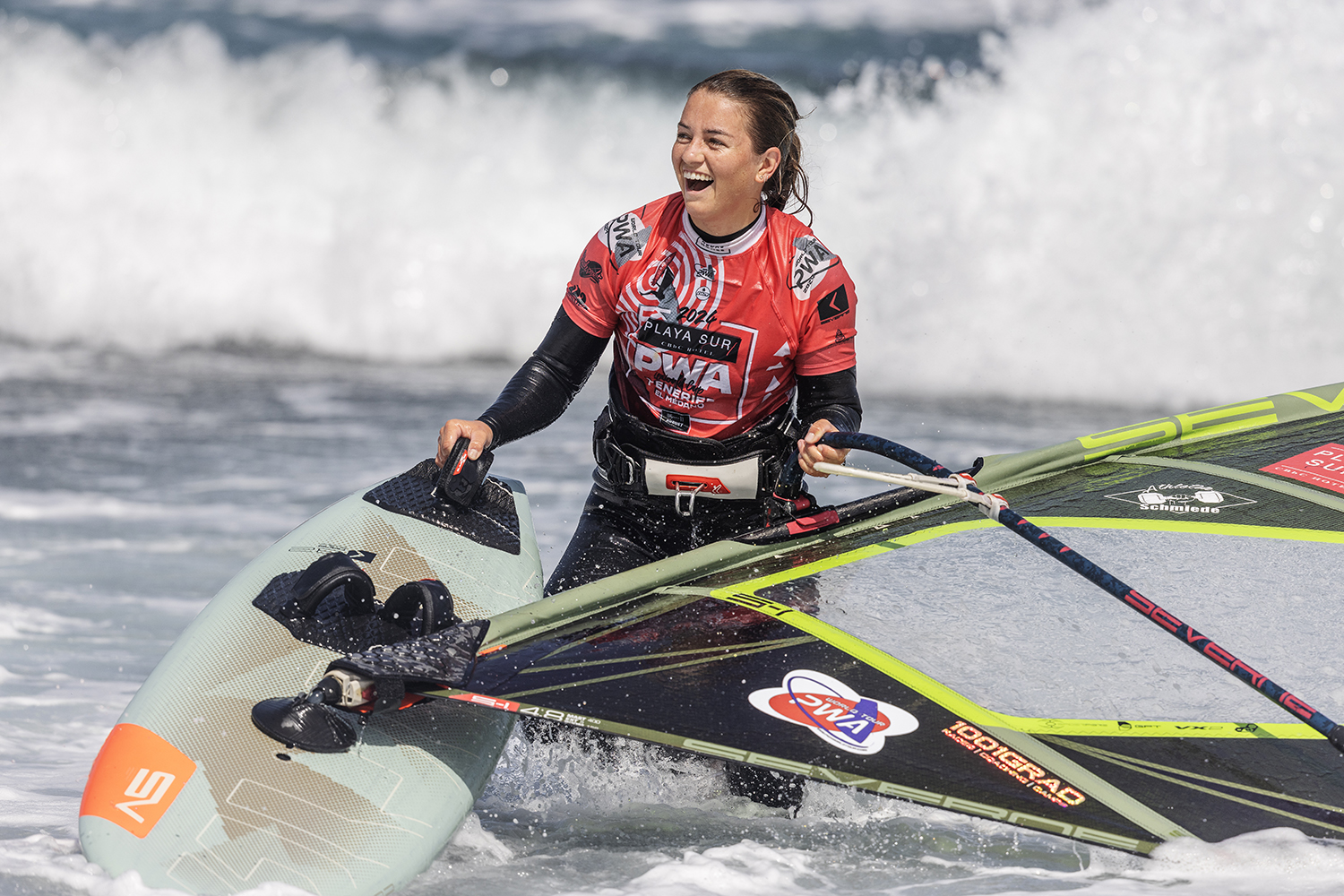
WINDSURF: Yeah, that must’ve been amazing to share the victory!
Dieter: “Yeah, it was. The year before, she’d already made big progress, but competition results don’t always reflect that. Last year, she really showed it…won Chile, then Tenerife and came so close to a world title. That was super rewarding. She was so close to the world title so it was really exciting”
-
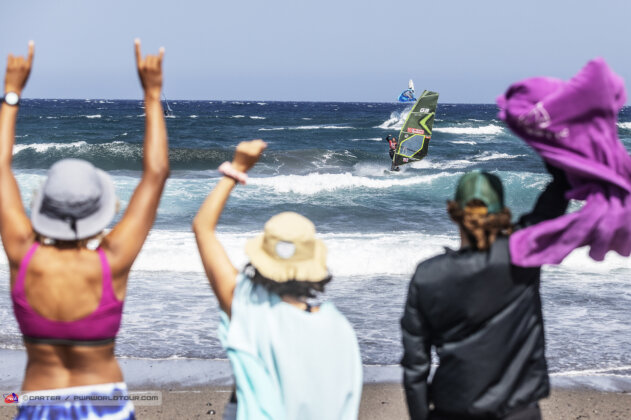
- LIna wins in Tenerife 2024
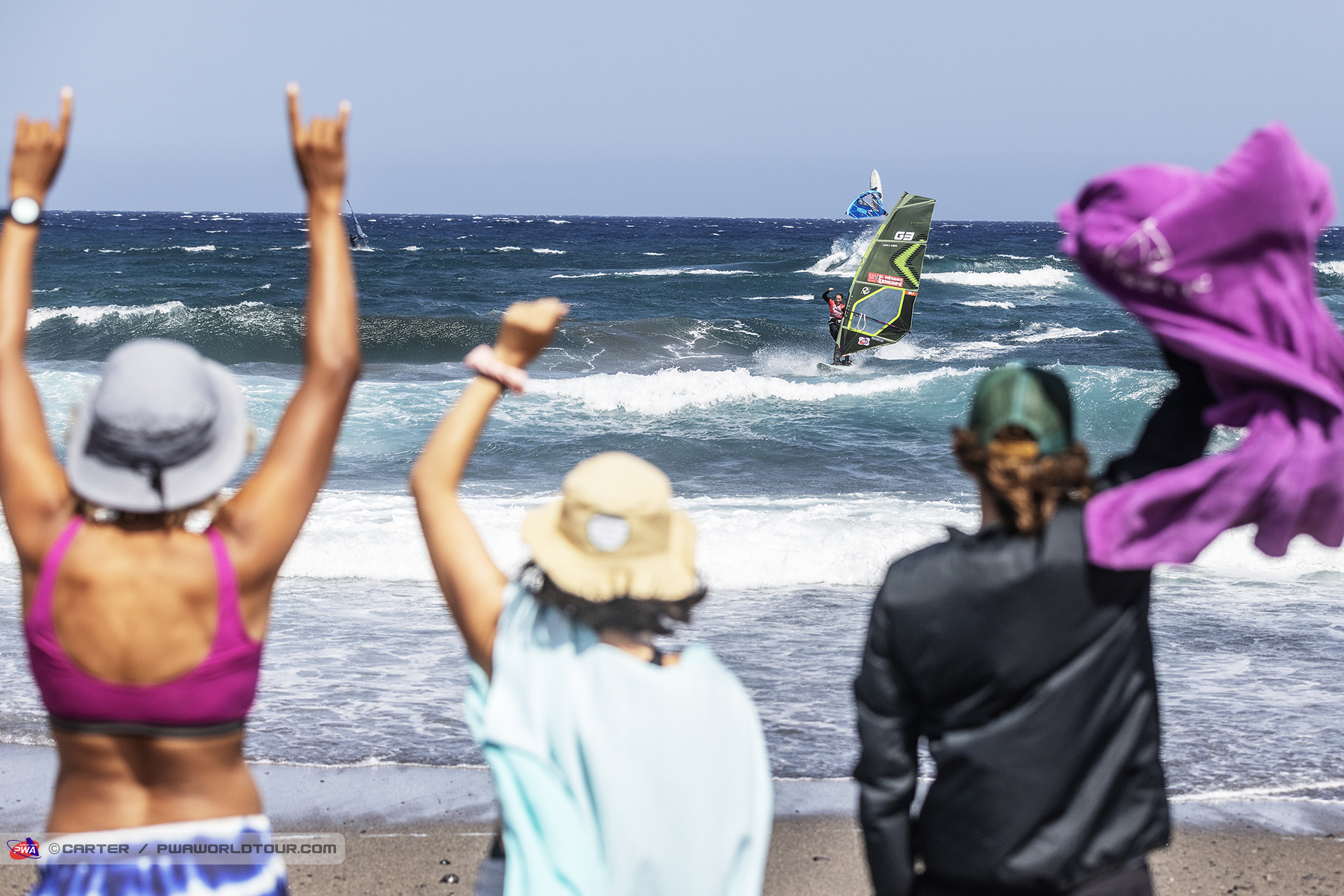
WINDSURF: Personally, you’ve had a pretty strong year on tour. That’s got to help your coaching reputation.
Dieter: “For sure. Coaching actually helps me stay motivated…it keeps me pushing my own boundaries. This year’s been great. In freestyle, we only had two events, so that’s always a bit limited, but I sailed really well. In waves, I’ve made good progress. Last year I got 4th in Pozo, which was huge. This year I didn’t make a final but finished 5th in Sylt, and I felt I sailed some of my best heats ever.
-
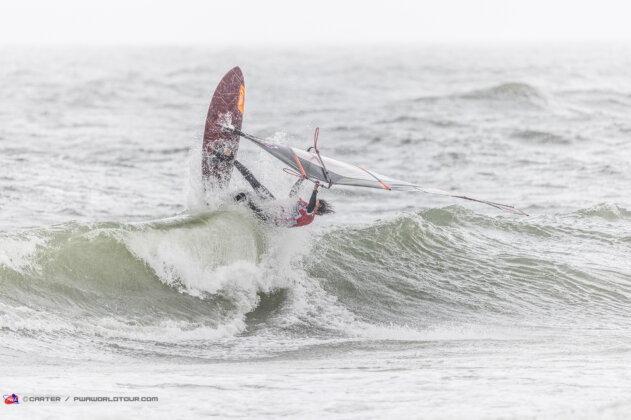
- Dieter on fire in Germany
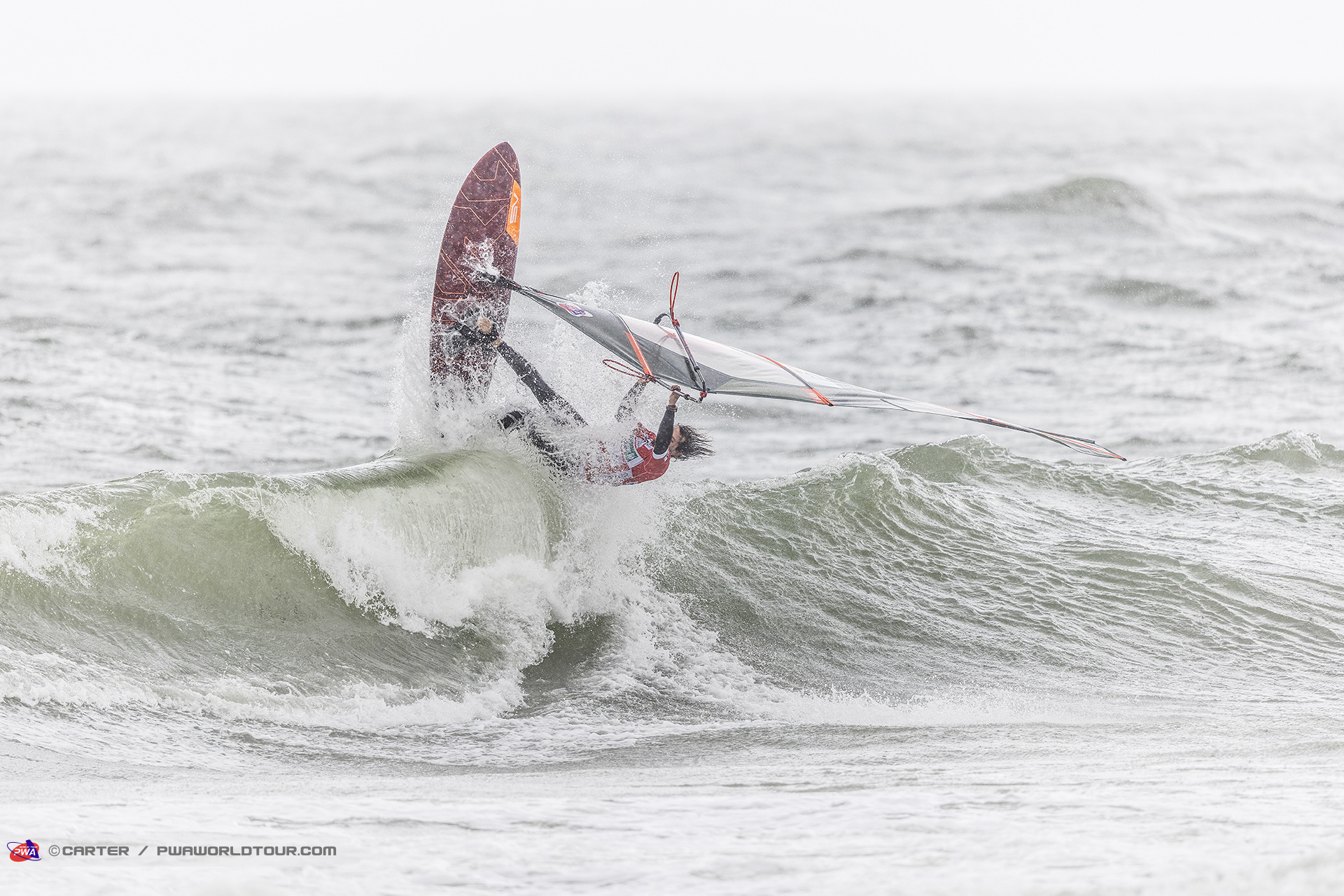
I’ve been trying to stay active, improving my diet and trying to enjoy windsurfing, and balance competition with coaching. They go hand in hand…I need one to motivate the other. At the moment, I’d say my training is 80% wave and 20% freestyle, that is going to stay like that. I still enjoy freestyle, but my focus is definitely waves. I feel like I am in a nice place at the moment. For freestyle I do it because I enjoy it but I don’t have ambitions. In waves I want to improve my starboard tack sailing”
-
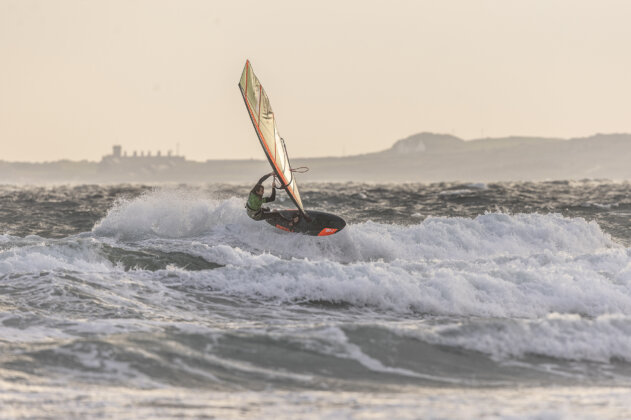
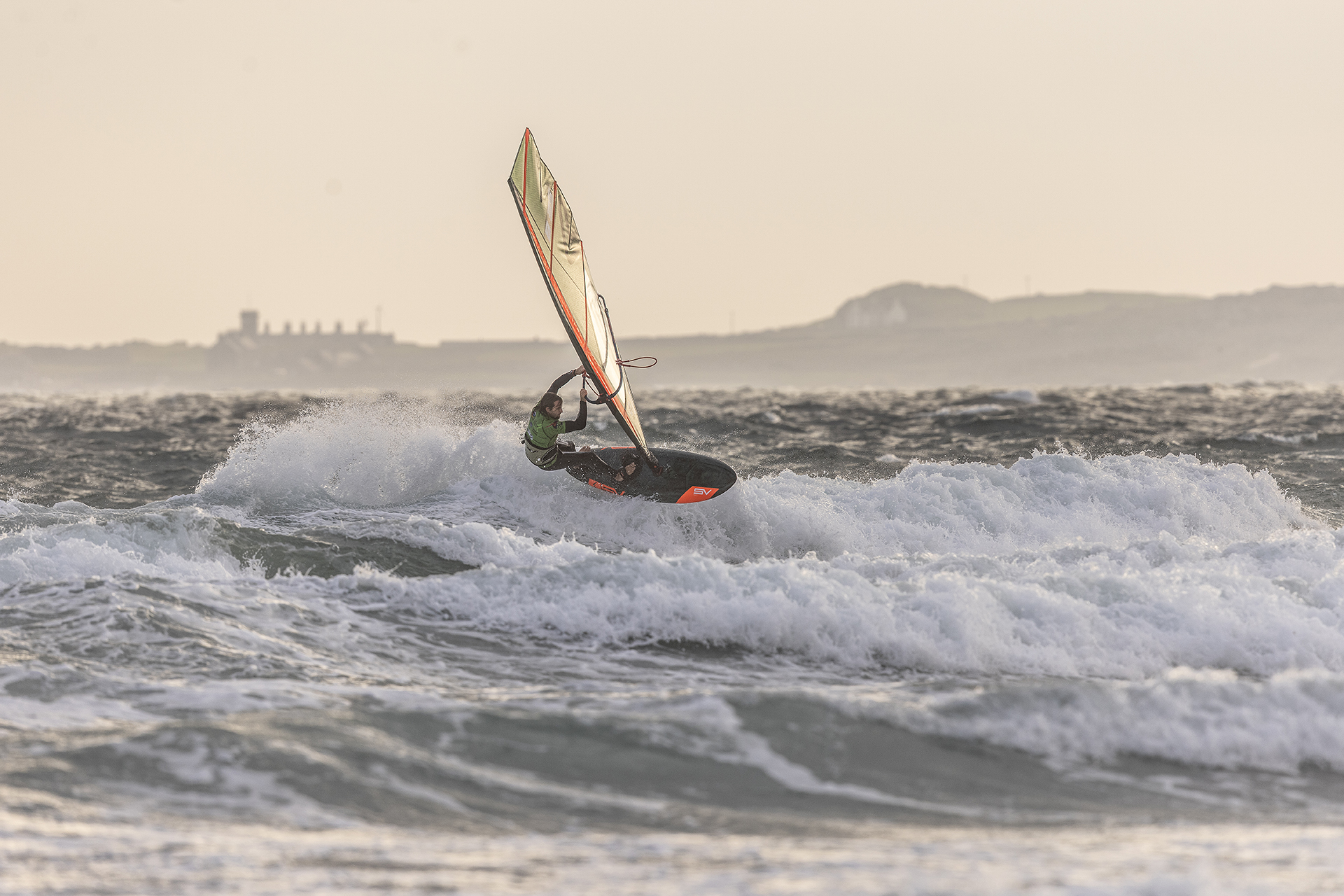
- Tiree action
WINDSURF: And that last day in Sylt…looked pretty wild!
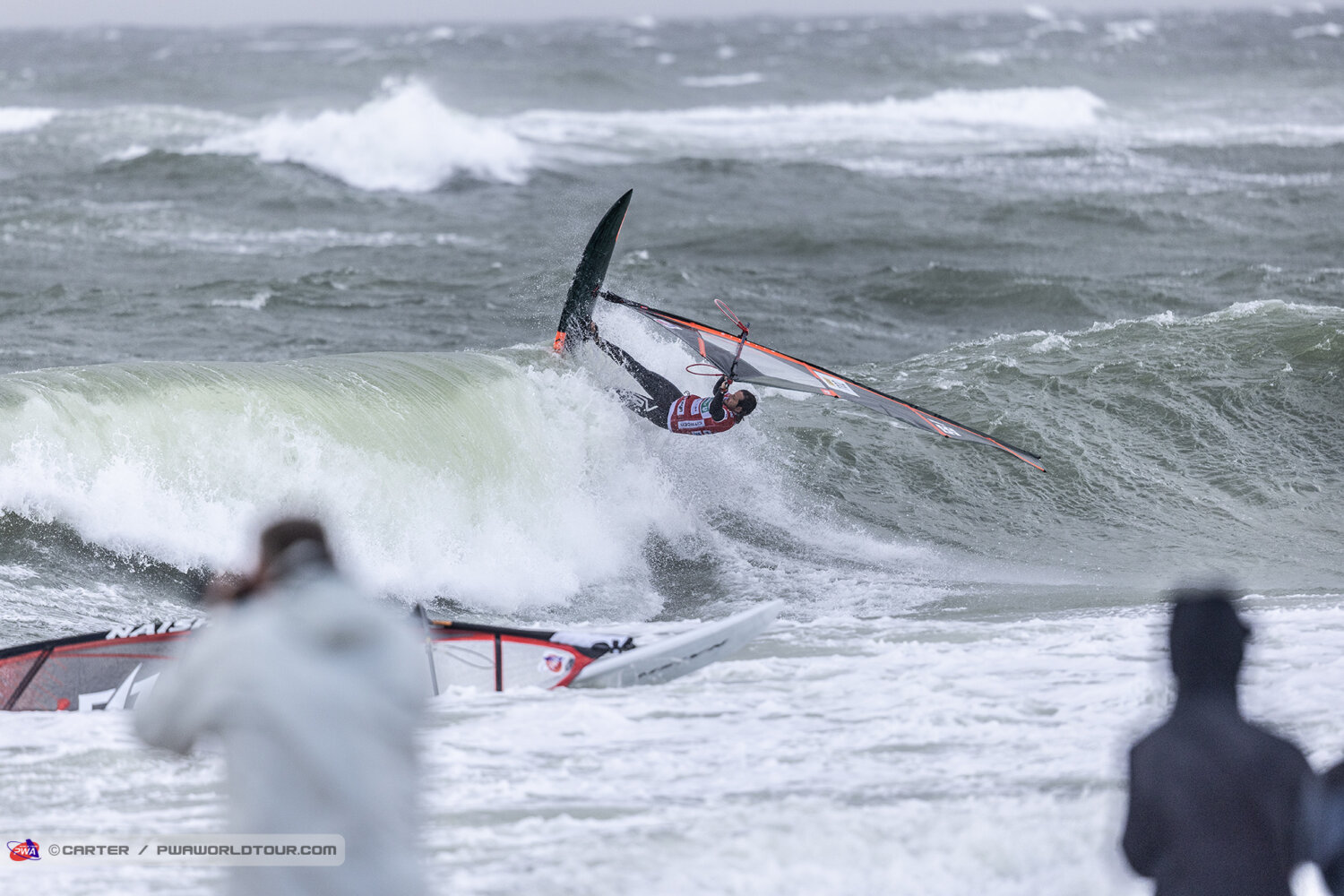
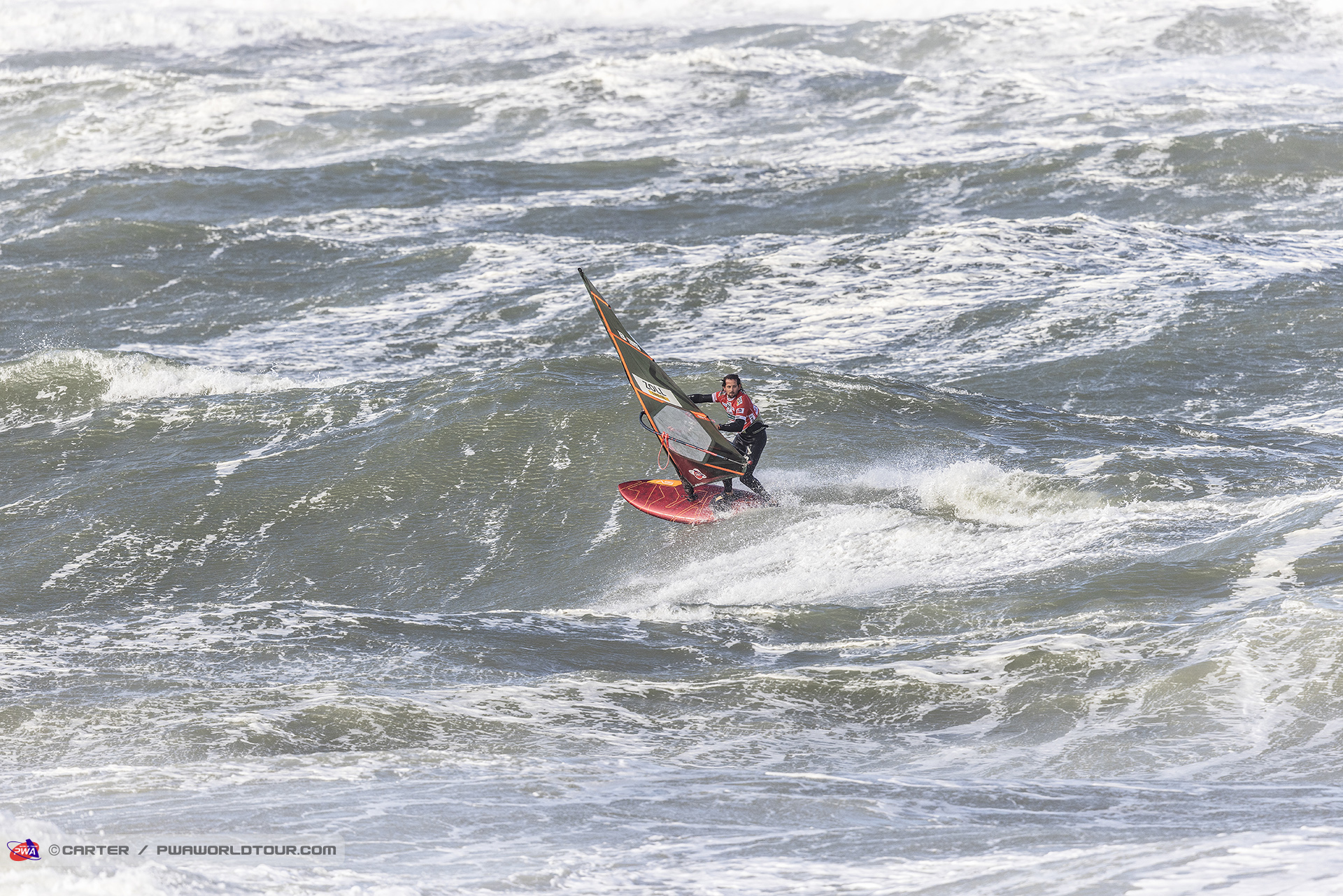
Dieter: “It was hectic. We couldn’t finish on Saturday because it got dark, so Sunday we were all unsure if we’d even run. Even Marcilio Browne was not sure if we could sail. Then suddenly the call came…“We’re running in 36 minutes!” and I was the first heat. I never expected that! Conditions were crazy: no beach left, 4-meter shore break, dead onshore wind. Honestly, I wasn’t keen to go out. I think it was Philip Koster who said we should compete! I never saw Sylt like this.
-

- Sylt was scary!
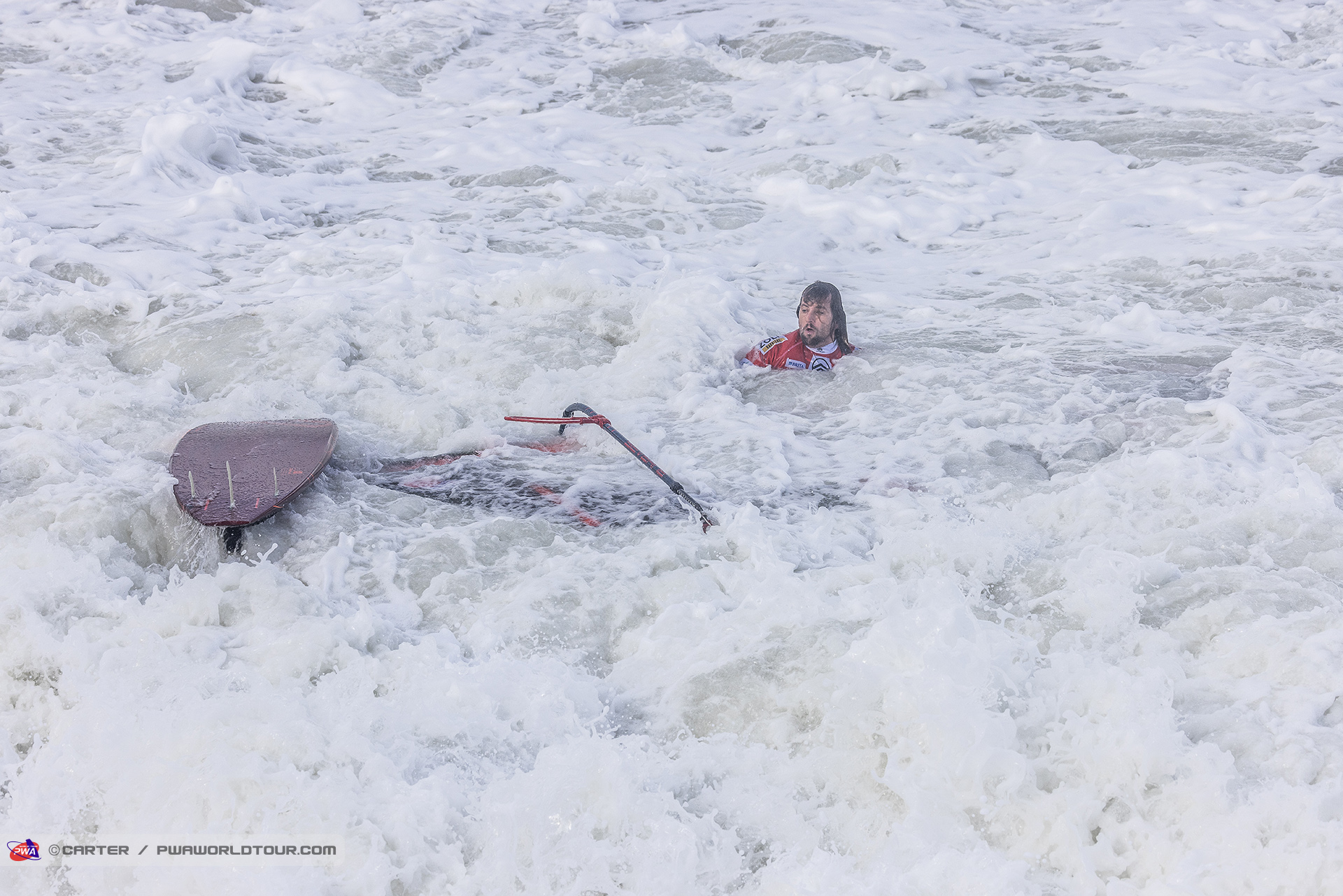
My first run I couldn’t even get out. Second run I managed to sneak through a little channel. You felt tiny out there…you couldn’t go too far out and inside was chaos.
-
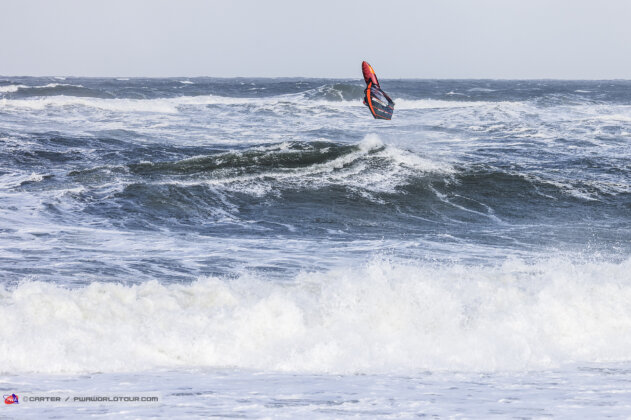
- Back loop on finals day in Sylt
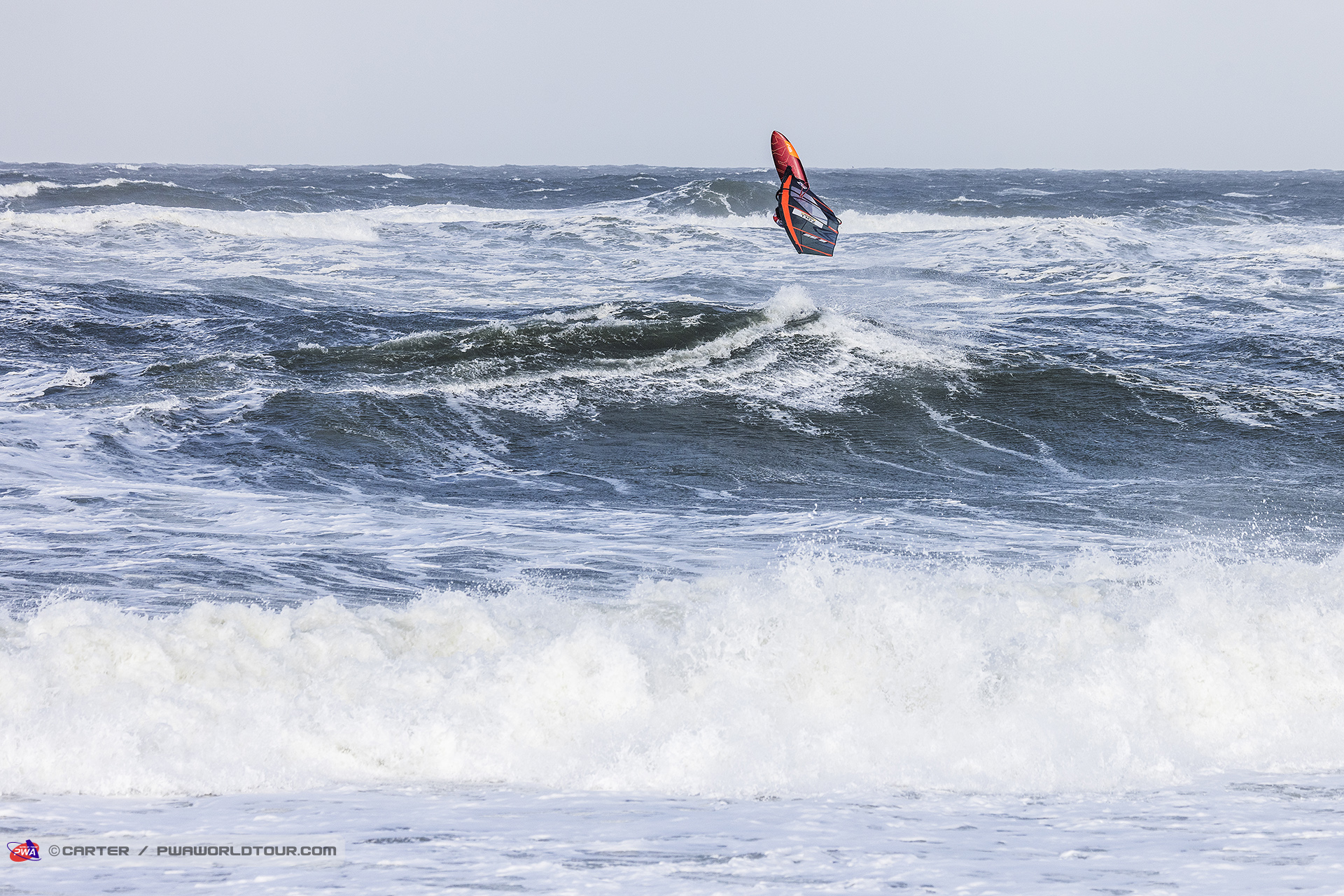
Massive respect to the guys who made the final; it was brutal. I finished third in my heat, which was fine by me because I didn’t want to go out again!
-

- It was a tough day
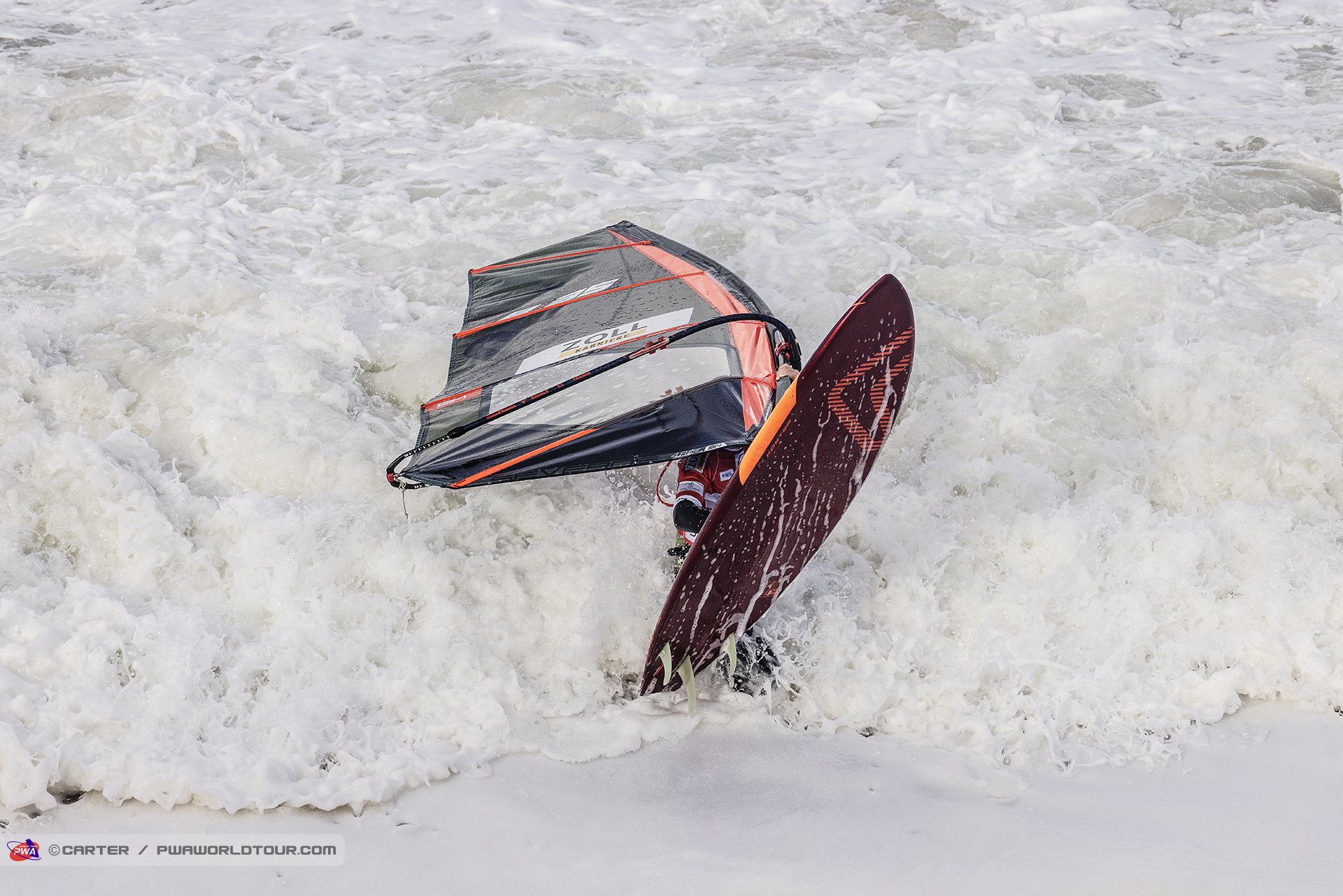
One of the guys, Alessio, got worked in the shore break…his boom snapped on both sides. That gives you an idea of how powerful it was. Luckily, no one got injured. If it hadn’t been competition, I wouldn’t have gone out. But in the end, it was the right call to run…it’s the World Tour, we have to give it a go. At least I have some pictures to look back on…I think Robby Naish and Bjorn sailed in similar conditions in 2009 but this was bigger…and there was no beach!”
-
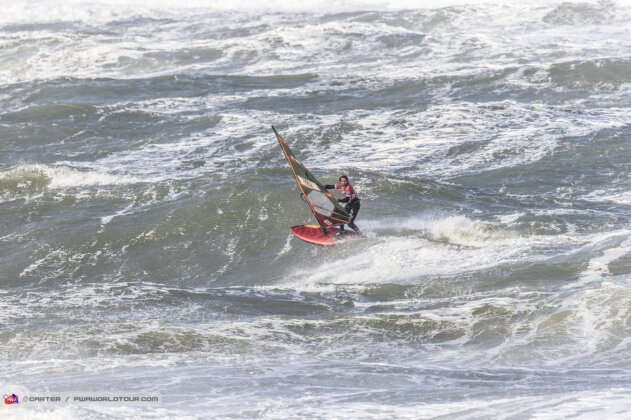
- Dropping into the shore dump
WINDSURF: And you’re chairman of the PWA now too?
Dieter: “Yeah, I’m the chairman. It’s a lot of voluntary work…definitely more than I expected! We’ve been going through a lot of changes, so my plate’s been full. Recently, I’ve been trying to balance it better and focus more on my own projects again, but I’m still very involved day to day.”
-
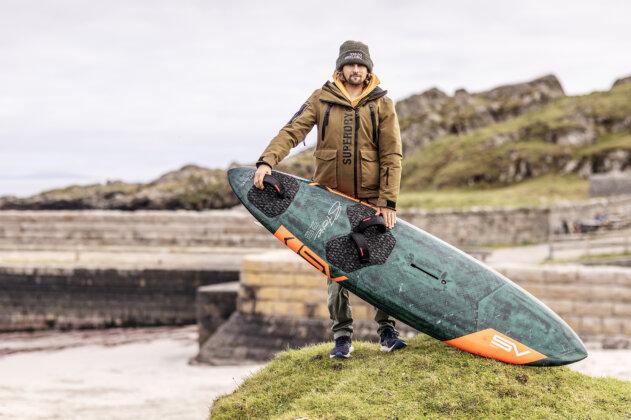
- Dieter Van Der Eyken Tiree 2025
WINDSURF: And what brings you to Tiree this year? Just something new?
Dieter: “Yeah, I think from the outside it looks like a really well-organized event. There are almost 100 competitors here. It’s always been on my list, and since I couldn’t afford to go to Maui, I thought, why not come here instead? My parents are coming to Scotland next week anyway, so I thought I’d give it a go. The forecast doesn’t look great right now, but hopefully that changes. The island itself is amazing…lots of different beaches. It could be a great training spot, actually, because you need to be really all-round here.
Maybe next year I’ll organize a training camp before the Tiree Wave Classic…it could be perfect. I’ve always wanted to come and do it, and yeah, maybe I’ll have to come back next year to get the wind.
-
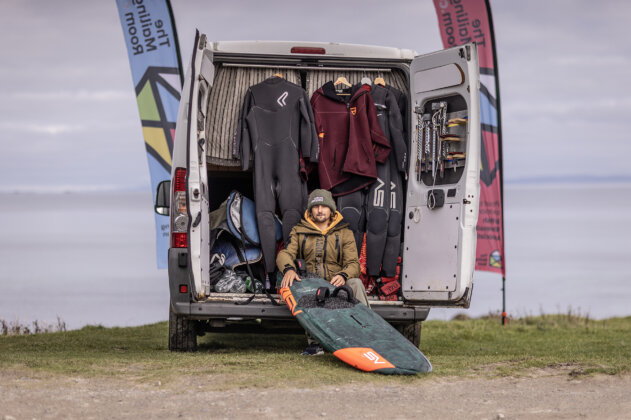
- Dieter ready to rock in Tiree
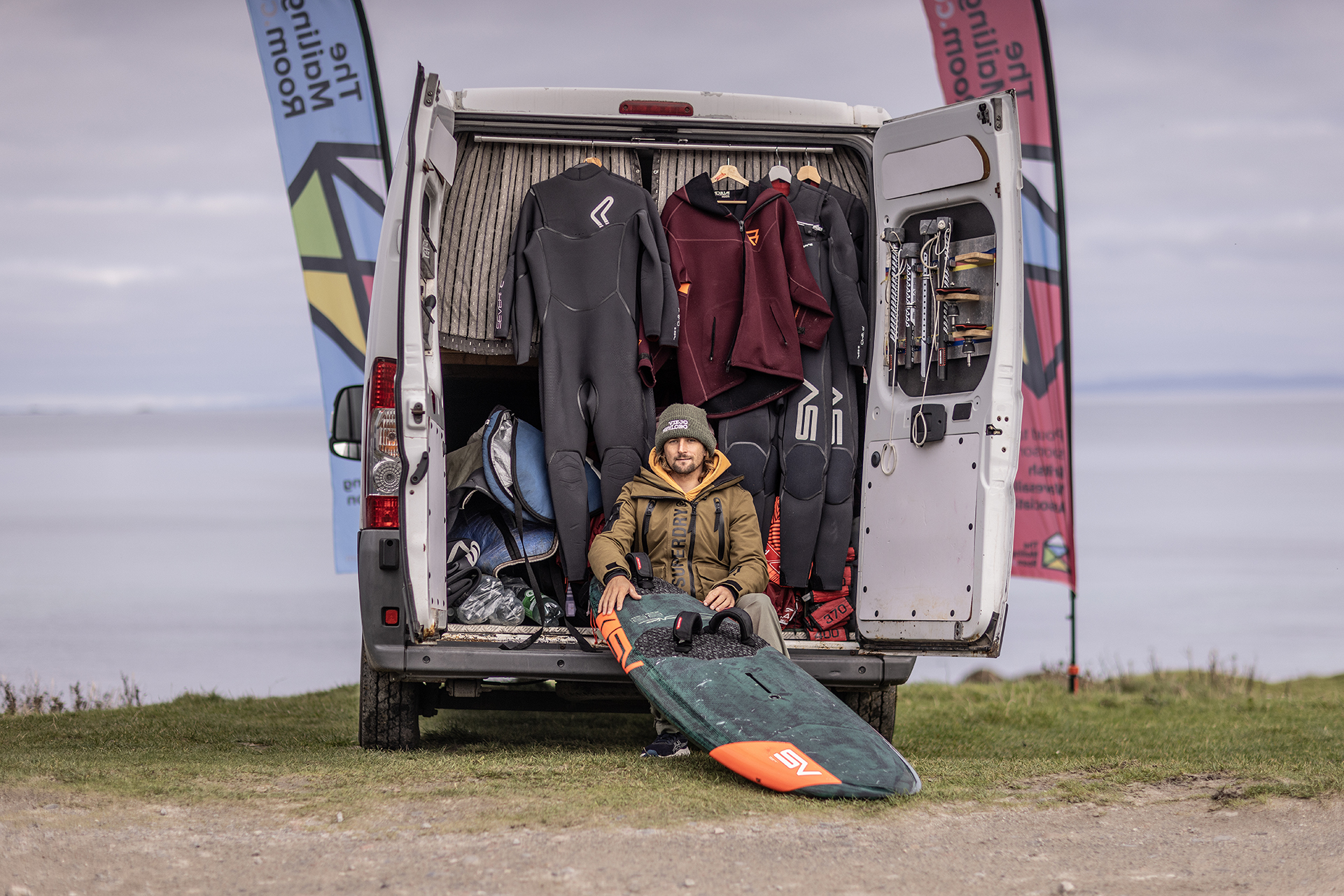
WINDSURF: Tell us about the gear you’re riding at the moment.
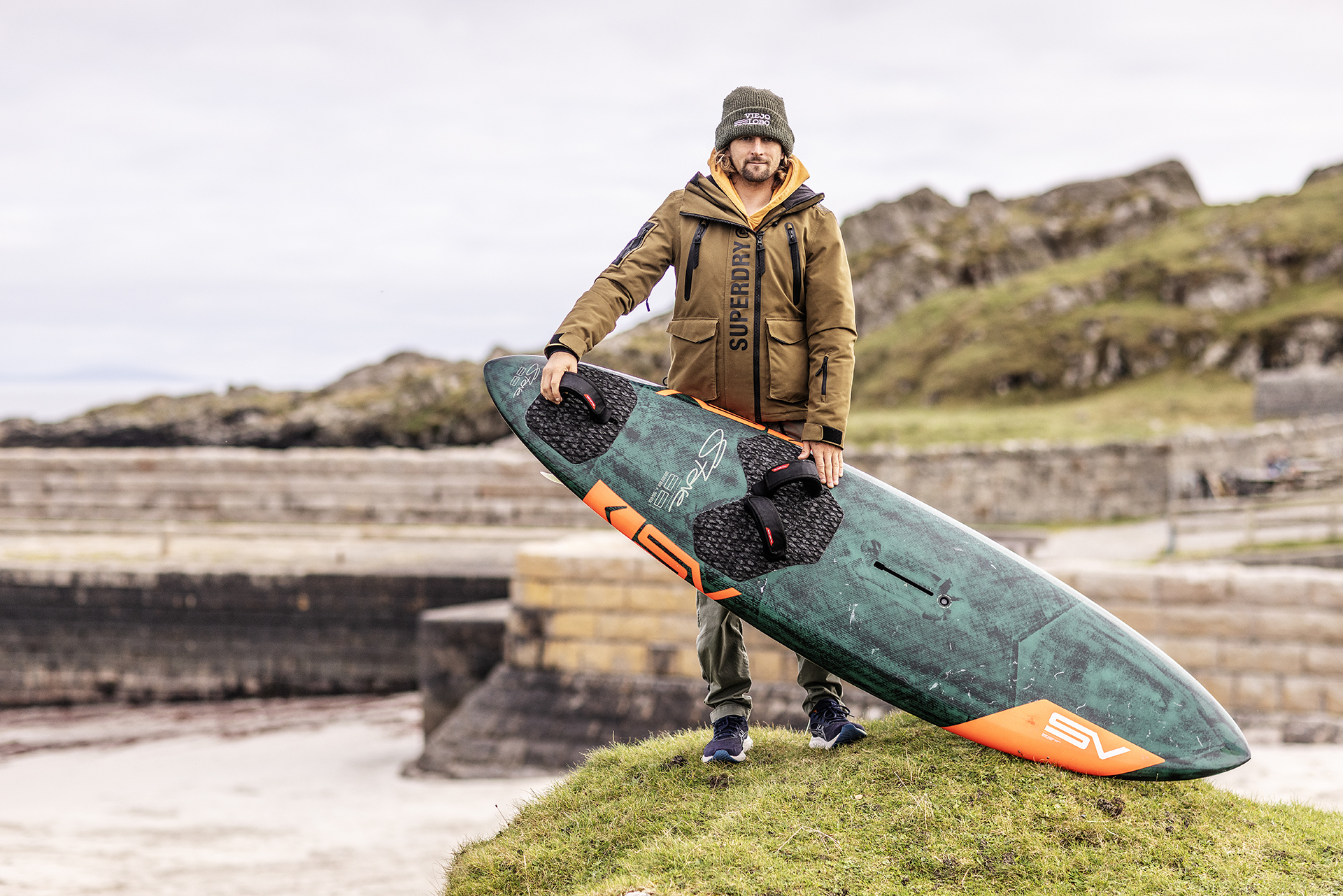
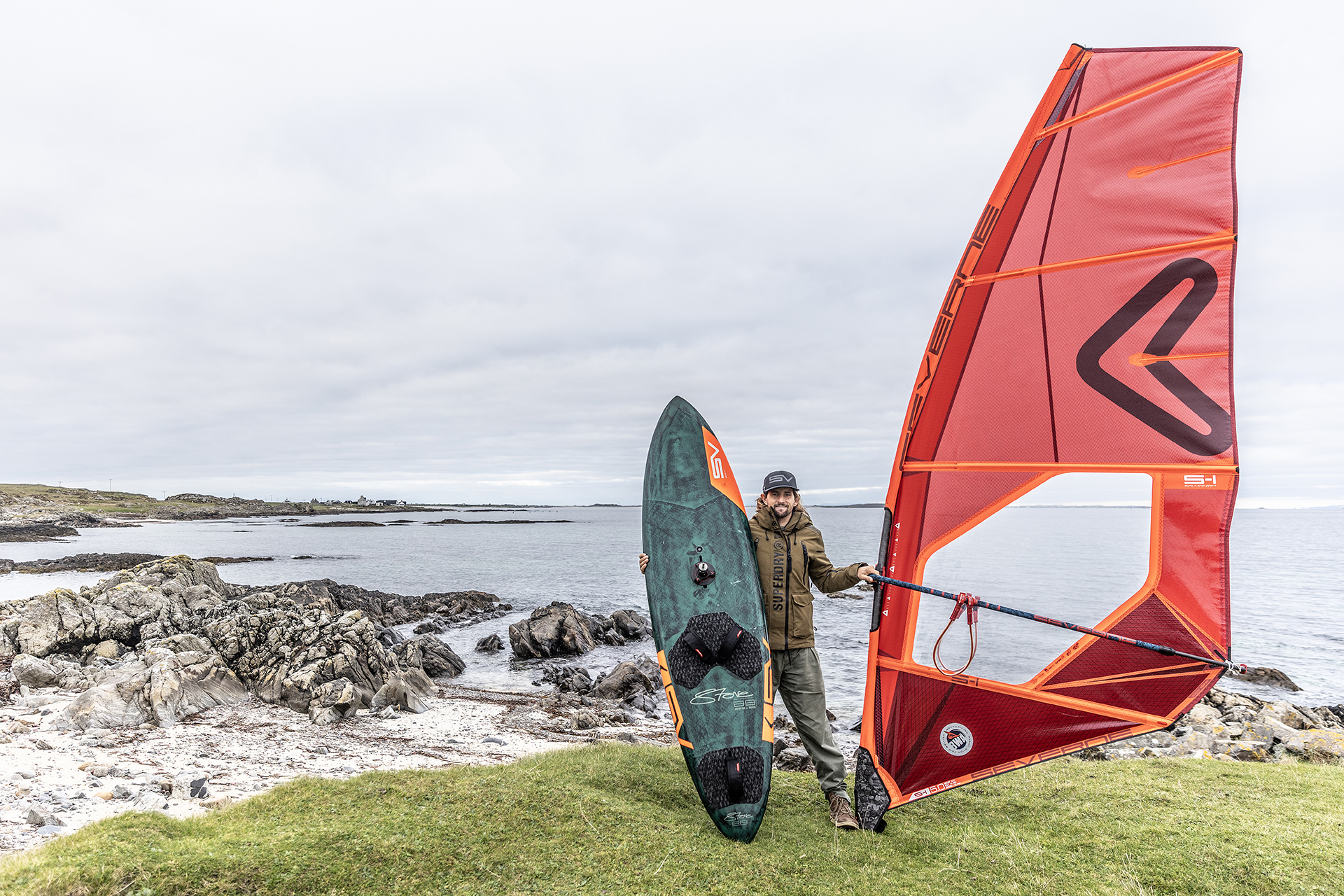
Dieter: “Yeah, I mean, I’m pretty excited about the new gear. We got the Stone back…one of my favourite boards. It’s not asymmetrical anymore this year; it’s just a pintail, but it came out really, really good. I’m very happy with it. You can ride it both as a thruster and a quad. And then on the sails, the S1 has been the sail I’ve been using almost all my life in wave sailing…originally even in freestyle before they split it off in 2012. But we got a new Dacron in the front…D6, I think it’s called and it completely changed the sail in a positive way.
-
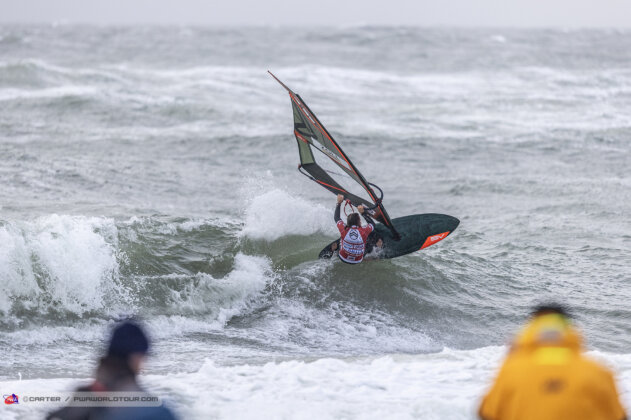
- Dieter on the Severne Stone
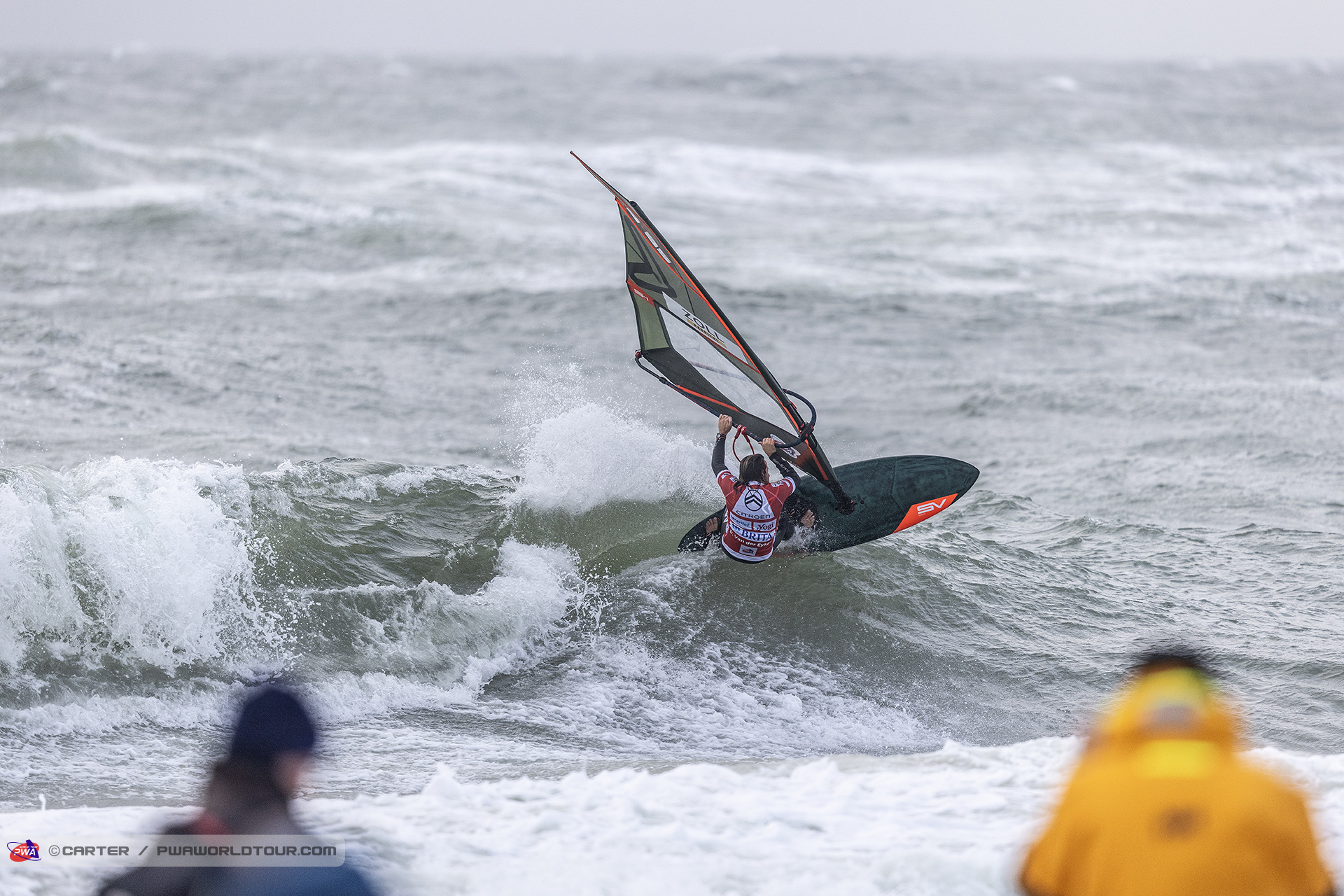
In the low end, it’s definitely a lot easier to plane. I get a bit more lift on some of my jumps and in the strong winds you still have all the control as before. So yeah, I’m extremely stoked on the gear performance. I’ve been using it now since the middle of August, and yeah…we always have to say it’s a big step forward…but honestly, this is definitely something special.
So yeah, I’m excited how this can push my sailing further. When you’re on good gear, it really helps you push your level to the max.”
-
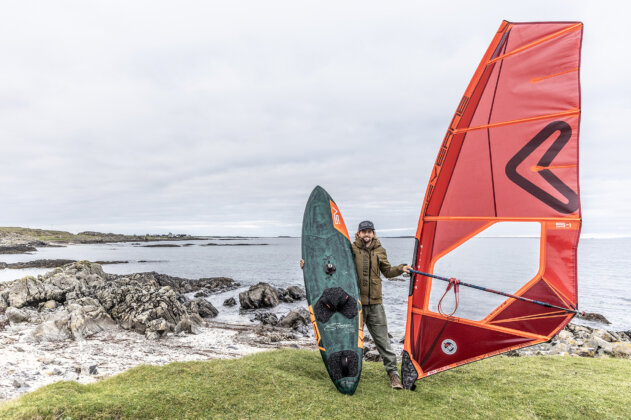
- Dieter with the killer combo
WINDSURF: Did you use the Severne, Stone in Sylt??
Dieter: “When it was 5.2m, I was still on the Pyro 93 and then as soon as it picked up, I went to the Stone, as it needs a touch more wind.
But yeah, I used it pretty well. I’m happy with it…it’s fast to plane, but not as fast as the Pyro. That’s why on 5.2m, I stayed on the Pyro and then as soon as I could go for 4.8m in my second heat, I was on the 88L Stone and that was perfect.”
-
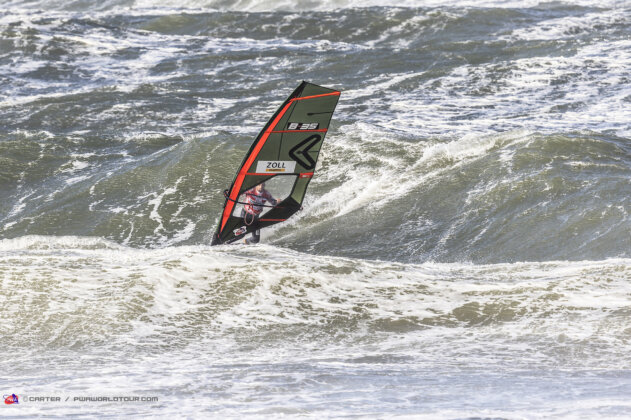
- Stormy Sylt
WINDSURF: So, if you went to Australia for a road trip, what boards would you take?
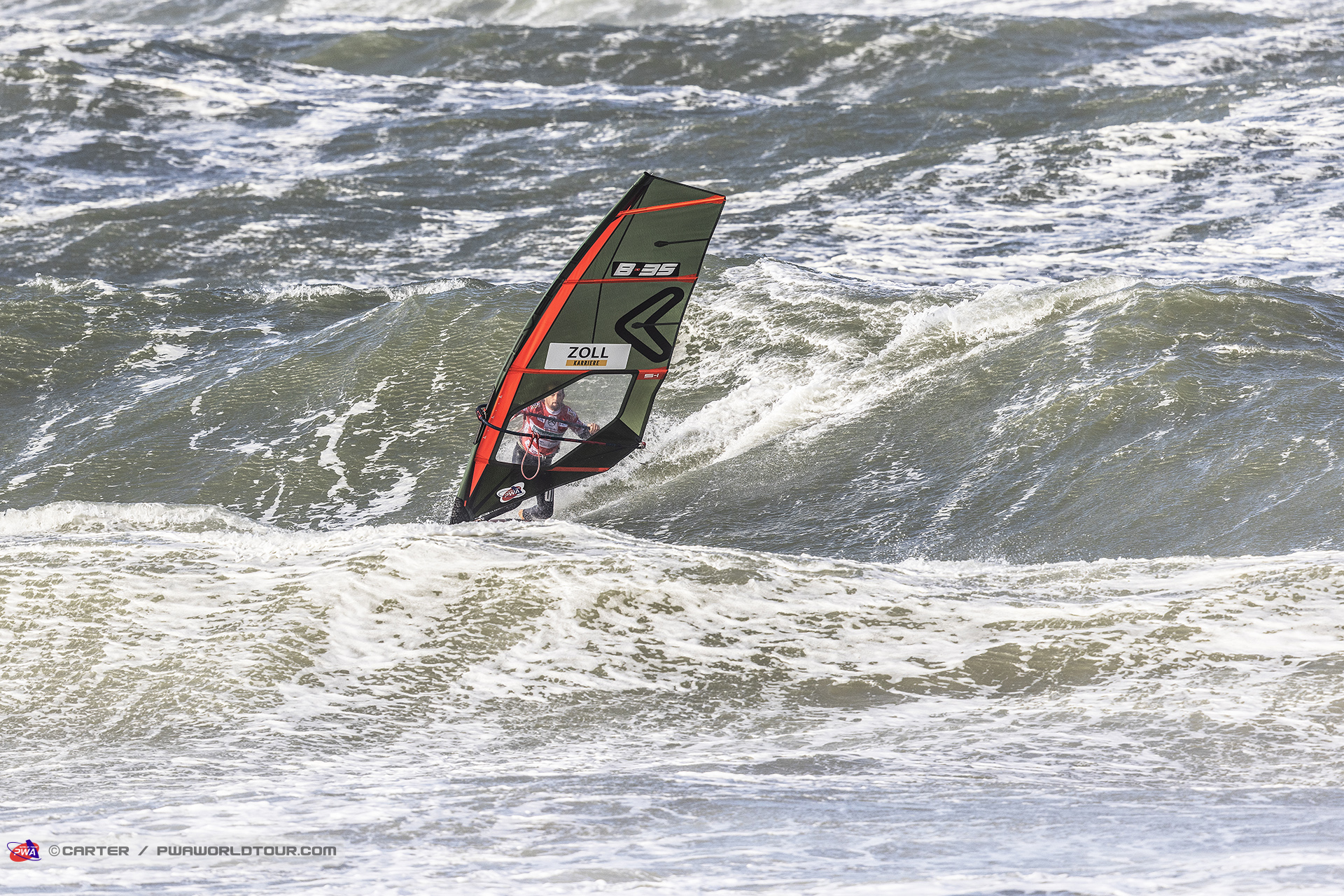
Dieter: “If I went to Australia, I’d just take the Stone. I probably have an 88L now. Like when I did my trip to Ireland, I had an 88L and an 84L with me. On the 88L I could do wobble and ride, and the 84 handled perfectly on a 3.6m in 35 knots…no problem on the Stone. So that would be my go-to.
It’s just for contests and places with a lot of current that I’d still have a Pyro in there. But otherwise, I’ll have the Stone.
I think I’m very used to sailing that. Like I said, only if there’s a lot of current then I’d take the Pyro. It’s full speed, early planing, and holds speed a bit better in the bottom turn. But on the other side, it can’t turn tight enough.
For me, wave sailing is about the wave riding. I want a board that’s really good in the wave riding, and then I’ll work around the rest as much as I can…and that’s what the Stone offers me. It also has great control. For example, now the Stone with the pintail gives a lot of control, especially in strong winds. Even in Pozo I’d be very happy using that.”
WINDSURF: You banged out some pretty nice 360s in Sylt. Were you happy with how they went?
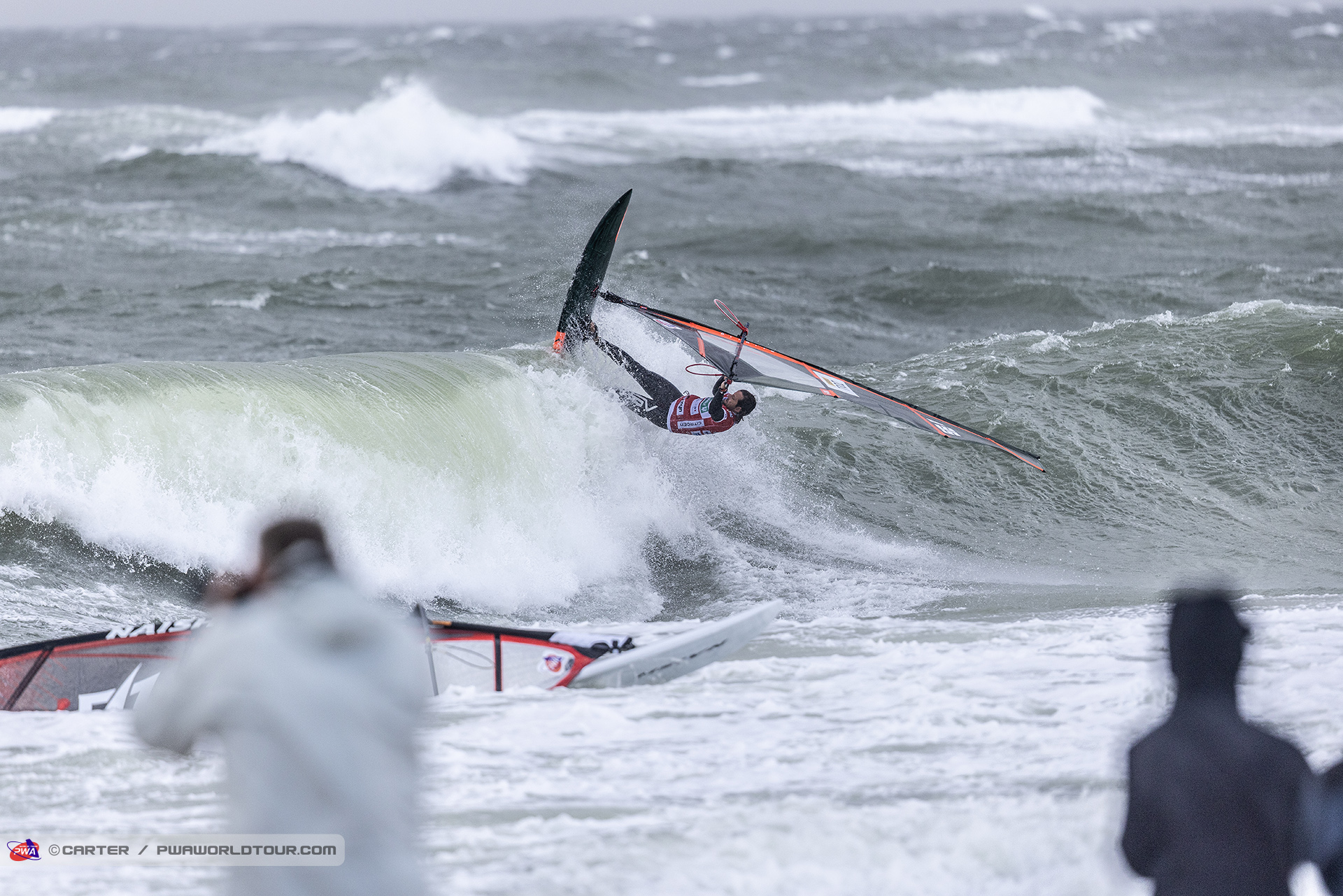
Dieter: “Yeah, I think it’s one of my signature moves. In the first heat, I was very happy because I couldn’t really find a good wave, and then I landed a 360. In the second heat, it was getting lower tide and really dumpy, and I just bottom turned…it felt like I was in Cabezo. I was just focused on the wave, did it perfectly and then realized afterward it was a bone-cruncher because the lip landed right next to me. It was a good thing it didn’t go wrong! It was ballsy in a way, but I control that move so much now that I know if I get a good one, it helps me win heats.”
-
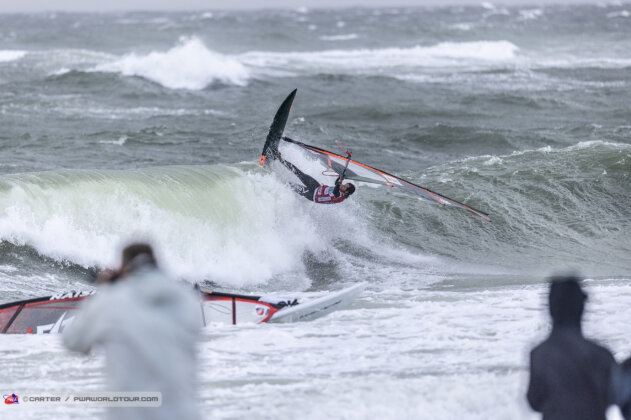
- 360 time in Sylt
WINDSURF: What’s your top tip for a 360?
Dieter: “Top tip for a 360: I see a lot of people make the same mistake…they try to turn their board just until 12 o’clock.
What I mean by that is straight up the wave. You actually need to, just before you get to the top of the lip, push one more time and really push on the tail hard so you go past 12 o’clock…more like 11 o’clock. That’s what brings you in front of the wave.
As you’re going for the lip, you have to push and your hips should stay below the lip in the beginning, because that allows you to fall in front of it. That’s the key.
You don’t need as much speed as for a top turn. For a top turn, you need a lot of speed when you hit the top. For a 360, it’s more about finding that right section, going past 12 o’clock, and even if you kill all your speed…it doesn’t matter. You’re allowed to kill your speed if needed. Really stand on that tail, and that’ll bring you back in front of the wave again.
-
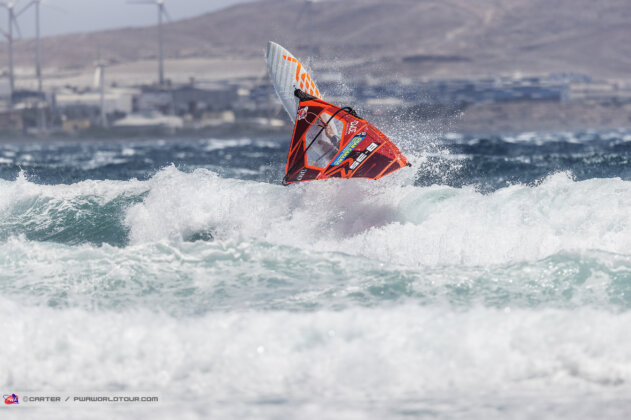
- 360 in Pozo
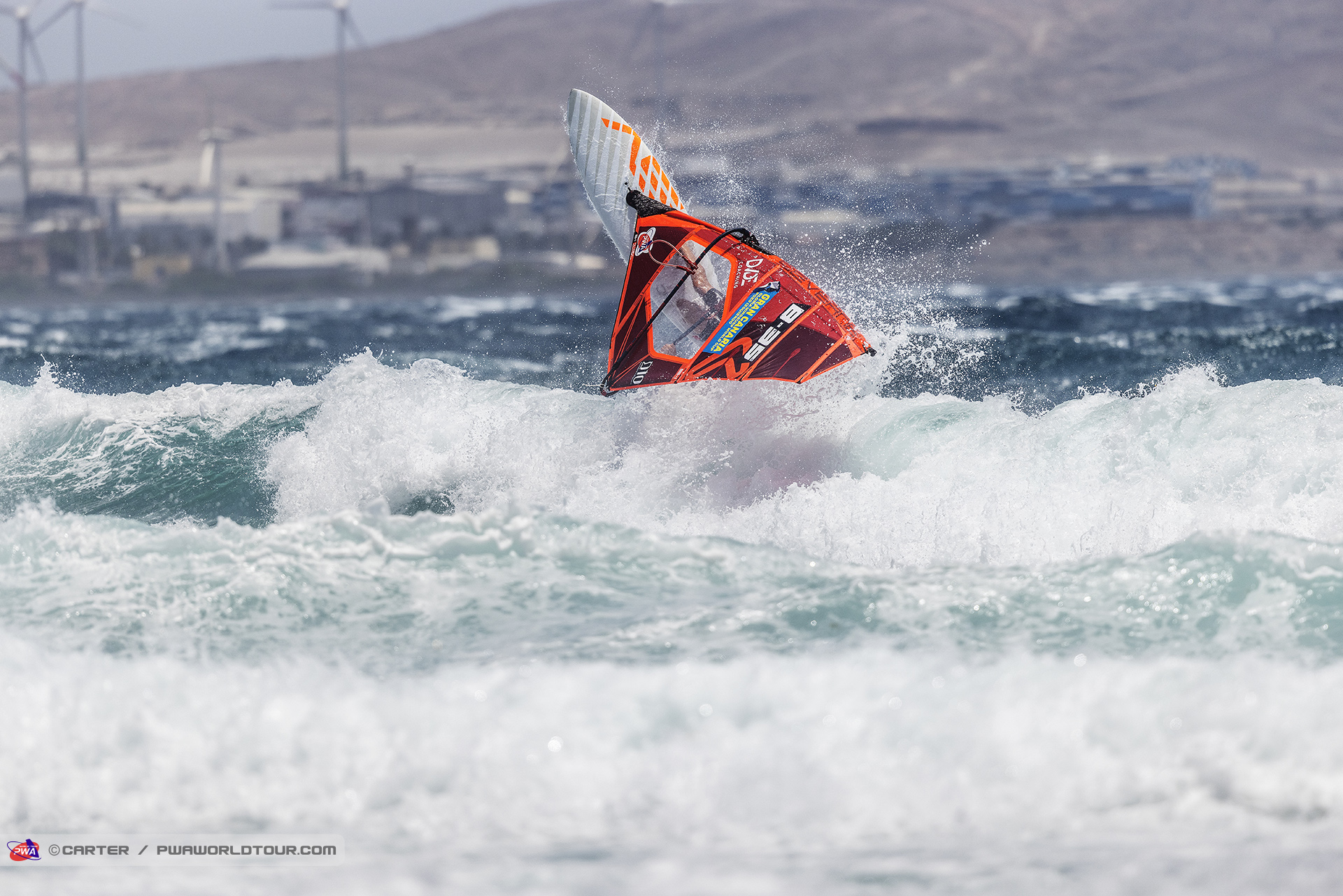
That’s a proper 360…not the spinny ones. Spinny ones can work in strong wind because the wind pushes you back in, but then when you go to other places, you’ll struggle because there the wave needs to push you.
It’s the same with back loops. I always tell people…learn a good back loop from the beginning rather than a bad one you have to fix later.
-
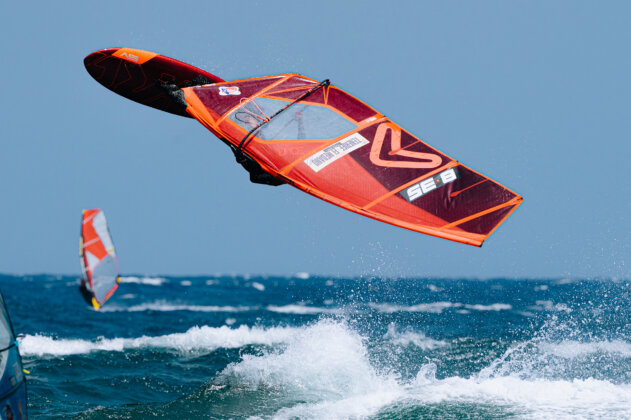
- Back loop time in Tenerife
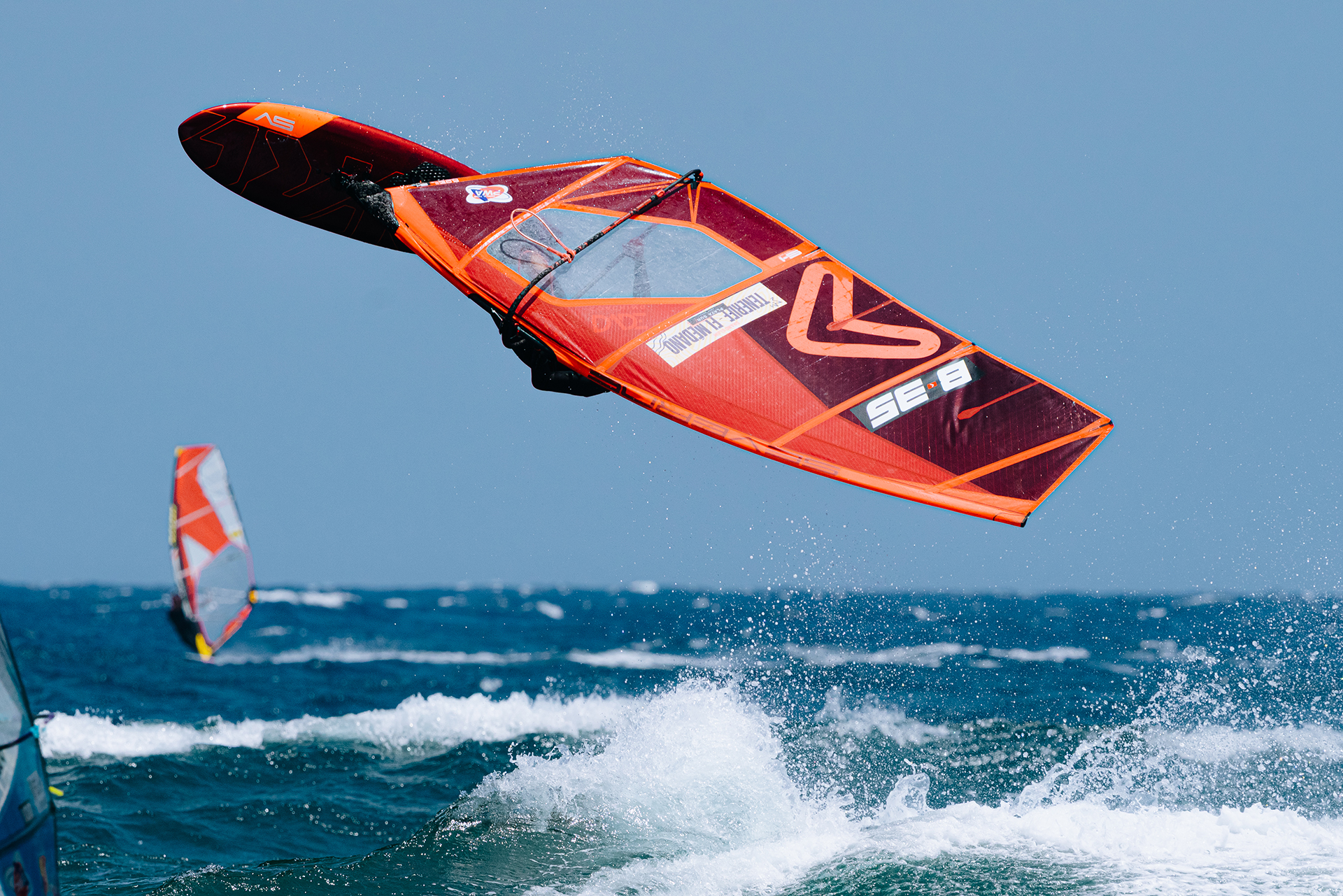
Some start with “doughnut” back loops, which are like little 360s in the air, but when I coach, I focus on getting a good take off…going high first and then rotating. It’s the same with 360s…it might take longer to land your first ones, but once you do, you’ll do them much better and much more consistently.”