SARAH HAUSER: STILL HERE
Two injuries. Two years. Still fighting.
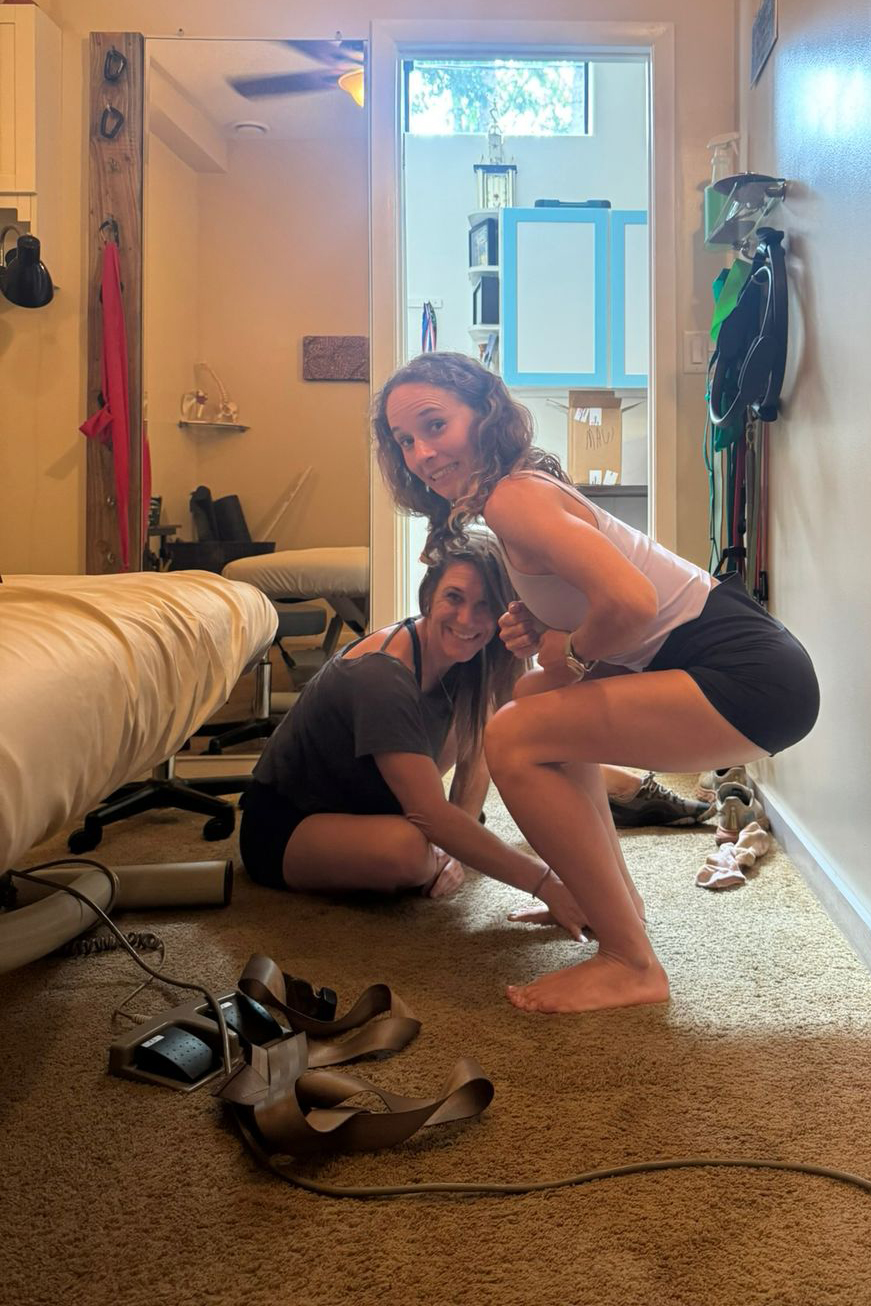
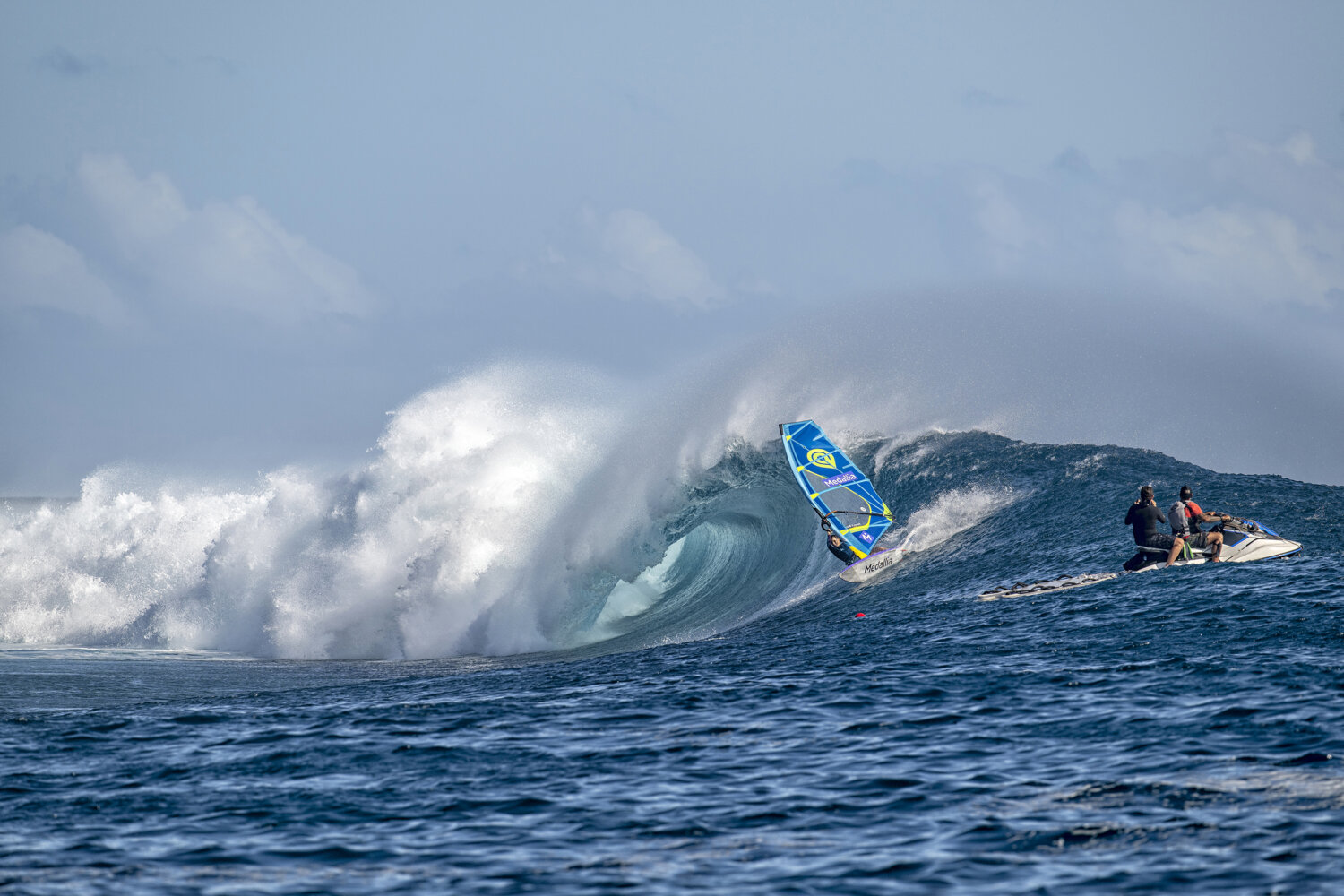
What started as an ankle problem around the 2024 Aloha Classic turned into surgery, a stress fracture, months on crutches and one of the toughest periods of Sarah Hauser’s career. With no definite comeback date and her world gradually shrinking, Sarah had to find new ways to stay positive, keep moving and simply get through each day.
Now, finally, there are signs of progress. The road back to the water is still long, but Sarah is still here and the dream of returning stronger is very much alive.
Photos: Fish Bowl Diaries and Courtesy of Sarah Hauser
-
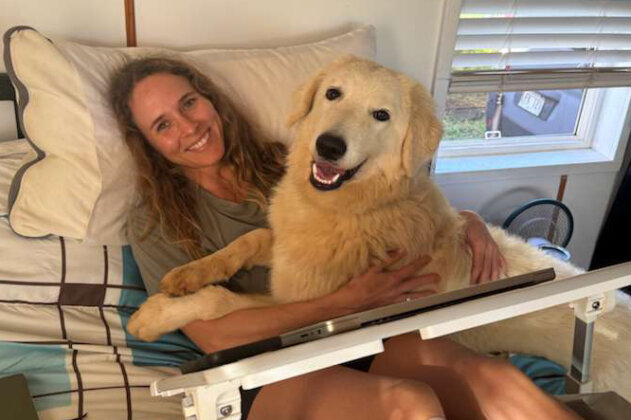
- Sarah and Caia
WINDSURF: Tell us about when you first found out you were injured. What was the initial problem?
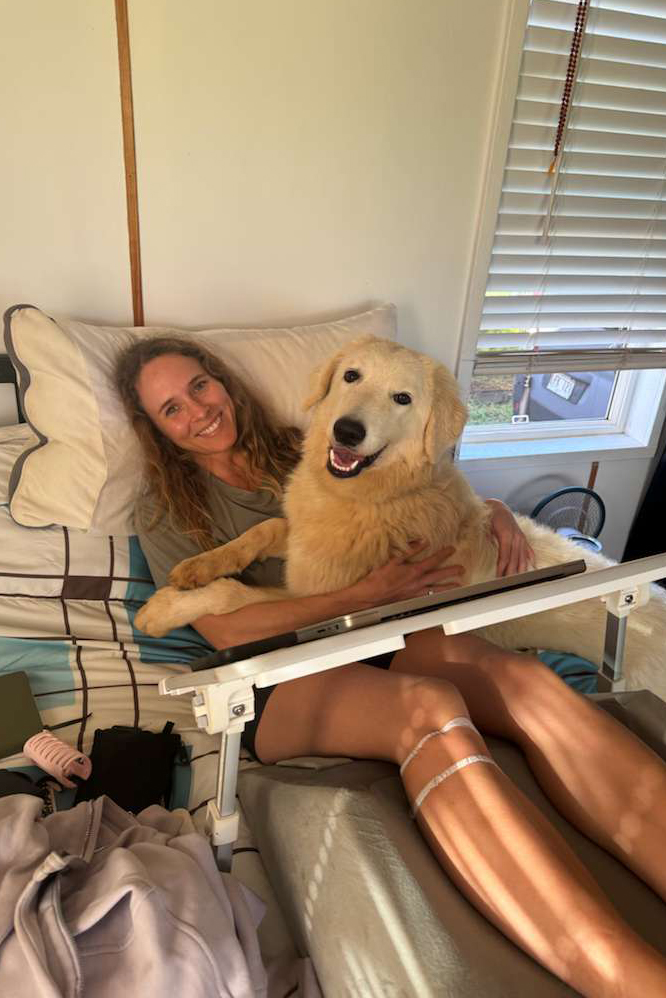
SARAH HAUSER: I actually had two injuries. The first one came on very progressively. I started feeling pain in my ankle around the 2024 Aloha Classic, and it got worse over time. I tried to manage it with physical therapy, peptides, a cortisone injection and a lot of rest. But after eight months of trying, with things not getting better and actually getting worse, I had to get surgery to remove bone spurs.
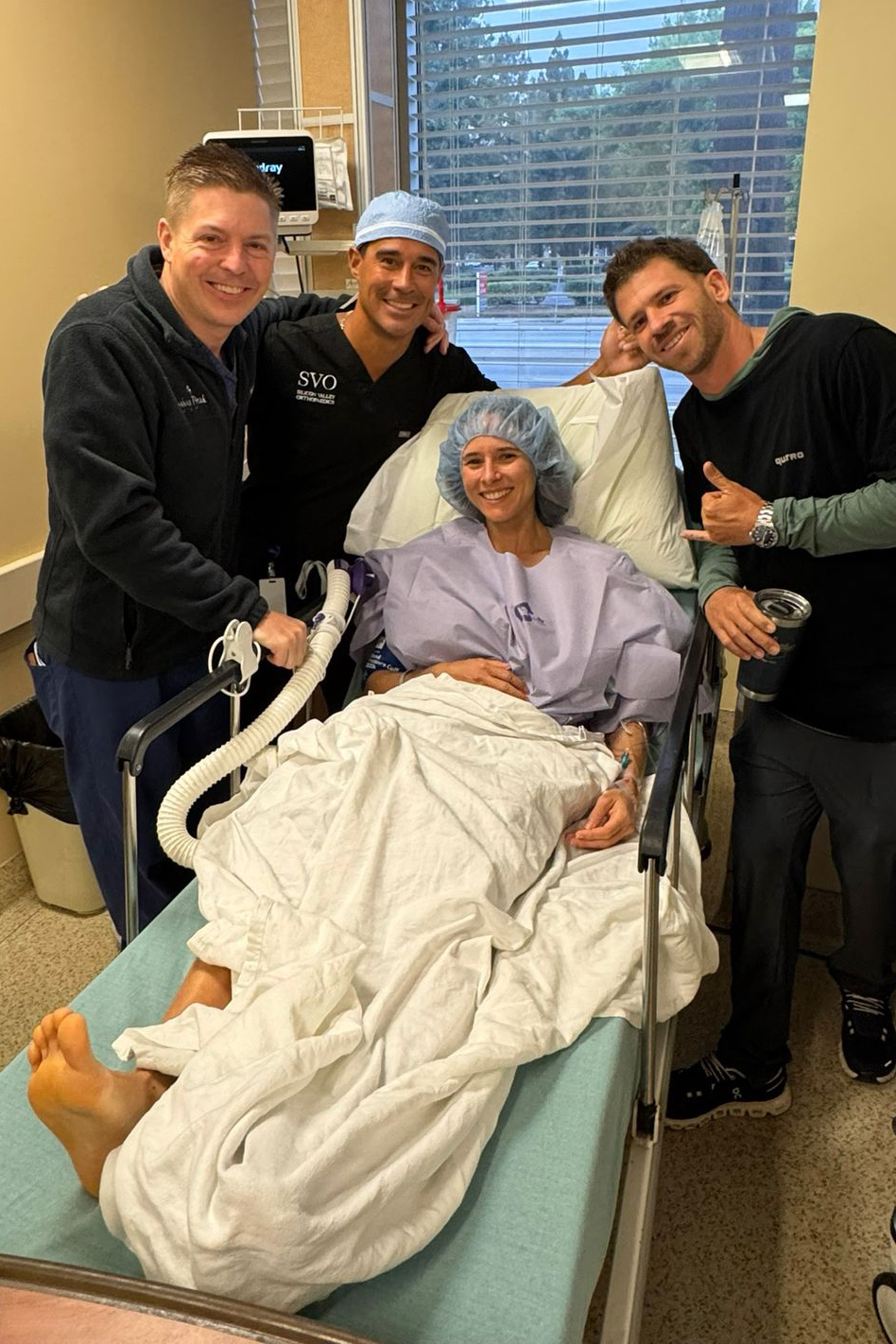
Bone spurs are a reaction to overuse. Just like muscles, bones grow to adapt to the demand. Because I have a lot of mobility in my ankle, I was hitting those spurs at the end range of my movement, so removing them seemed like the best thing to try. I had surgery in July 2025 and progressed to the point where I was able to go wing-foiling twice.
And then I got injured again. That time, too, it wasn’t one single moment of realization, although there was a sudden change: I went from being okay to not being able to put weight on my foot the next day. The second injury was a stress fracture, also called bone marrow edema, on several bones in my foot, but mainly my calcaneus, the heel bone.
The pain came on suddenly, but the diagnosis came slowly. When you have pain five months after surgery, you don’t rush to get an MRI. But when things weren’t getting better after two or three weeks, I got the MRI and the confirmation that something bad had happened.
Even then, it took time to get information to understand what had caused this and what the future would look like, which was a very long and slow recovery.
-
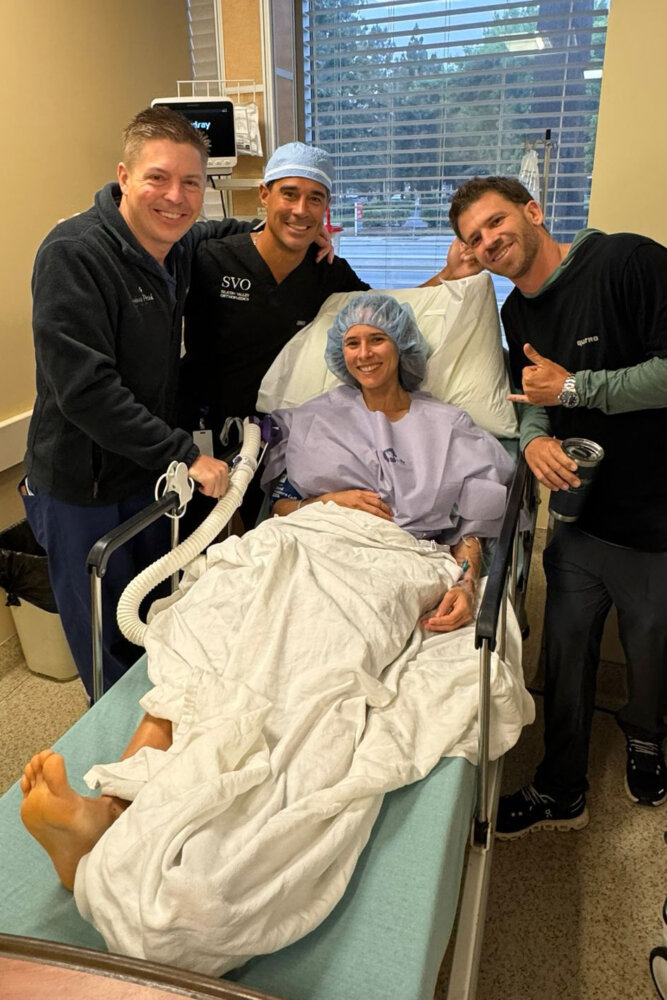
- Difficult decisions to make
WINDSURF: Did you have any idea how long you were going to be out of action?
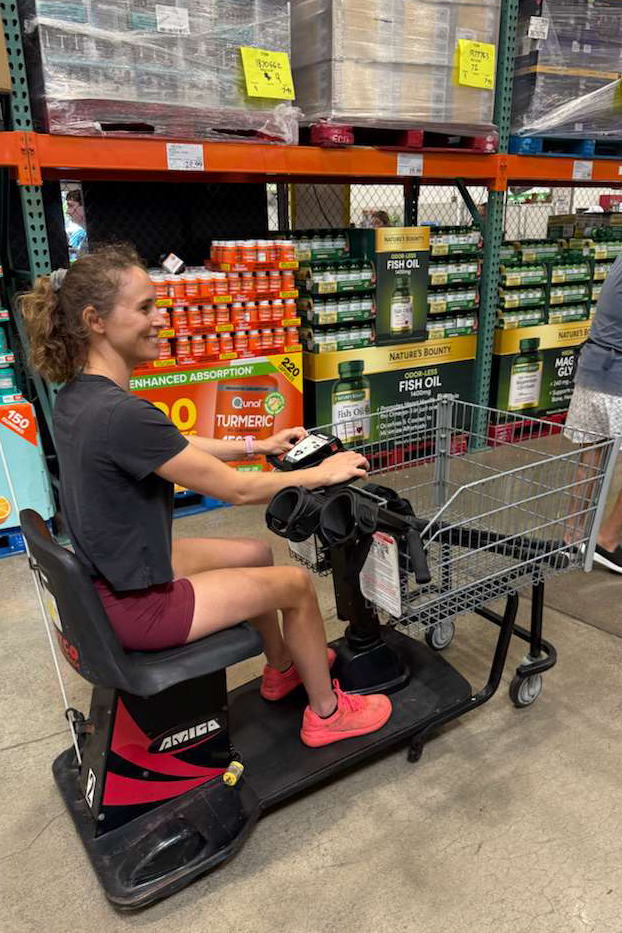
SARAH HAUSER: No, I didn’t, and that was one of the hardest parts of this injury: not having a timeline. I remember at some point wishing I had an ACL tear. As much as that’s almost a death sentence for an athlete, everyone knows it’s a nine-month recovery after surgery plus a lot of management afterwards. At least it’s a well-known procedure with a clear recovery timeline. As hard as that sounds, I would rather have had something hard with a plan than what I was faced with, which was total uncertainty. That was especially true during the first injury, when months and months went by and things kept getting worse. I was grabbing onto whatever I could to stay positive. Not being able to windsurf, I tried to be satisfied with lighter water sports like foiling and surfing. Then that became too much, so I focused on gardening. Then that became too much, so I tried to accept my fate and be patient. But then even going to the grocery store was too much. It felt like things were being taken away from my life bit by bit, with no end in sight and no explanation.
So when the decision to have surgery came, it was a relief. Even though it meant a huge reset and starting from scratch, at least there was a plan. For the second injury, the stress fracture, there was a bit more of a plan, but not really, because I had now accumulated two injuries. It meant things were going to take extra-long. How much longer wasn’t certain, but it was definitely going to be slow and long. One to two years is what I was told, and that was on top of the year I’d already been dealing with the first injury.
-
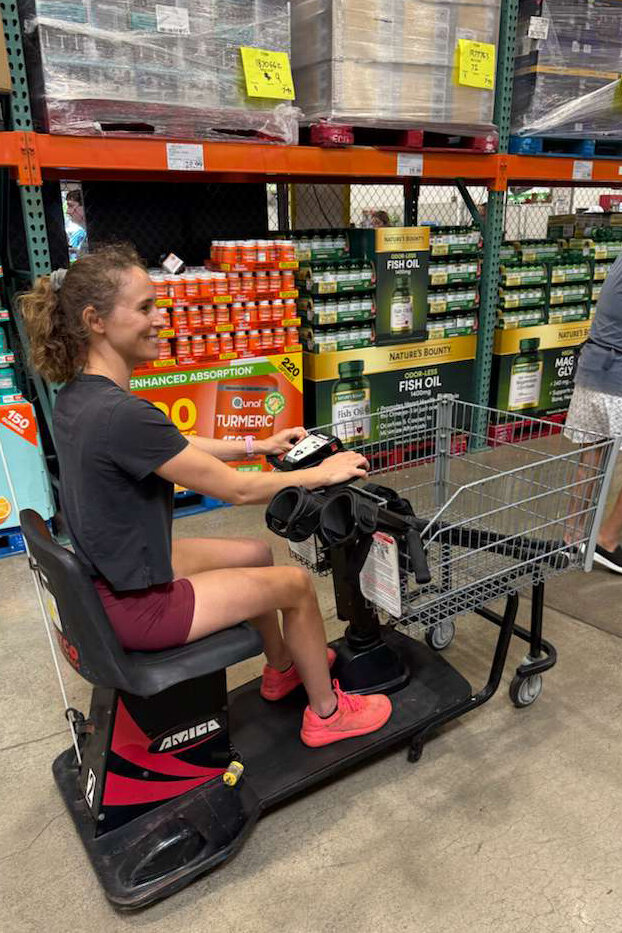
- Supermarket time
WINDSURF: How did you cope mentally when you knew you were going to be off the water for so long?
SARAH HAUSER: With the first injury, I was never given a duration, like “it will be eight months until you’re back on the water.” Instead, I was going month by month, hoping something would unlock and move the needle, so I’d start to see progress. I had no timeline to hold on to. Over time, as nothing was happening, I started to lose hope and feel really lost.
One thing that turned out to be key in helping me cope was completely unexpected. A big injury is a given at some point when you do what we do. If you had asked me to imagine how I’d get through my first one, I would have said with the tools of a professional athlete: working with coaches and setting goals. But I was so lost and unable to make plans that what ended up helping me was a dog.
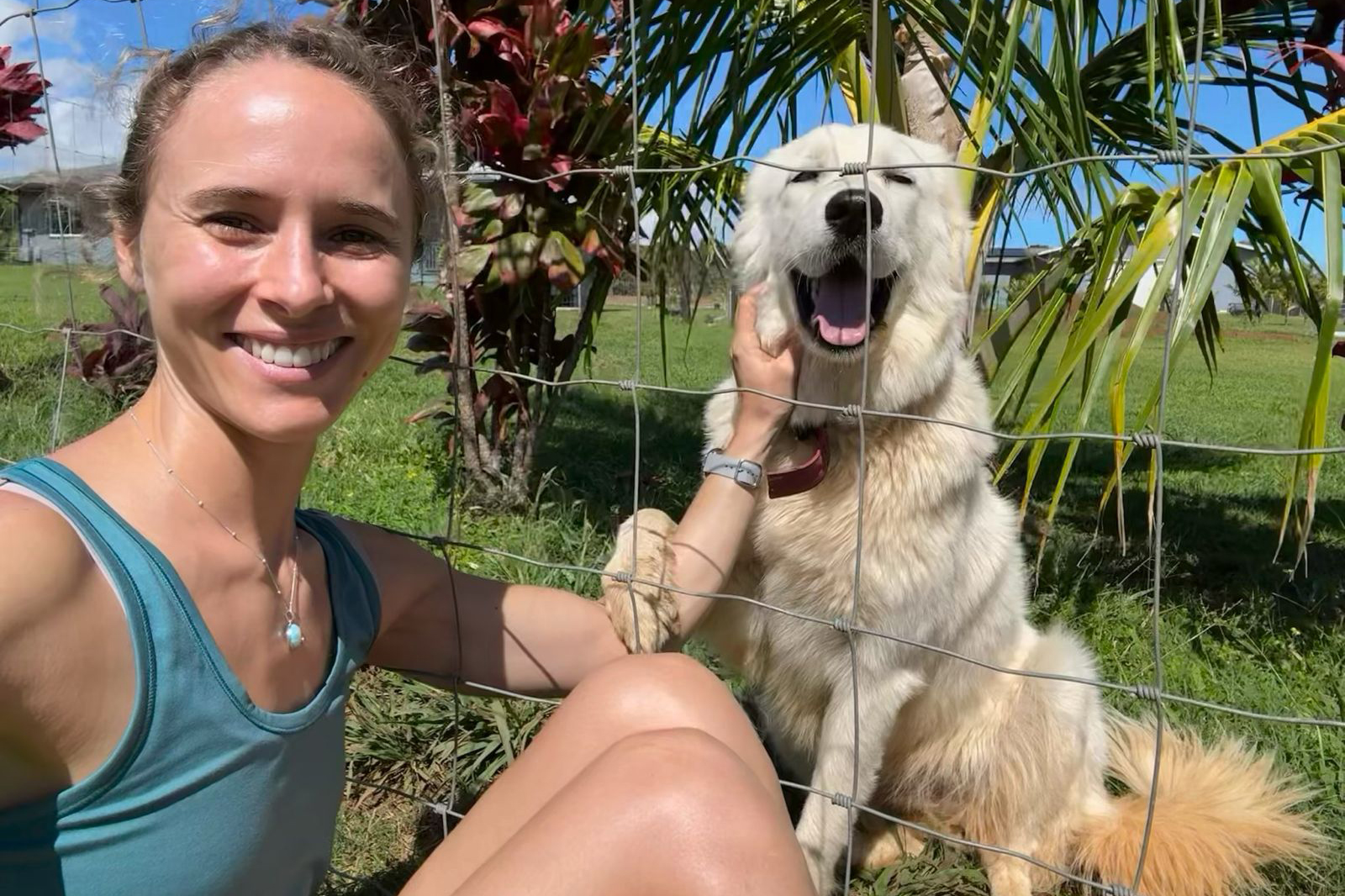
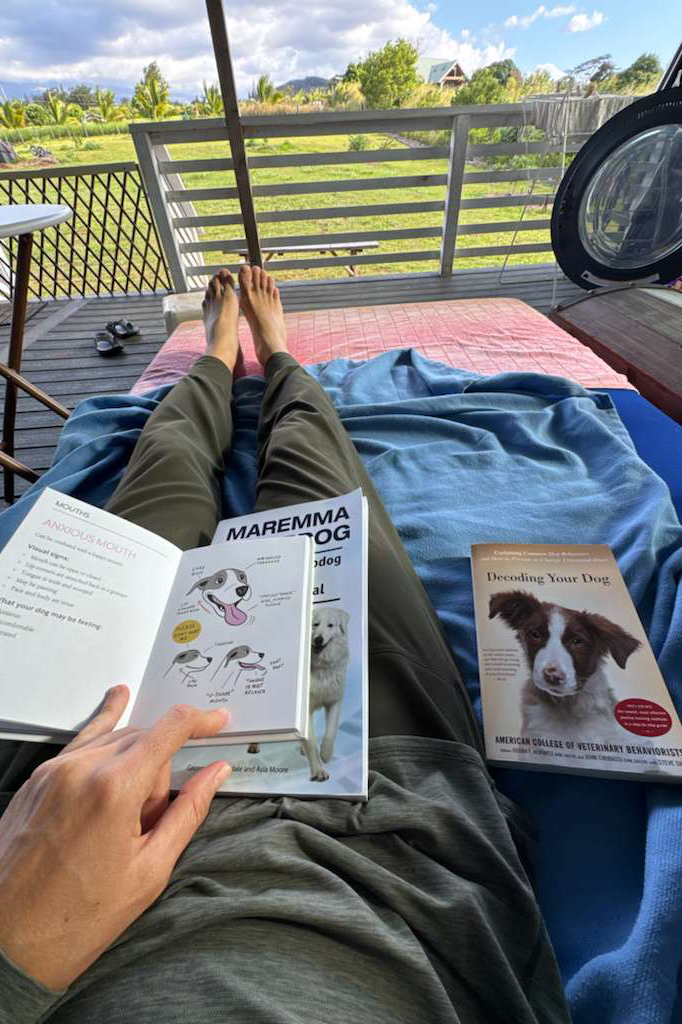
I would test my foot regularly by walking up and down my street to see how long I could last before the pain came. It was usually about 20 minutes, and that was depressing every time. But I befriended a neighbour’s dog, and that led my husband Casey and me to get our first dog, Caia. The whole anticipation phase, getting ready, reading about positive reinforcement training and diving into the science of behaviour gave me something to put my mind into that had nothing to do with the struggles I was facing. That really helped.
-
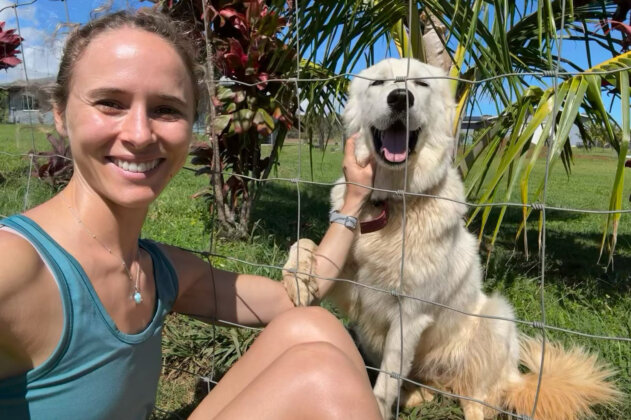
- A new best friend
WINDSURF: How did the injury pan out?
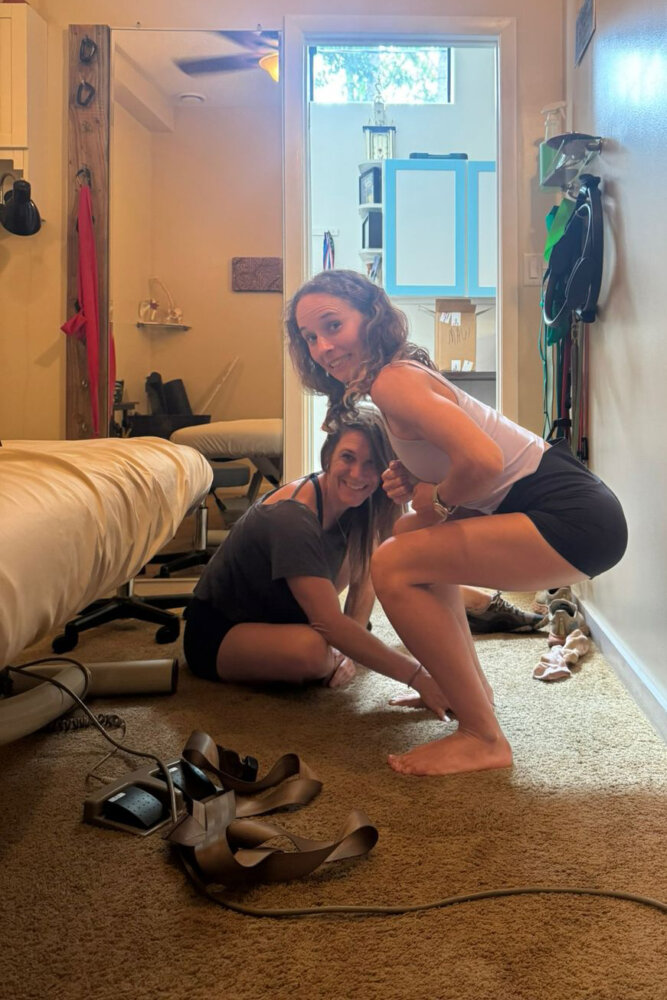
SARAH HAUSER: After the surgery, everything was great. It all went according to plan. I spent a month in a boot, and after that I was making great progress each week, doing something new: walking a little more, squatting a little lower, picking up weights, hiking. The comeback from that surgery couldn’t have gone better, and I fully attribute that to the amazing team I had assembled: my physical therapist, Mackenzie Brown, my coach at Deep to Peak, Sam Campbell, my surgeon, Dr. Josh, and Dr. Masi, who gave me a PRP injection (which is a treat here in the US).
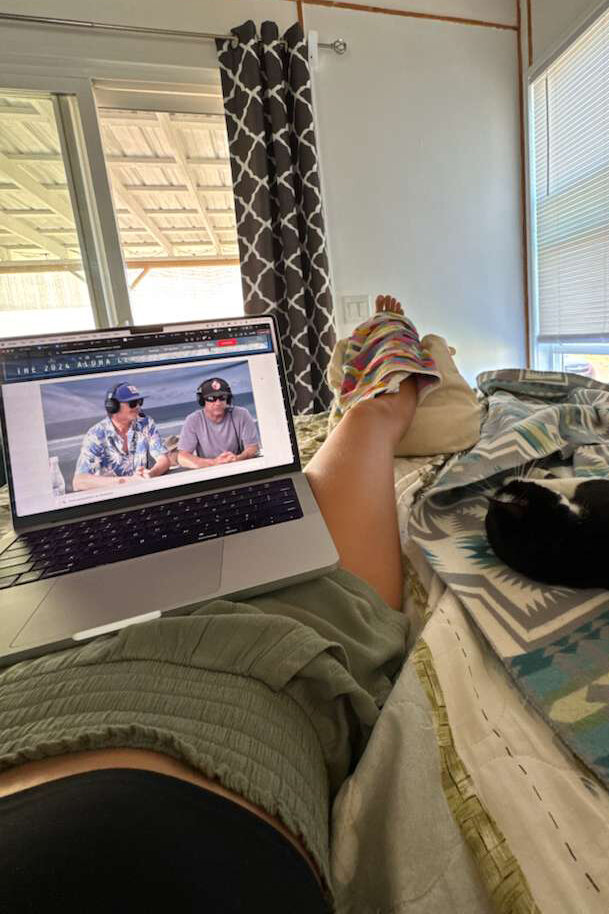
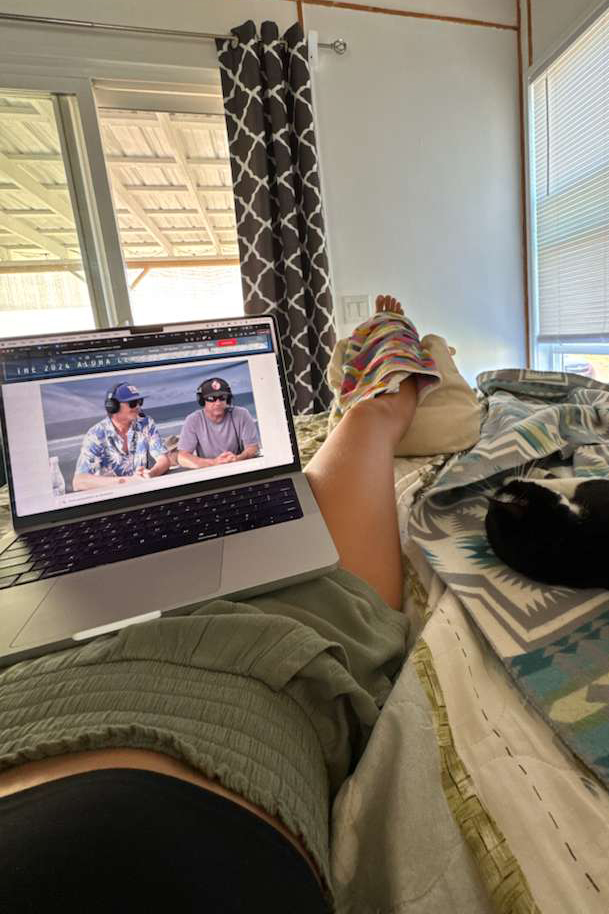
The stress fracture was much more difficult. I was on crutches for over two months. When I got off them, I progressed a little too fast and had to go back on them for another month. My foot was dictating what I could do. I had to not only listen to pain signals, but also try to anticipate accumulated load that would show up as pain a week or two later. It was so difficult because at the time we were living in our tiny house during the rainiest winter on Maui.
Our water heater broke, there was mud everywhere, and somehow I was still teaching fitness classes on crutches and knee pads. Every outing was a mission. It was an incredibly hard time.
-
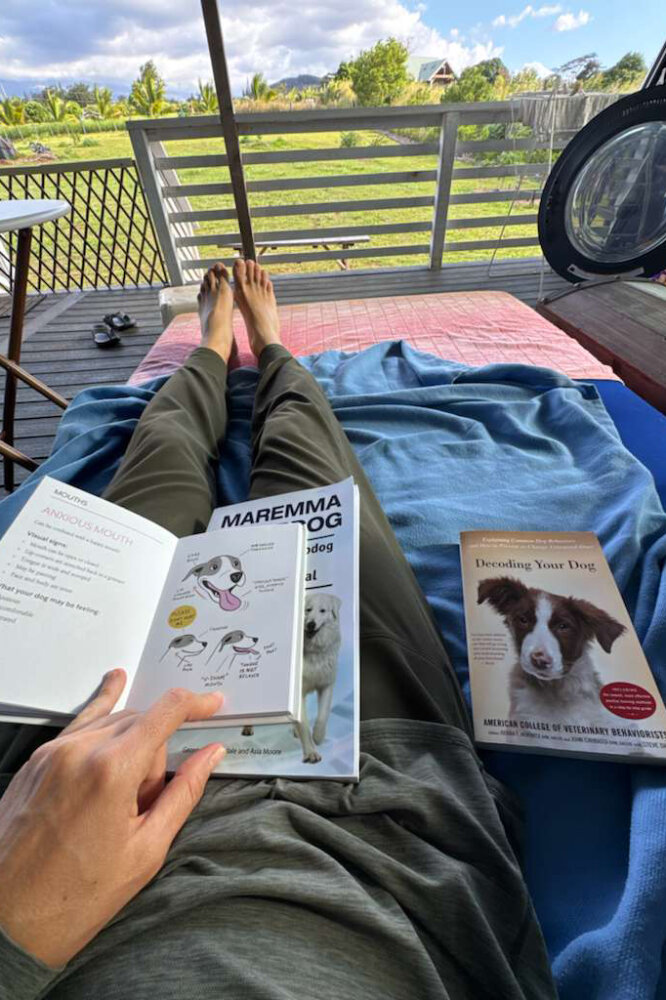
- Time to focus on other projects
One of the best decisions I made came after listening to a podcast about stress fractures. The expert being interviewed, Stephanie Mundt, is a physical therapist and coach who specializes in helping professional runners heal from stress fractures. She was based on the mainland, so I reached out and was able to hire her remotely. She’s been by my side this whole time, helping me not go crazy obsessing over step counts, deal with very limited capacity on my feet, navigate daily life, and still find ways to maintain function in my body. She’s been a saviour, that’s for sure.
So the timeline was: a sudden change in pain, a month to see if it got better, finally an MRI showing the stress fracture, over two months on crutches, a month off them, another month back on, and finally off crutches since June 2026. Even then, I could only stand and walk for a few moments at a time, not even long enough to make a sandwich. But I’ve been increasing that bit by bit and became more autonomous over the summer, no longer having to ask for help with every single thing. Lately, I’ve been able to get on a paddleboard on flat water for 15 minutes. It still makes my foot pretty tired, but I can tell it’s also making it stronger. It’s always about finding that balance.
-
- Rehab time
WINDSURF: What have you been doing in the meantime while you have been off the water?
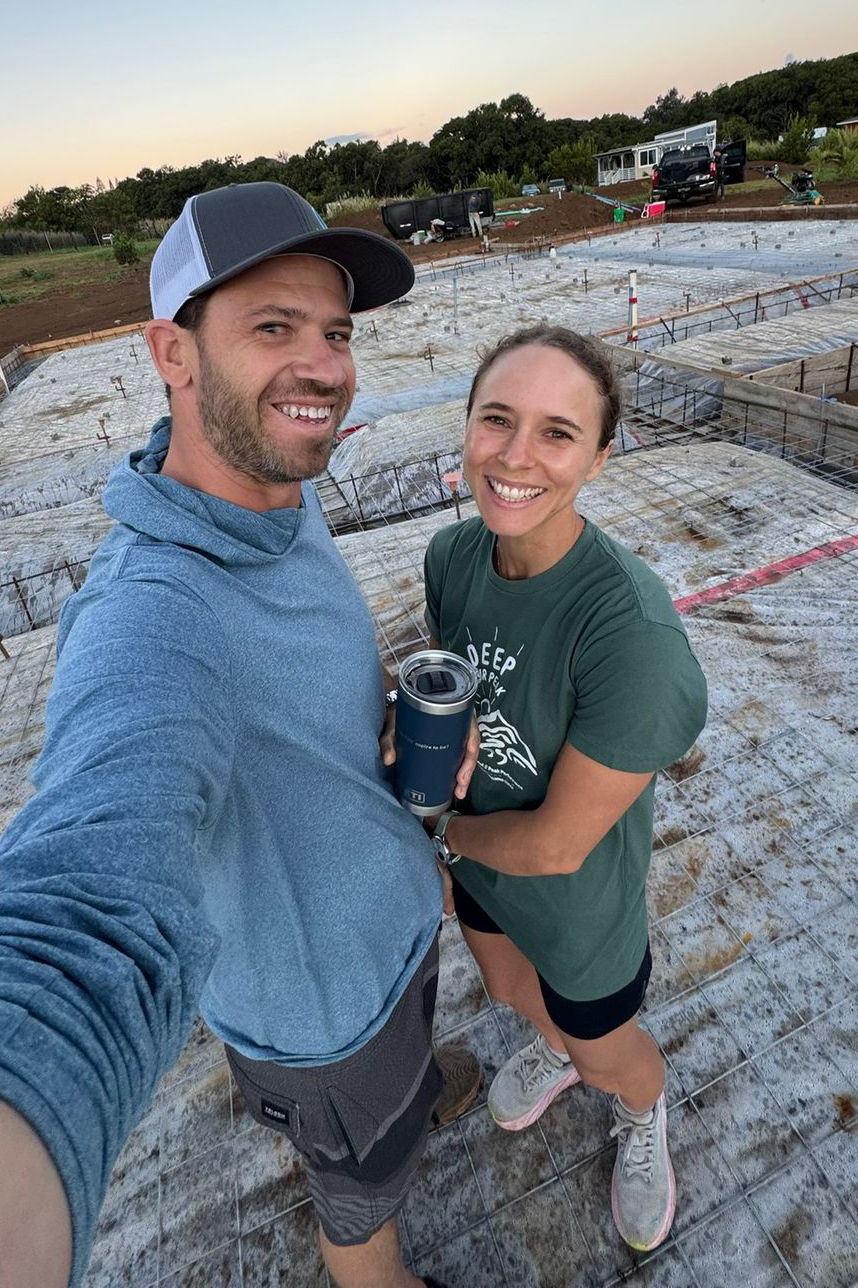
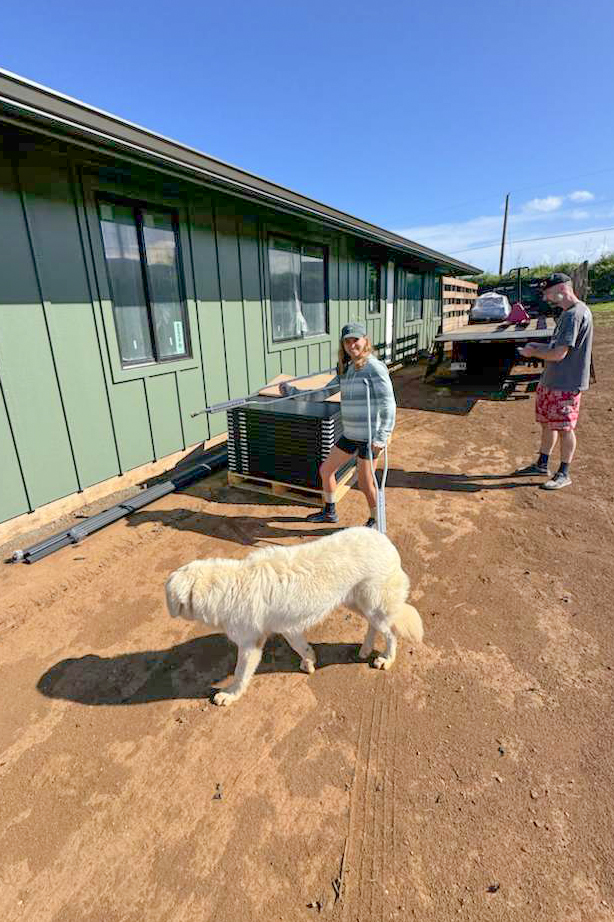
SARAH HAUSER: I learned what it’s like to bond with a dog, which is a little frustrating when you can’t walk, but still manageable! And I led the charge on building our house. Casey and I own a piece of property on Maui, and for a while we were living in a tiny house, but we’d been making plans to build our home and had started putting things in motion. Around the time I first got injured, I also lost my main sponsor, Medallia. It wasn’t because of the injury; they let go of all their athletes as part of a change in vision. But it meant I had more time on my hands, so I decided to take on managing everything related to the construction. I didn’t build it with my own hands, but there were so many decisions to make, things to coordinate and research, permits, lots to do. It’s a huge privilege and a ton of work, and I’m so proud I was able to work with an amazing team and make it happen. We now have our home, where we both live and work. That’s something I sometimes forget.
I look back at the last two years and think I’ve been injured and unable to do anything, but then Casey reminds me to look at the roof over our heads and what we’ve accomplished. So yeah, I guess I kept busy! We also finalized Life on Waves, the sequel to Girl on Wave. I went to Phoenix to record voiceovers in 2025, and we premiered it at the Maui Arts & Cultural Center in April 2026. We’re now working out the details for distribution. It was a great night, sharing some really cool footage and the story behind Casey’s leukemia and how it impacted me as an athlete.
-
- Sarah and Casey
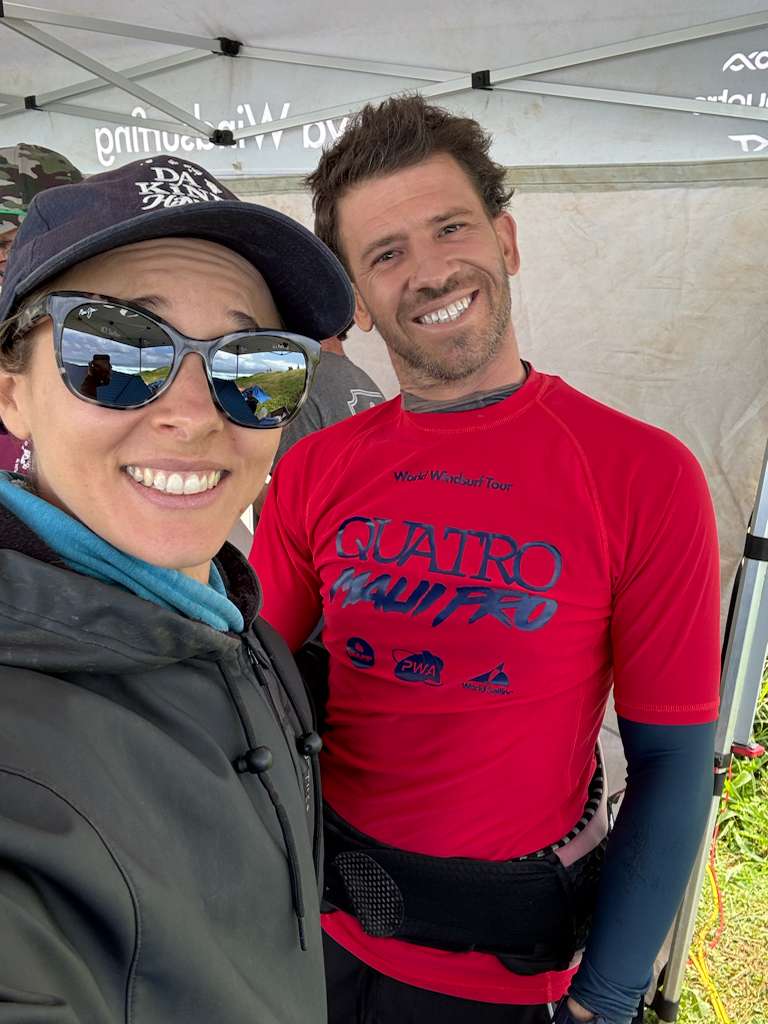
WINDSURF: What did it feel like when the competitions were on in Maui and you were unable to compete?
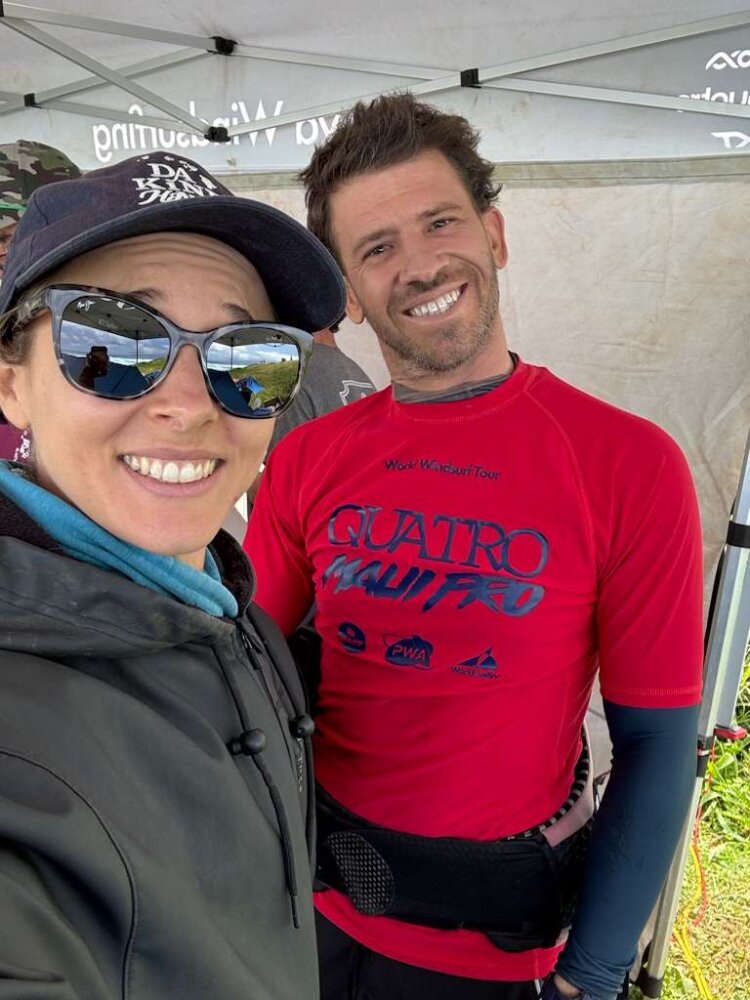
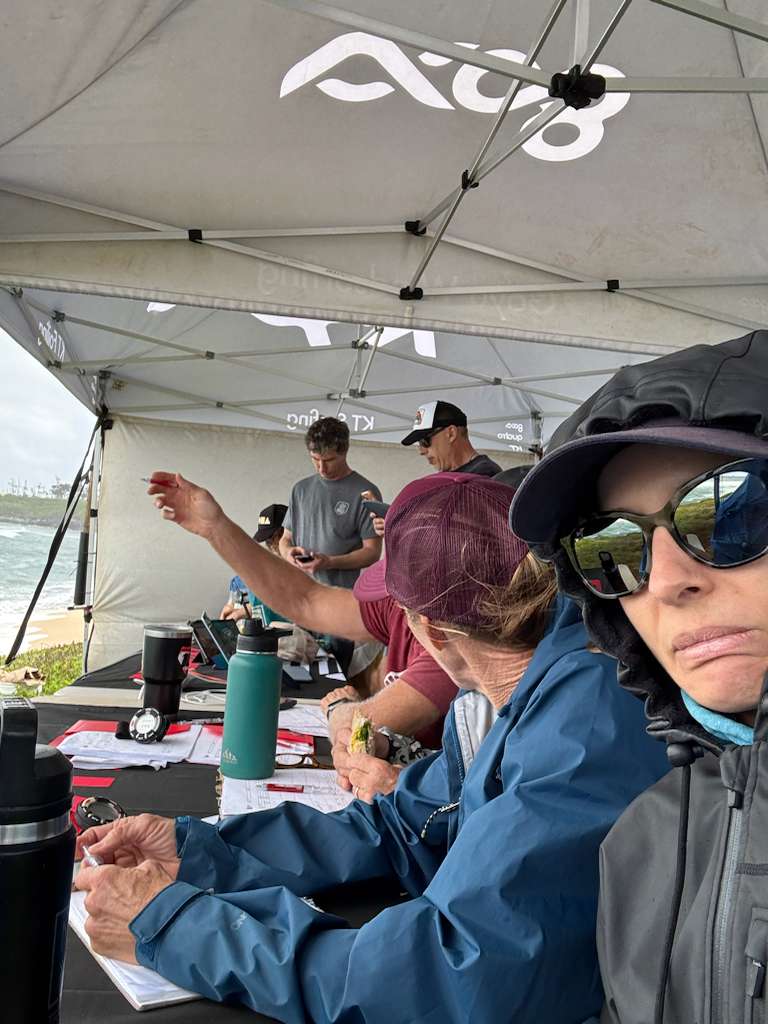
SARAH HAUSER: That was hard. I wasn’t completely removed from it all. I tried to help out a little with judging and volunteering here and there, but I also needed to keep my distance a bit, because I wanted to be part of it so much. It was just another reminder of what had been taken away, how long it had been and how many Aloha Classics I’d missed. The timing was frustrating too. I was injured the year there was a spring Aloha Classic and the Quatro Maui Pro in 2026, which was a five-star event. Those would have been really good opportunities for me to go for a world title or a podium, and you never know if events will be able to continue. So yes, I was definitely gutted. But I don’t think I let it take over my head either. I knew it would be hard, and I put some boundaries in place to protect myself a little.
-
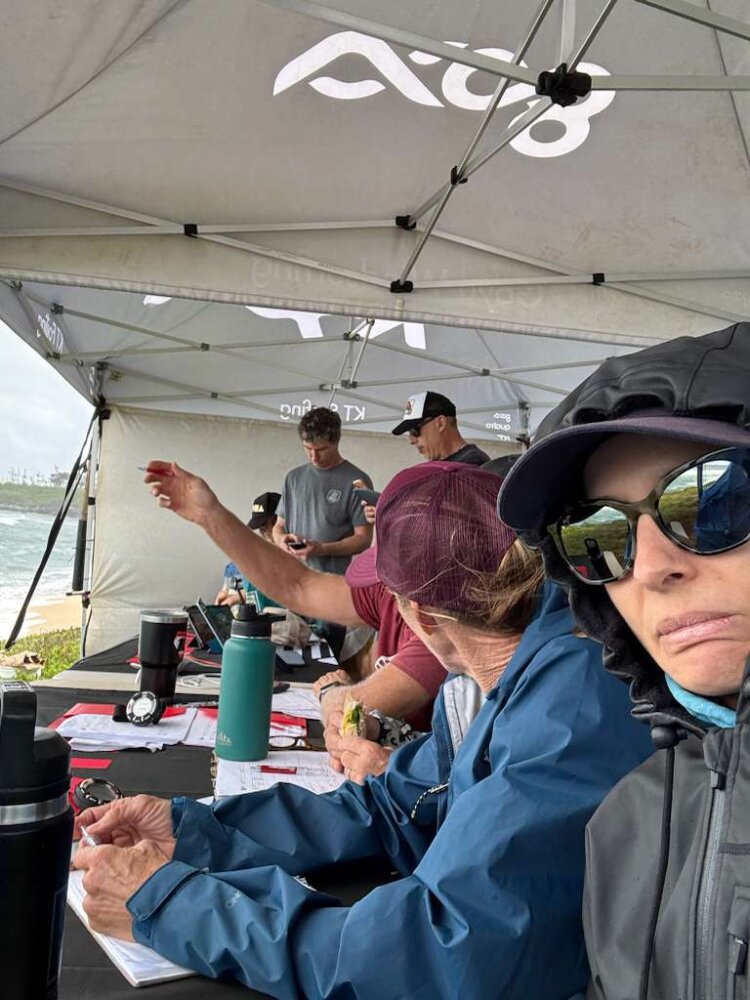
- Judging in Maui…it looks like Sarah would rather be on the water!
WINDSURF: How is the injury now, and is there a light at the end of the tunnel?
SARAH HAUSER: I’m still having to watch my step count, and I’m in this weird situation where, to caricature it, I can walk one minute five times, but I can’t walk five minutes. Those numbers aren’t exact, but the principle is. I need a lot of breaks because I’ve lost all the muscle around my right ankle. But I’m definitely stronger this fall than I was at the start of the summer, when I couldn’t stand long enough to make myself a meal. I’ve now made several meals, and sometimes I can even help with the cleaning afterwards. And I swear, I try hard, ha-ha! I’m finally able to walk from my car to the water so I can swim. I used fins for the first time this morning. I’ve been on the paddle board four times in the harbour, and I’m looking forward to trying rougher water.
-
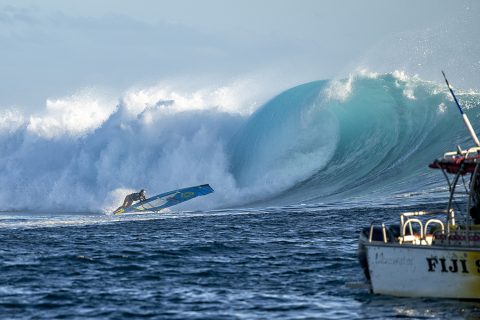
- Light at the end of the tunnel for Sarah Hauser
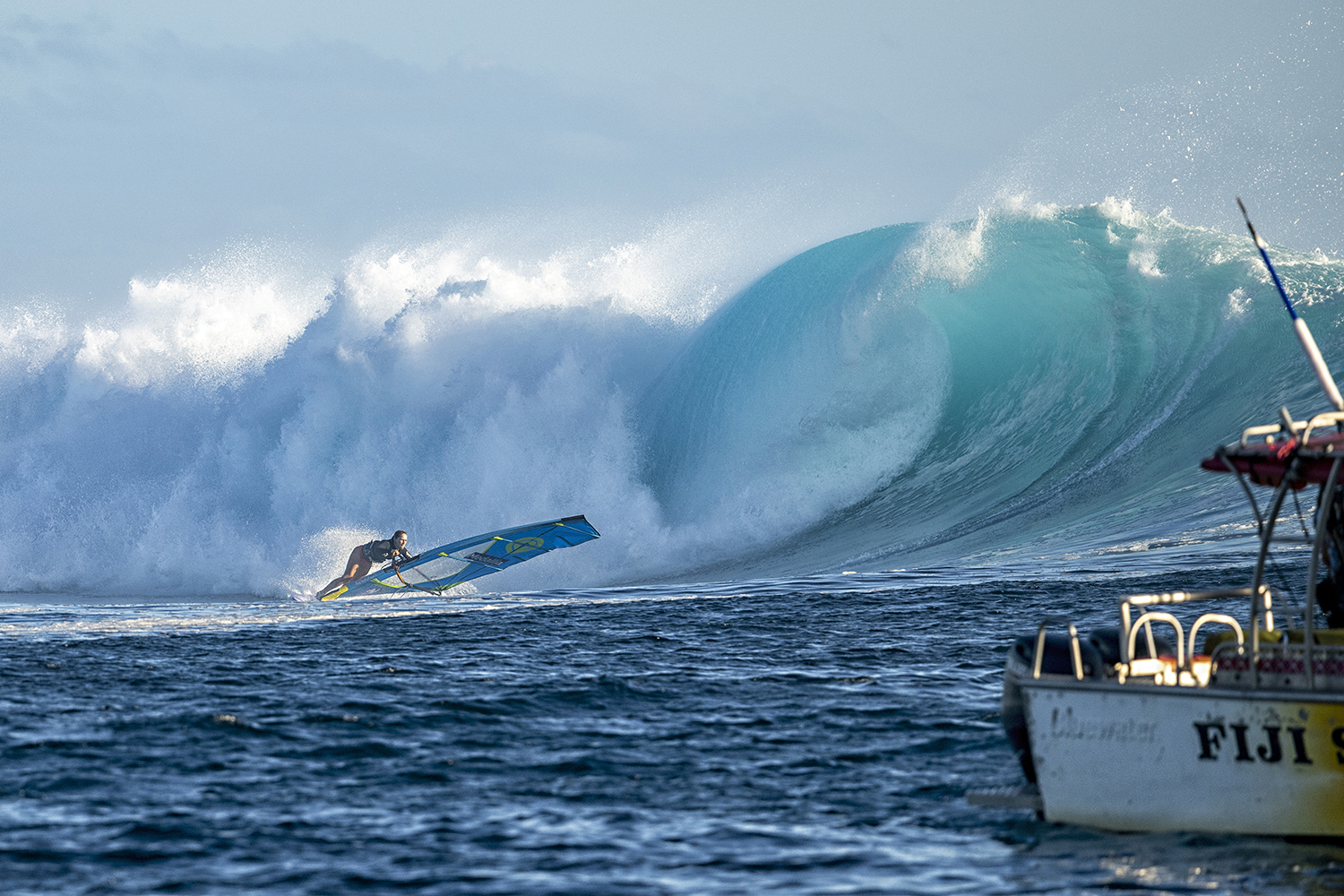
So, there is hope. There is a light at the end of the tunnel. I think 2026 is still going to be about regaining basic function for normal life, and 2027 will be about reconquering water sports. Some people on my recovery team have planted the seed that things might never be quite the same again. My objective brain, my personal trainer brain, can understand that, but the dreamer in me wants to believe my best athletic days are still ahead of me. The thing is, my first injury was caused by overuse, but my second was most likely caused by under-fuelling. I hadn’t realized it, but over the years I hadn’t done the best job of fuelling myself adequately. I think I underestimated how much energy my lifestyle demanded. I’d adapted to living fast, dealing with the impracticalities of cooking in a tiny house and trying not to spend too much money on Maui, so I’d end up not eating enough.
In 2025, with the injury and the stress of building the house, I lost a lot of weight. We’ll never know for sure, but it seems that’s what caused the stress fracture: my body didn’t have the fuel it needed to heal, so it treated my bones as a luxury. They lost density, and the fracture happened. This pattern of not eating enough is much more common among female athletes than people think, and it has nothing to do with the way you look.
When I look back at the last ten years or more of living this life, I can see I’ve made a lot of mistakes without realizing it. So part of me thinks that if I do things right in the future, there could be a next chapter where things aren’t just back to normal, but even better.
-
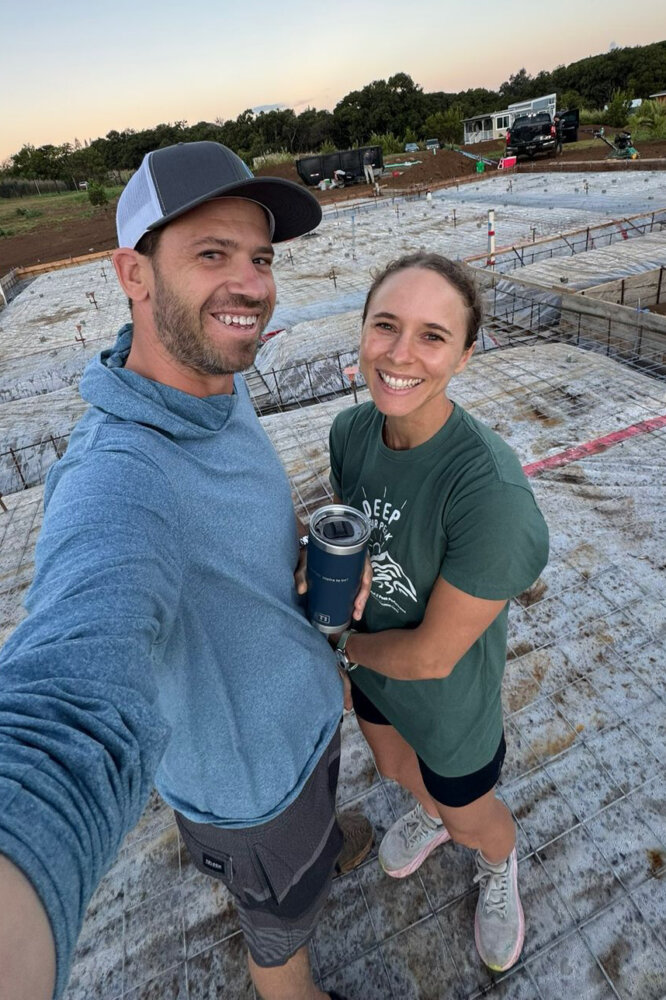
- Always busy with projects
WINDSURF: When do you hope to be back on the water?
SARAH HAUSER: I can’t say for sure. As I mentioned, 2026 is about regaining basic function, and 2027 will hopefully be about getting back into water sports, but my foot will set the pace.
-
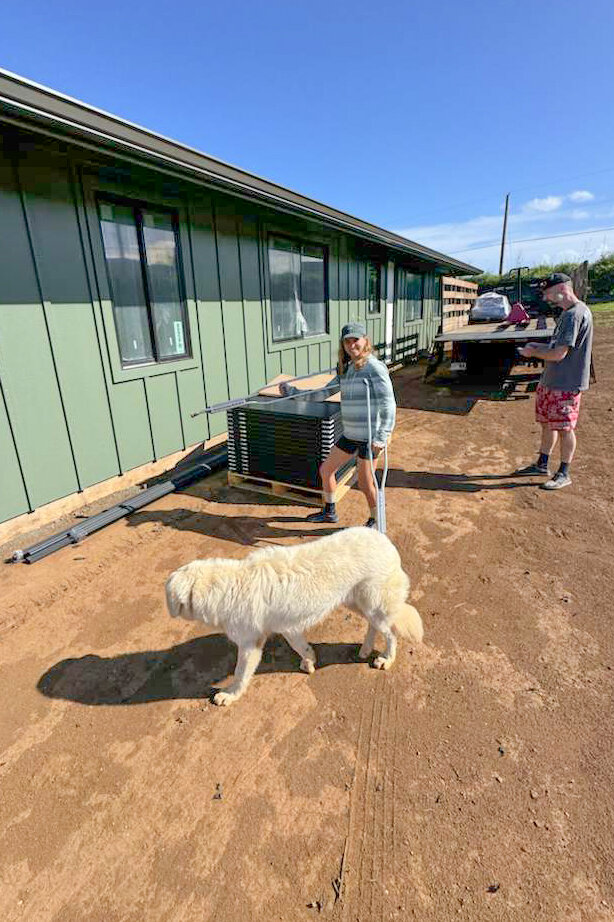
- Working in the house in Maui
WINDSURF: We saw you have some new Goya sails delivered. Are you excited to get those on the water?
SARAH HAUSER: There’s so much gear I’m excited about! Obviously the windsurf gear: the new sails, and the changes in the boards I’ve heard the whole Quatro team talk about, since I still see those guys a lot. Keith Teboul comes to my workout classes, I see Brawzinho and Casey, and we talk about the boards. I also hear Casey and Keith talking about the development of the foils, the downwind boards and parawing.
There are so many toys, and they keep evolving so fast. And honestly, I’m kind of excited to let them spend time getting to know all the new equipment first, so that by the time I get back out there, they can recommend the best sizes and models for me!
On September 30th, I’m launching a new series called Still Here, where I share my injury journey: the ups and downs, the lessons, the things that still don’t make sense, the hard moments and the ones that surprised me. I’m really excited about it because it’s very raw and human, in a world with so much AI, trends and algorithms.
This series wasn’t planned from the start. I didn’t go through my injury thinking I’d film it all and have enough to share. In the thick of it, I couldn’t even deal with social media. So I had to dig through random photos I’d taken on my phone, or Casey had taken on his, to find some documentation. None of it was captured with the intention of sharing it. But later on, I felt the need to gather my thoughts and offer some camaraderie and lightness to people going through something that feels too long to handle. I made it with a French team. Adam Denis is my editor, and his brother, Hugo Denis, composed the music for each episode, for each emotion and each word, which I find really cool.
It was filmed by Amanda Beenen, a former pro windsurfer and a great friend of mine. The funding came from Bastien Siebman Holding, which invests in athletes and philanthropic projects. Bastien decided to invest in me in the middle of my injury, and it’s so rare as an athlete to find support when you’re at the bottom of a hole like this. I applaud his commitment to athletes, supporting my recovery, helping me come back to my strongest self and helping me create this series. Starting September 30th, and every Wednesday after that, you’ll find a short 5 to 10-minute episode on my YouTube channel about the different phases of these injuries and the stories behind them.
-
- Back to exercise