
UP YOUR FREESTYLE GAME WITH LENNART NEUBAUER
Fresh off his victory at the 2025 Sylt Freestyle World Cup, Lennart Neubauer sat down with us to share his top tips for taking your freestyle windsurfing to the next level. From planing early to nailing your first spock, flaka or sail duck, Lennart breaks down what really matters on the water…mindset, repetition and feel. So, if you want to improve your freestyle game take a look at these tips from Lennart!
Photos: PWA / John Carter…Inna Bru….Tom De Brendt.
-
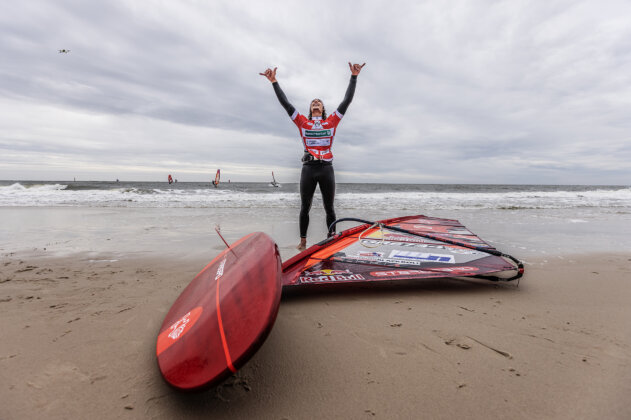
- Lennart wins in Sylt
GETTING PLANING
LN “OK, so I see a lot of people that kind of start or try to start planing in the straps, and then if it’s light, it doesn’t really work. So, it might sound obvious to somebody, but you want to start with both feet outside the straps.
I like to place my front foot very close to the mast base, with my big toe actually kissing the mast base sometimes. That gives you a lot of pressure towards the middle of the board, and that usually gets you planing. And then obviously you want to look at gusts…like you want to kind of time the wind gusts with a bit of light pumping of the backhand.
There’s no secret tip to getting in the straps and planing really quickly as soon as you leave the beach. You just got to do it so many times that you don’t really think about. I don’t think as I am leaving the beach, ‘Ok, I need to put my foot in the straps, hook in, and get planing as quick as possible’. It just all happens automatically. And to be honest, when I take off the beach, I am just think about the move and everything else is automatic. Getting in the straps and being ready to do a trick comes subconsciously. It’s just about doing it again and again and again.”
THE SPOCK
LN: “So, a tip that I got very early on…listen up…is that you want to imagine that you’re on train tracks. You want to go about half wind and then when you take off, you want to make sure that you’re very much over the board…like the centre of your body is over the centre of the board and you want to be straight upright. You don’t want to lean too much back or too much off balance when you take off. The take-off is the most important. As you take off, your hand straight away goes to grabbing the other side of the boom. Many people forget that and they just fall back.
So, once you get the board sliding, which can take some sessions for sure, you really want to focus on grabbing either the mast or the boom. Of course learn first the air jibe or Vulcan and then the more speed you get, the more natural the Spock is going to feel.”
THE FLAKA
LN: “Learning the Flaka took me ages. It’s a more technical trick for sure. For me, it’s all about depowering the sail because you want to go with some decent speed and then go so far downwind…almost like a carving 360. When you feel like you have no pressure on the sail, you want the sail to be dead, you throw it to the front towards the nose of the board, and it’s almost like a pivot in basketball. You kind of dive in the nose and then turn 180 degrees. Yeah, the flaka is more technical for sure.”
-
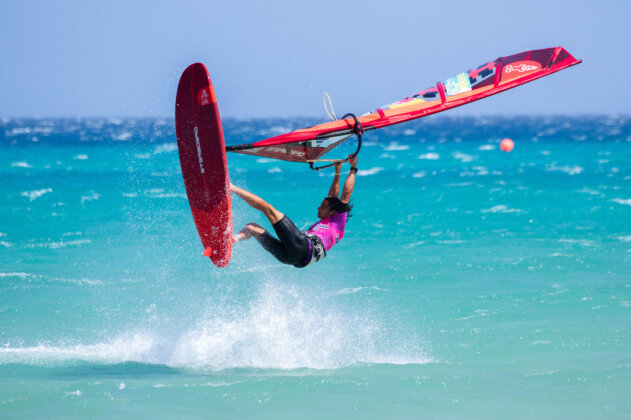
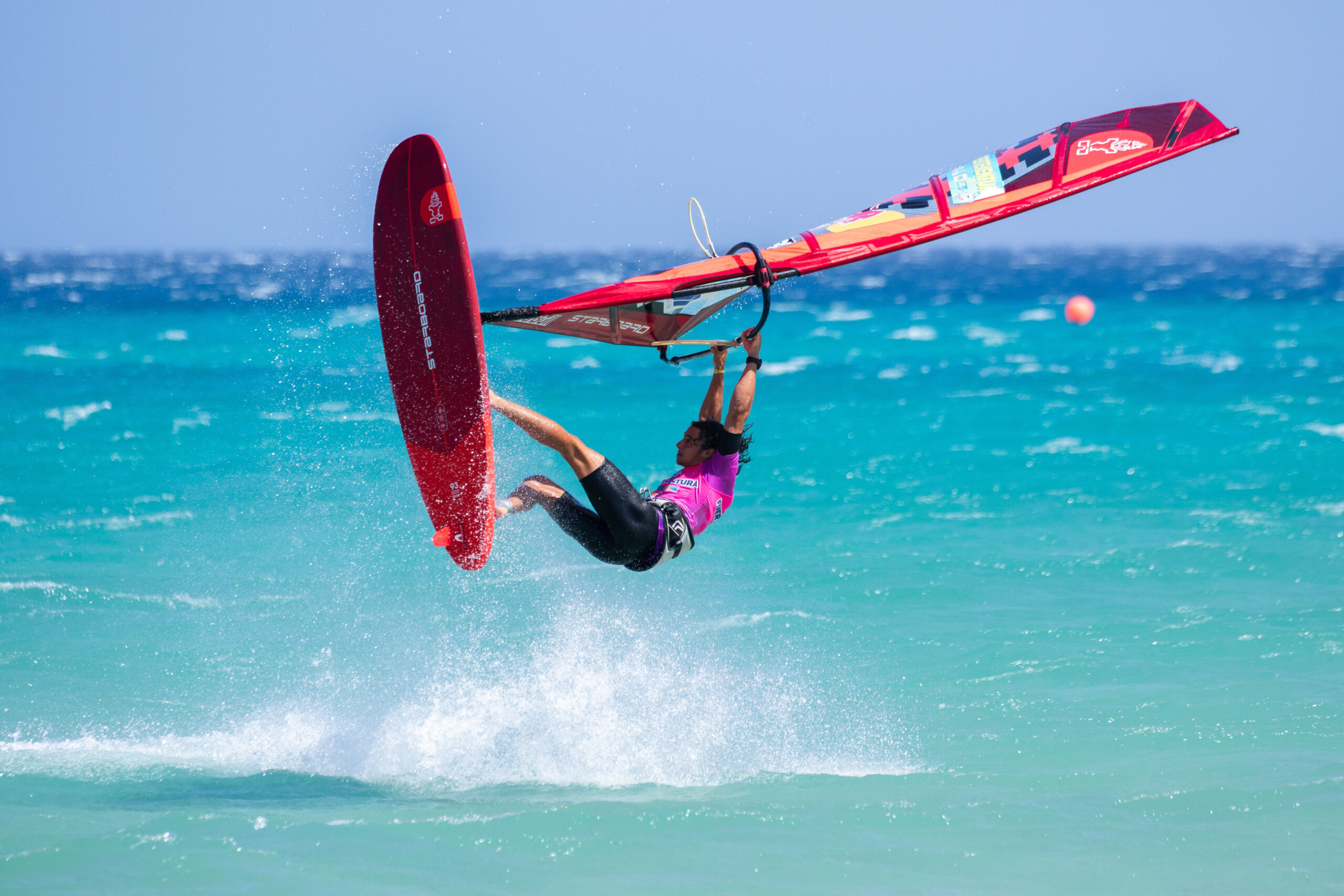
- Lennart in action
DUCKING THE SAIL
LN: “Most of the moves these days, you have to duck the sail. I would say just ducking without a trick is not too hard…manageable for sure in a couple of sessions. It’s just more difficult when you want to try a trick to keep the speed because you can duck and then easily lose the speed.
It’s exactly like a duck tack or something, and then it’s just all about going downwind, finding a spot that’s not too choppy…that helps a lot in the beginning…you don’t want the wind too gusty.
Then, yeah, just as you duck, you want to keep the body weight over the centre of the board, not to break by being too far in the back, for example. And then as soon as you duck and you feel like you have the sail in the hand, you want to take off. You don’t want to wait too long.”
MASTERING THE BASICS TO PROGRESS
LN: “Yes, yes, yes. I’m such an advocate because I see too many people learning a Spock and the next trick is Shaka or a Scopu. Even if you do land it, I’ve seen some people that cannot Spock but can Scopu, for example…then honestly their freestyling game is crap, because I think you need to have the whole range. Then it just gets you further and your style improves so much if you have many tricks in the bag.”
-
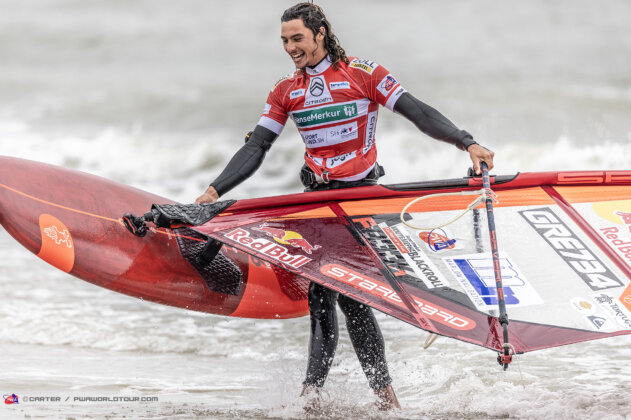
- Lennart heads in
THE IMPORTANCE OF THE FIN
LN: “Actually, especially in the beginning where you really want to slide, I recommend taking a bit of a smaller fin. If you’re coming from wave sailing or freeride, then it might take some time to get used to a 19-centimeter fin because you need to use the rail more and not so much pressure on the fin. And then, yeah, it’s going to help you a lot. I would say start with an 18 or 19-centimeter fin is ideal to get your first slides.”
-
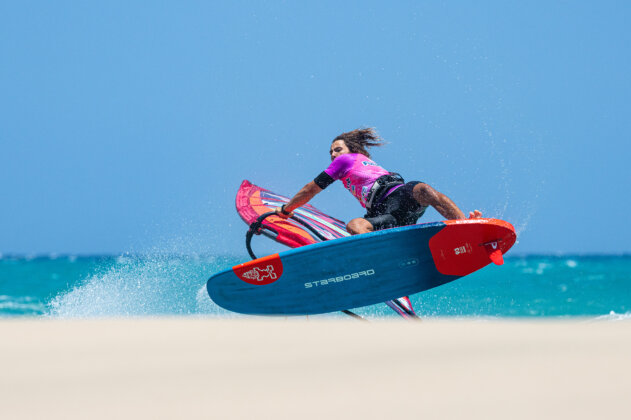
- Lennart using the Maui Ultra fin
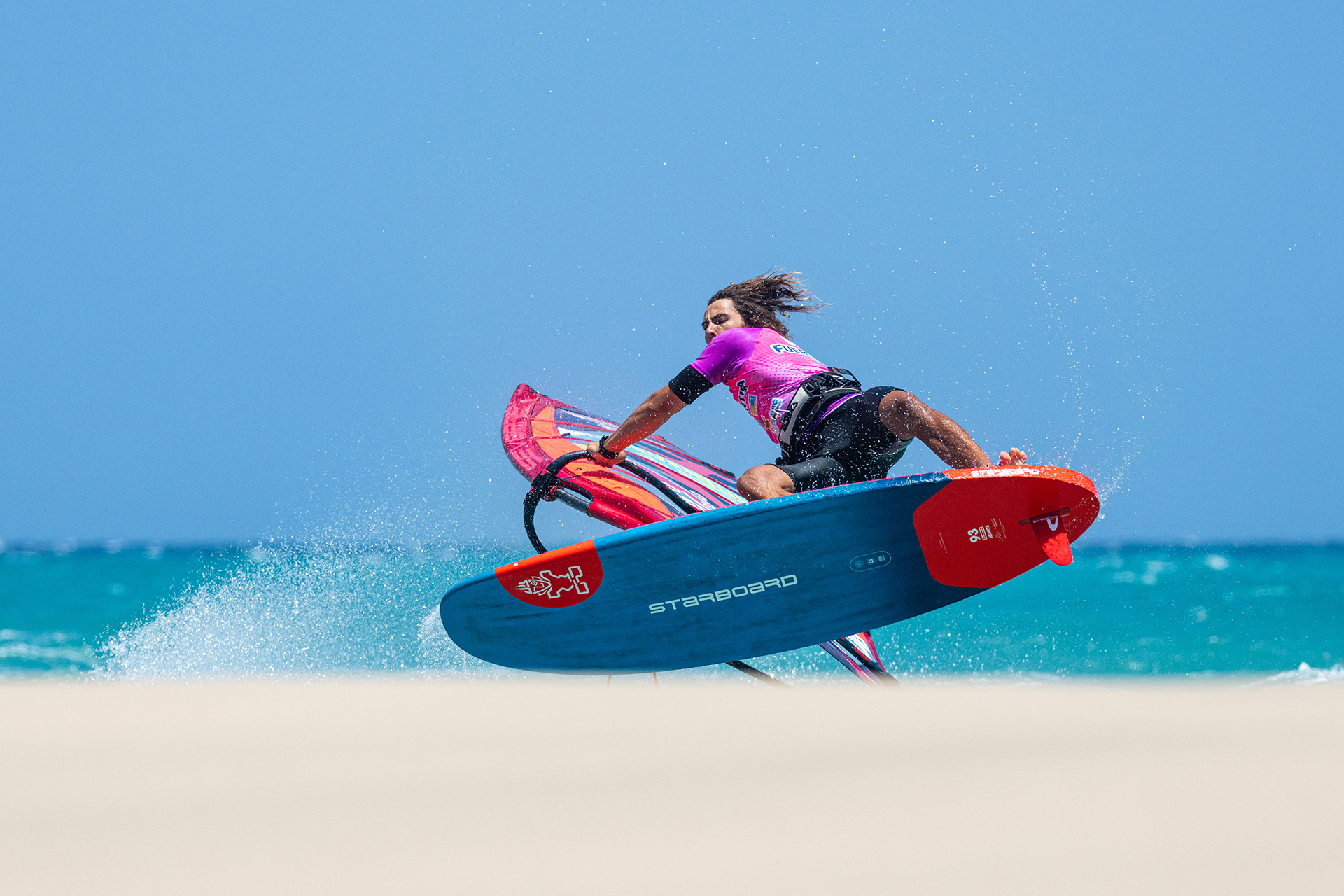
BOARD SIZE
LN: “OK, so I would say it all depends on the rider’s weight. Your board should be around 15 to 20L over your weight. So, if you’re 80 kg, I think a 100L board for starters could be good. A 93L can work depending on your skill level.
So, for 15 knots I would go big…I would say 100L. For 20 knots I would say 93, and for 25 knots and over I would say also 93 to 87. That would be my range.”
-
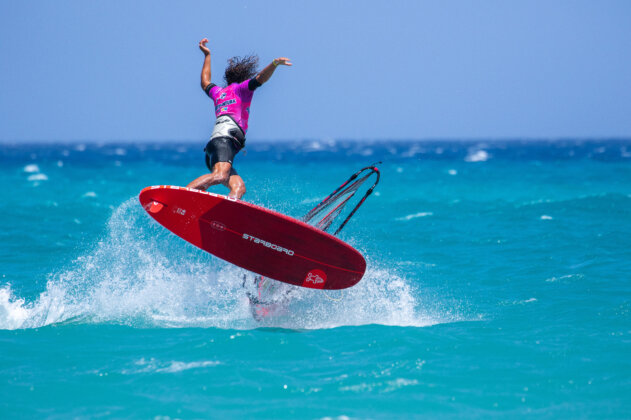
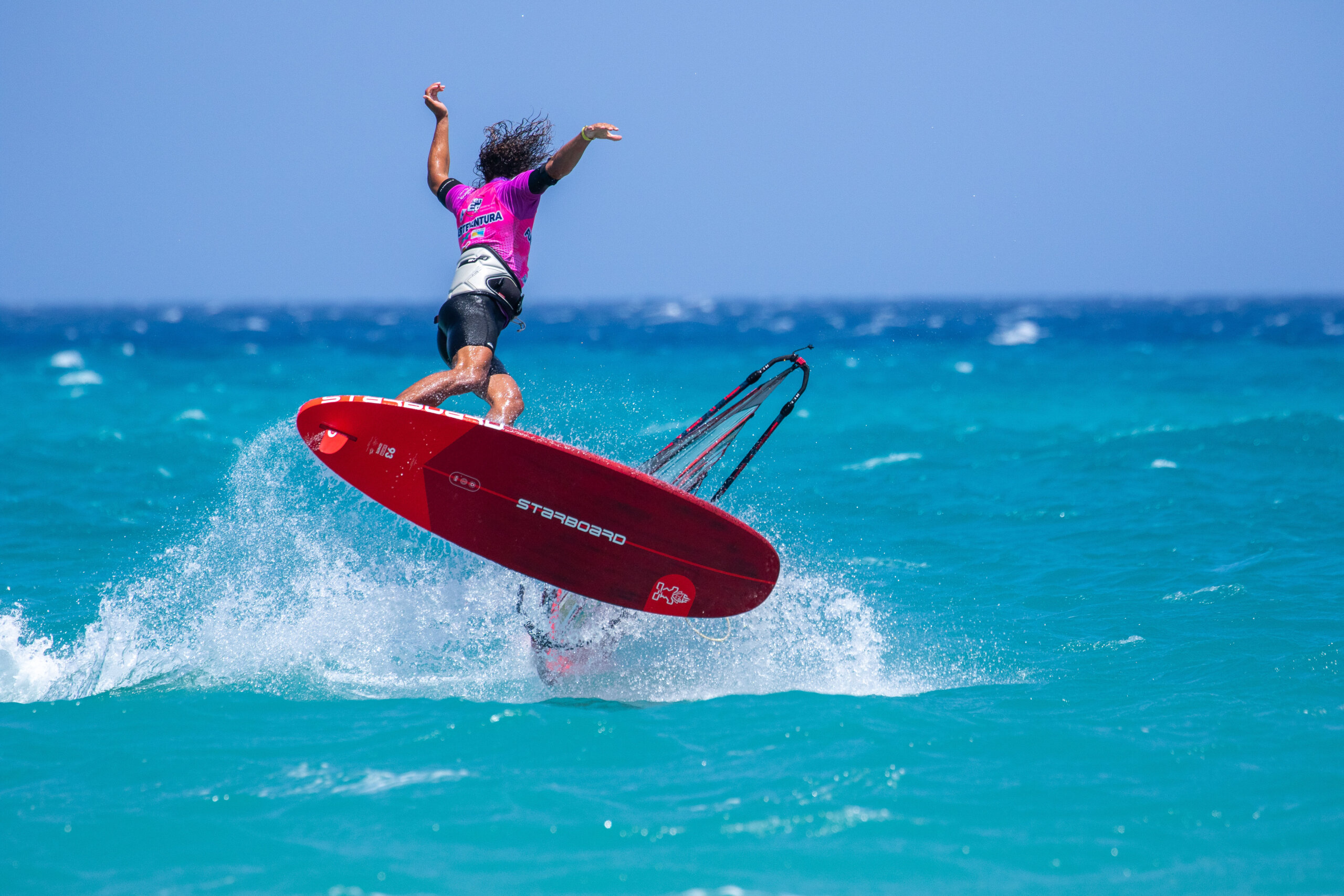
- Lennart in action in Fuerteventura
LIGHT WIND TRAINING
LN: “Yes, people can go out. There are geckos, there’s 360s. I do it sometimes too. If there’s no wind for a while, I’ll just take my bigger sail, big board, and go out and just jump around and have some fun. It’s all about the sail feeling at the end of the day. Even going out in 10 knots can make you improve a lot.”
-
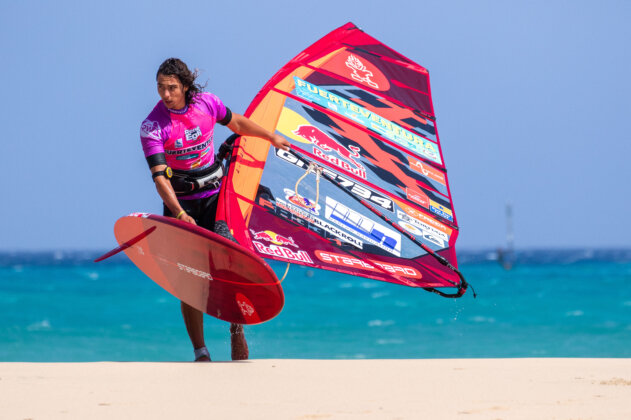
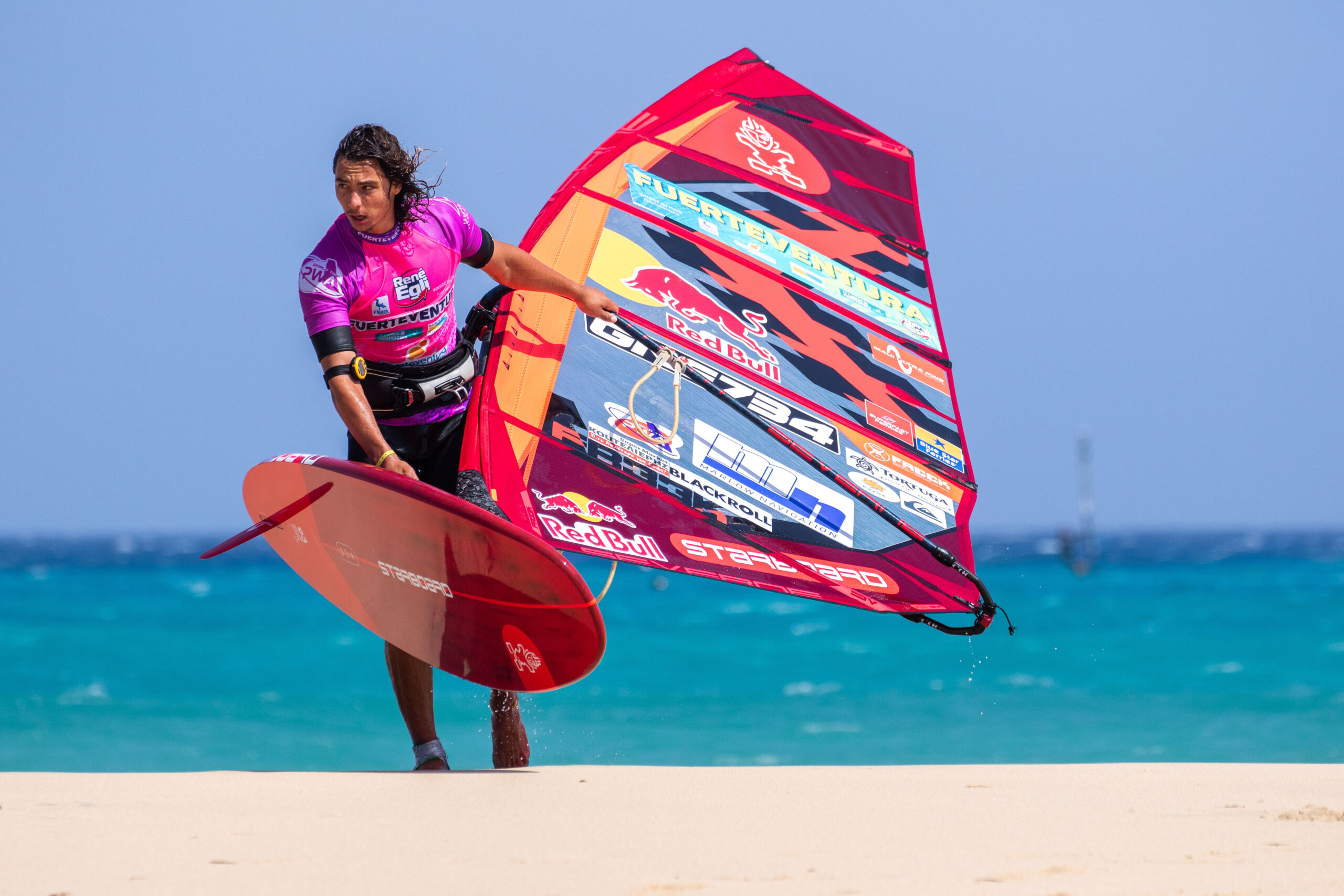
- Lennart competing in Fuerteventura
REPETITION
LN: “Yeah, there is no secret to freestyle…you just have to do the moves over and over. Make sure to always try to improve a move like 0.01% better than the previous time and that’s already making progress. You cannot magically learn a new move, it just takes time and practice. It helps to train in a windy place. People nowadays always try to find a sneaky way around practicing and want to have these hacks, but it just doesn’t work. You just need to put in the hours; otherwise progression is not going to happen.
And you learn from your mistakes…like it might be a key point in a move, or you feel, “OK, that’s the thing that made it not happen.”
So yeah, for that I think videos help. If you have a mate that can film you, it’s very helpful because sometimes you think you’re doing something right, but it ends up being completely wrong. I would say video analysis is very useful. And if you have something like a trick-tionary book or slow-motion video of others and then you just visualize a move and go on the water and try…it might look off in the beginning, but you can learn a lot from your mistakes.”
PHYSICAL TRAINING
LN: “Yeah, it helps for sure. Not everyone has time and access to specifically train for freestyle windsurfing, but I think if you’re in half-decent physical shape, then it really helps.
All the training I’m doing now is for the latest freestyle tricks where you need to pop two or three times. But yeah, I will say that the better physical shape you are, the easier it’s going to be for you…100%. Also training in the gym or cycling helps injury prevention.”
INSTINCT
LN: “The more you think during a move the worse it will be…because our brain, when we do a triple culo, can’t think so fast. So, my approach is, if I try something like that, I’m only going to think about the third Culo. The first two I don’t even pay attention…they just happen instinctively. And then on the third one I make sure to really push. So, the more you think during a move, the worse it’s going to be…just trust the training and the feeling that you have!”