
LISFRANC IN MOROCCO: MATT SCOTT!
One top turn, one nasty foot injury and a very long road to recovery…
A perfect wave, a shared top turn with Boujmaa Guilloul…and then everything went very wrong. What started as another great session at Sidi Kaouki in Morocco, ended with Matt Scott discovering that a seemingly innocuous foot-strap injury can have serious consequences. A Lisfranc is not something any windsurfer wants to become familiar with, but Matt has learned plenty along the way about the injury, the recovery and keeping positive when life suddenly comes to a grinding halt. Months on, the focus has shifted from what he can’t do to everything he still can…and, finally, the light at the end of the tunnel: getting back on the water.
-
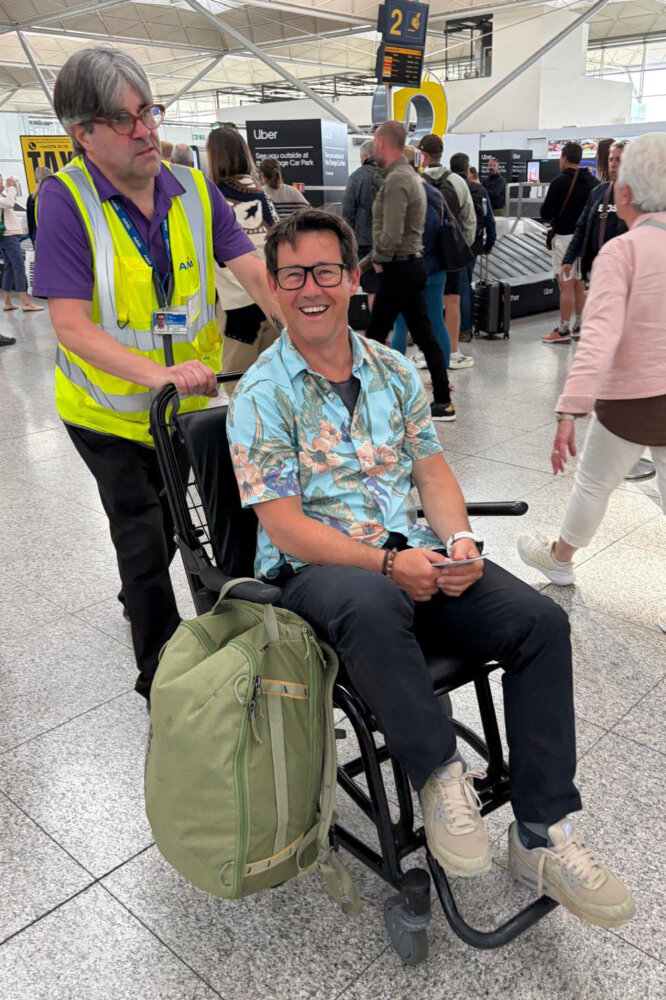
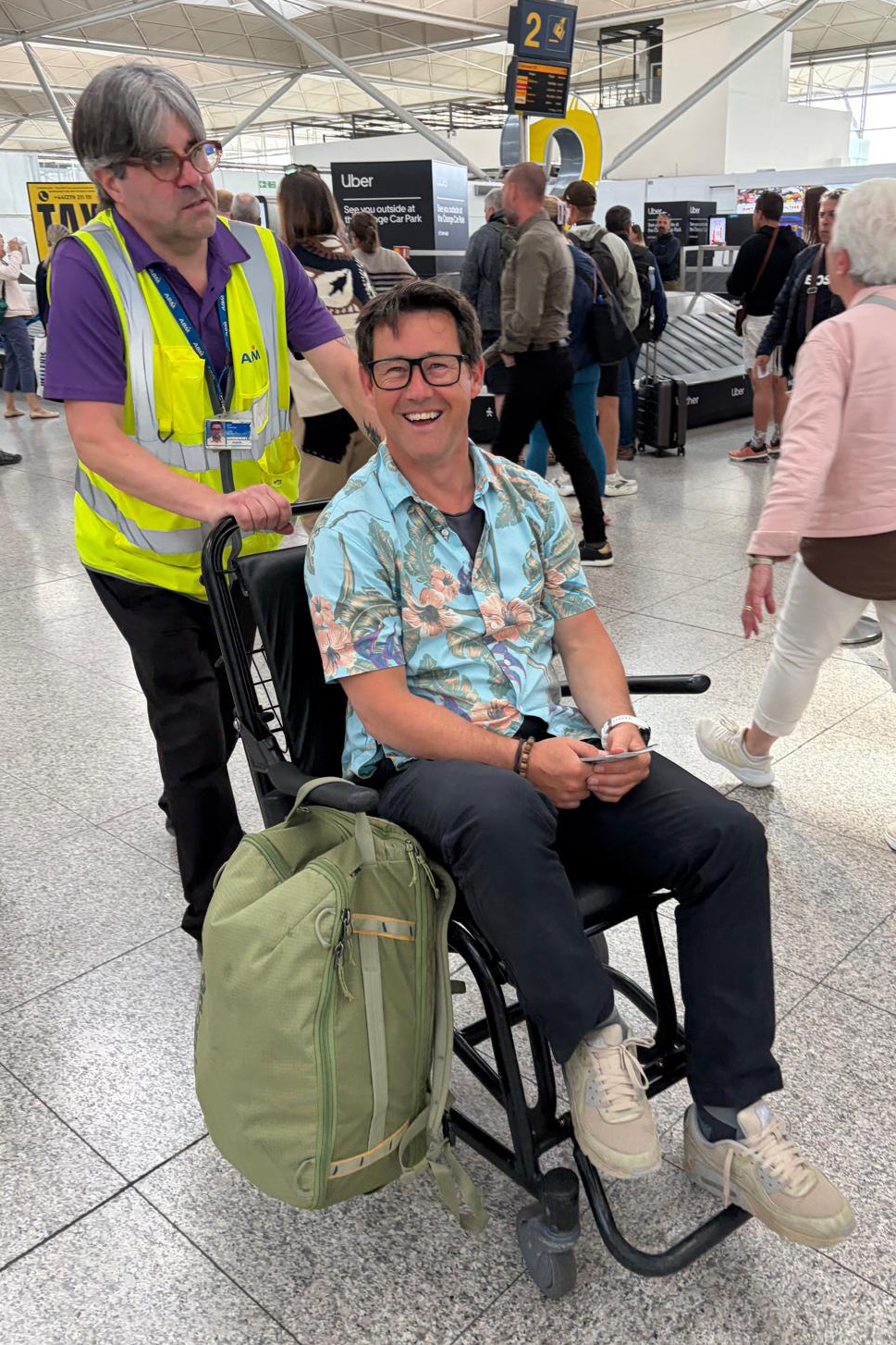
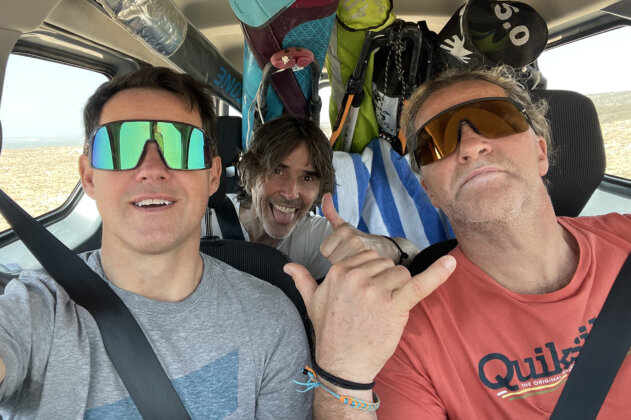
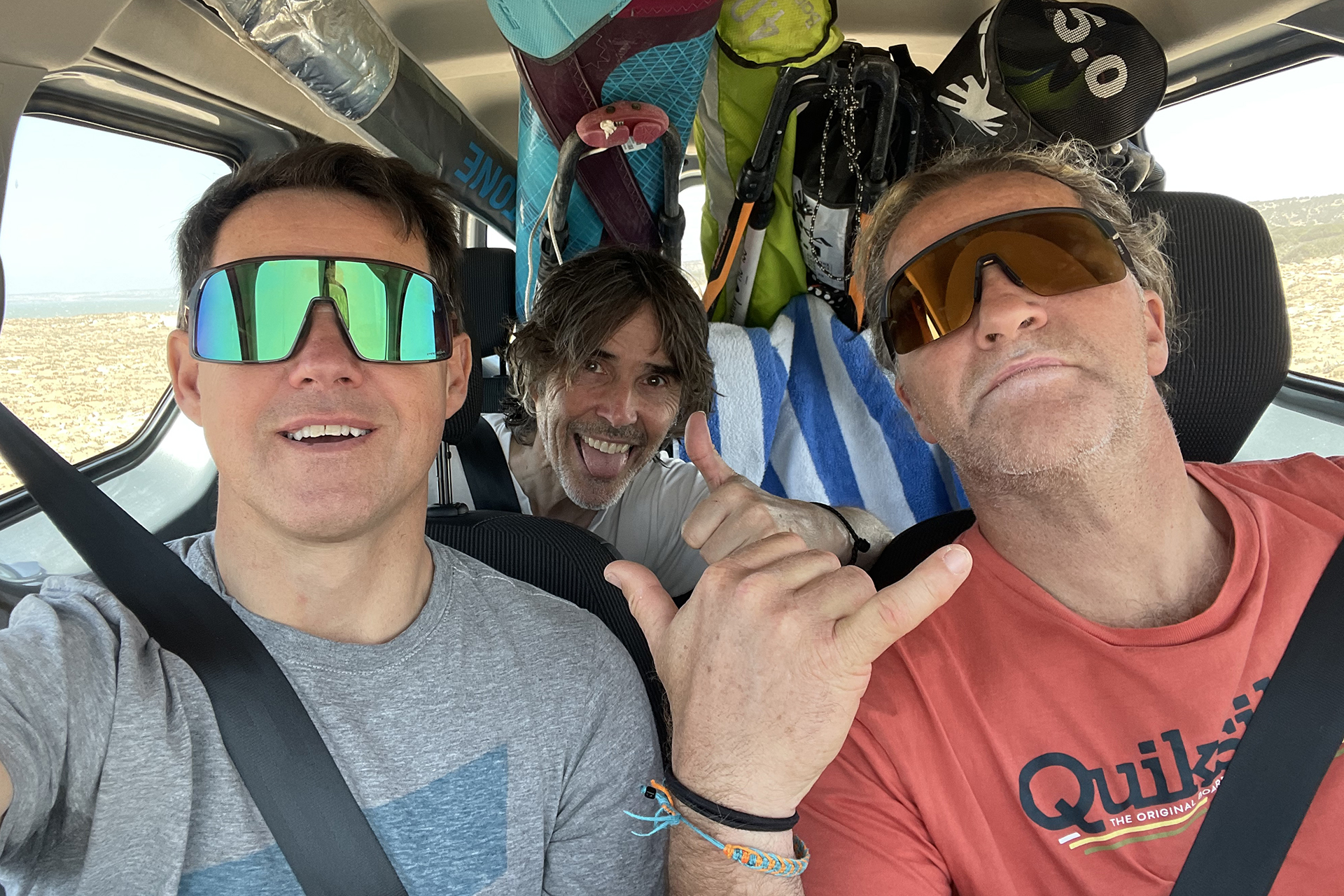
- Staying positive en route home
MATT SCOTT: If you’ve not heard of Lisfranc…this is unfortunately not a story about the latest young ripper from Morocco! If you have heard it, you may have an idea of what’s coming. Those who have experienced one, I imagine the chills this may bring…
-
- Heading out in Morocco
Over the last ten years or so, a group of us have been heading back to Essaouira each year, staying in a riad in the city and making the twenty-minute drive south to Sidi Kaouki, where Boujmaa Guilloul…Aloha Classic champion and founder of Bouj X Sports… has built a fantastic base, with quality gear, coaching, and video analysis for riders of all levels. If you’ve never been, put it on the list. Essaouira is a vibrant, cosmopolitan city with wonderful people, amazing food, and reasonably priced accommodation, with some of the best wave sailing you’ll find anywhere near Europe just down the coast.
-
- The crew were having a good time before the injury
THE SESSION THAT CHANGED EVERYTHING
In May this year, Boujmaa and I along with a few others, were having an afternoon session at Sidi Kaouki. It was 4.2 weather, and after a superb morning session on the reef in front of the shop, glassy head high waves, the afternoon had turned bumpier in classic Moroccan fashion, but with some lovely sets coming through. We’d sailed about a kilometre and a half down the beach to find the good stuff. As I came in, I looked across and saw Boujmaa riding a beauty beside me. He called me over and we bottom turned around each other as we headed to shore. A rare delight to share a wave with Bouj! But that one last top turn was the moment I got to know Lisfranc intimately and I’ve been getting acquainted ever since.
The Lisfranc injury takes its name from Jacques Lisfranc de St. Martin, a French surgeon who first described the injury after treating Napoleonic cavalry soldiers who had become trapped by a foot in a stirrup during falls. The modern equivalent of those cavalrymen, it turns out, is your average wave sailor.
-
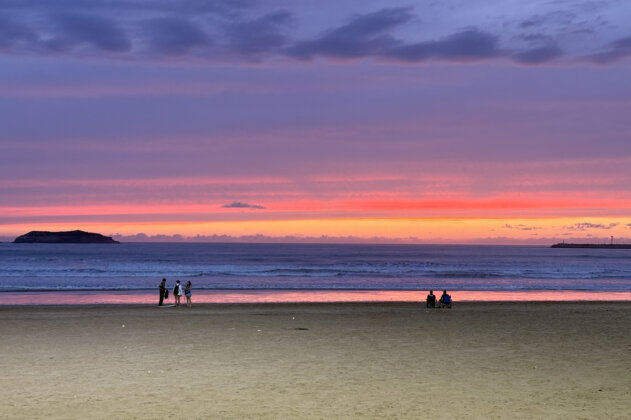
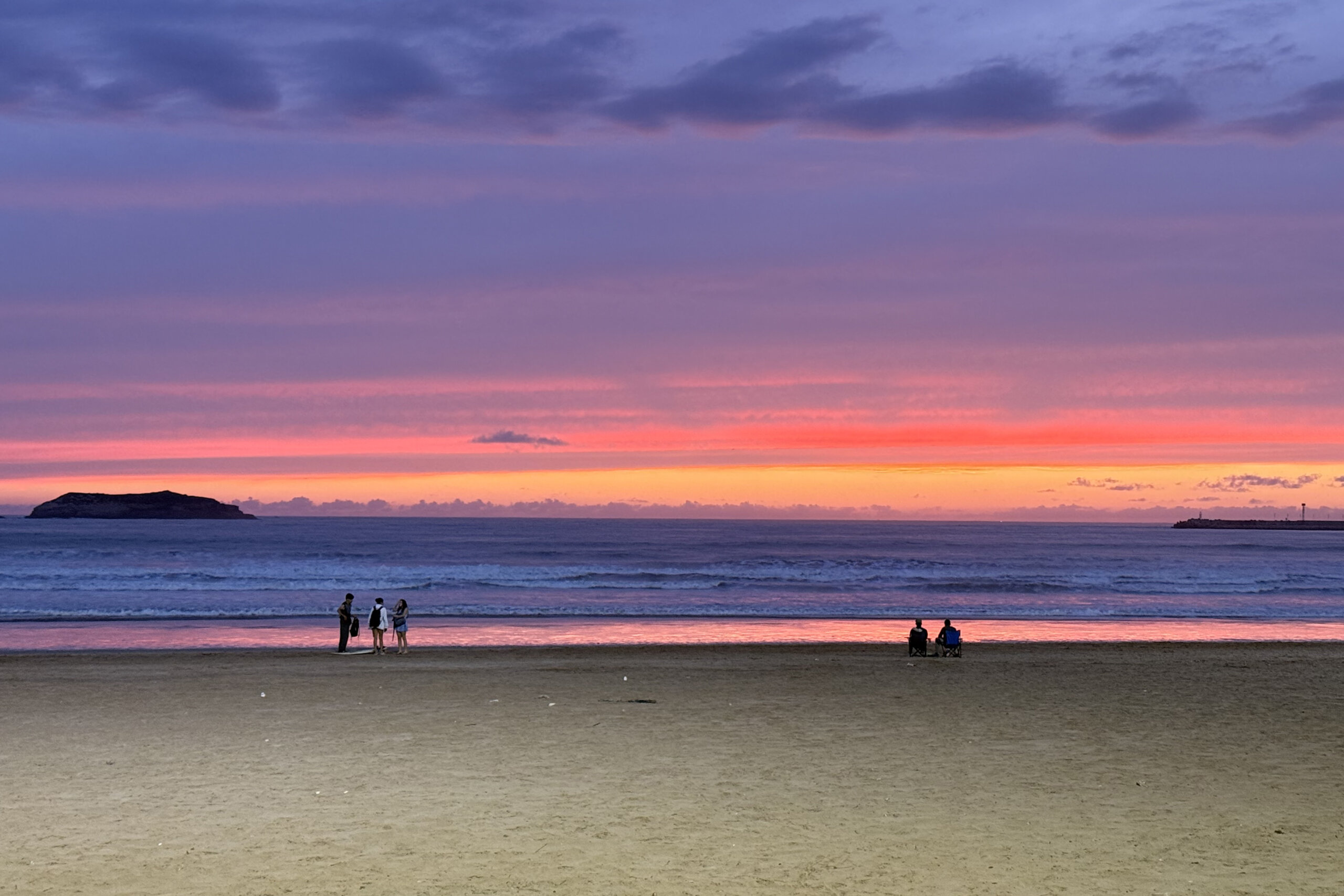
- Morocco
Loose foot straps are an essential part of staying safe when wave sailing but sometimes accidents still happen.
The pain after that top turn was immense. I knew almost immediately I’d done serious damage. Luckily, I was in shallow water and drifted in with the waves. It quickly became clear I couldn’t put any weight on my left foot. As I washed in, Boujmaa was already on the shore…ready, naturally, with some coaching tips.
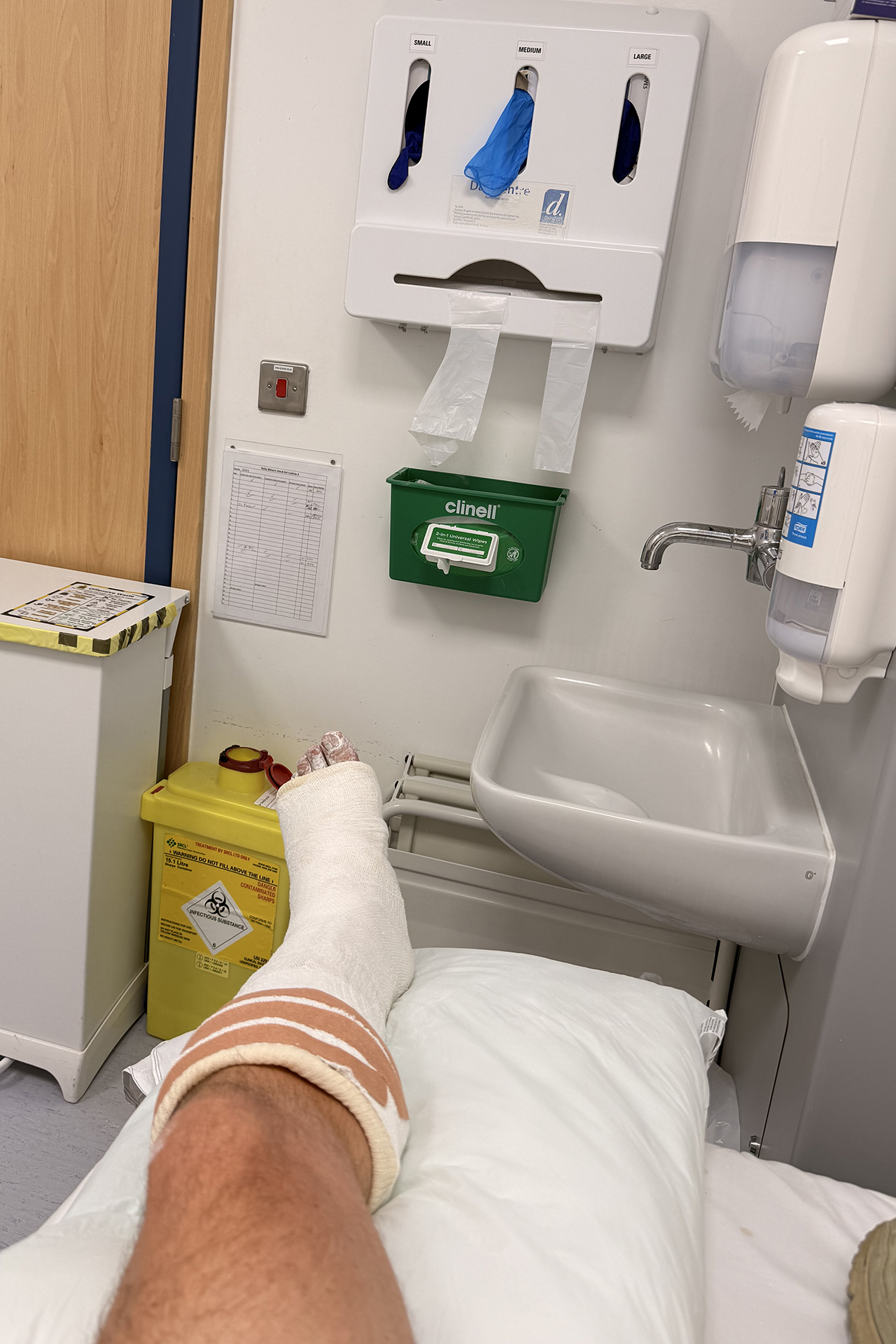
Cool head as ever, he left me on the beach, sailed my kit back upwind and returned shortly after on a quad bike to collect me. Back in Essaouira, the initial X-ray showed no broken bones. I was elated, a quick recovery on the cards, or so I thought. Back in the UK, progress was slow. A trip to A&E saw me in a cast within 45 minutes, with surgery planned for the following week! The diagnosis: a Lisfranc.
Fortunately, Boujmaa has considerable experience with foot injuries as is so often the way with professional windsurfers. He knew that Marc Paré had sustained a serious Lisfranc in 2024 and had it treated with a surgical method that can meaningfully speed recovery. Marc kindly passed the information to Boujmaa, who passed it to me, and I passed it on to my surgeon. As luck would have it, my surgeon was already familiar with the technique, although he’d never used it on a Lisfranc, his colleagues had…so we went for it.
It feels worthwhile sharing a few things I’ve learned along the way…both about the injury itself, and about getting through it.
What is a Lisfranc?
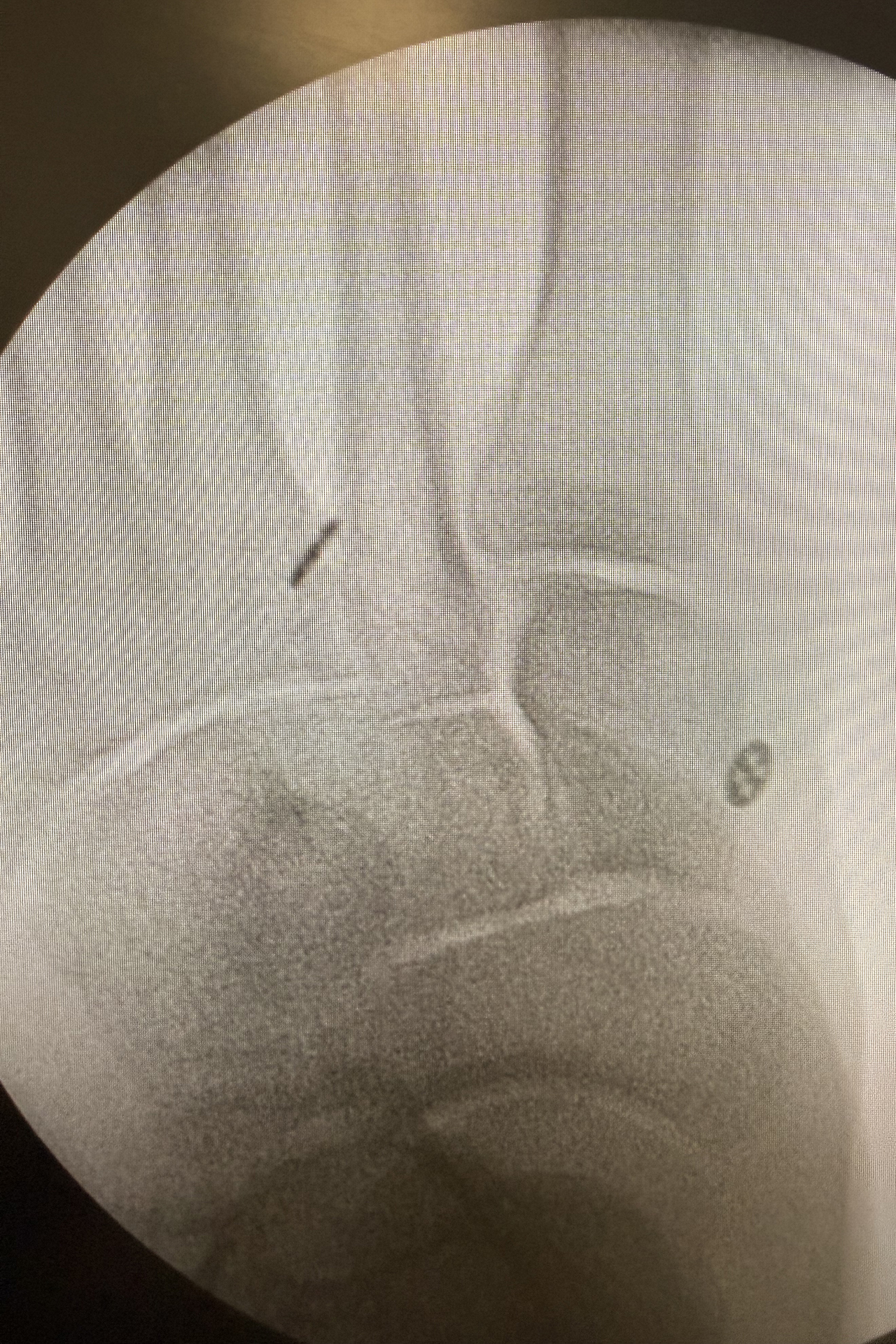
The Lisfranc joint complex sits at the top of the midfoot, right where your foot strap crosses. That area is largely held together by ligaments rather than bone. A Lisfranc injury displaces those ligaments and separates the bones. Left untreated, it can lead to long-term arthritis. The fix plates, screws, or the Tight-Rope procedure…pulls the bones back into alignment and allows the ligaments to heal properly.
The key lessons if it happens to you:
- Take any foot-strap injury seriously. Don’t walk it off.
- A weight-bearing X-ray is how a Lisfranc is diagnosed. This loads the ligaments and will reveal any issues. So make sure you get a weight bearing x ray!
- Stay non-weight-bearing if you’re not sure. Walking on a compromised Lisfranc risks worsening the injury and complicating treatment. I walked on mine, loaded roof racks, pulled airport trolleys around, which I don’t think helped.
-
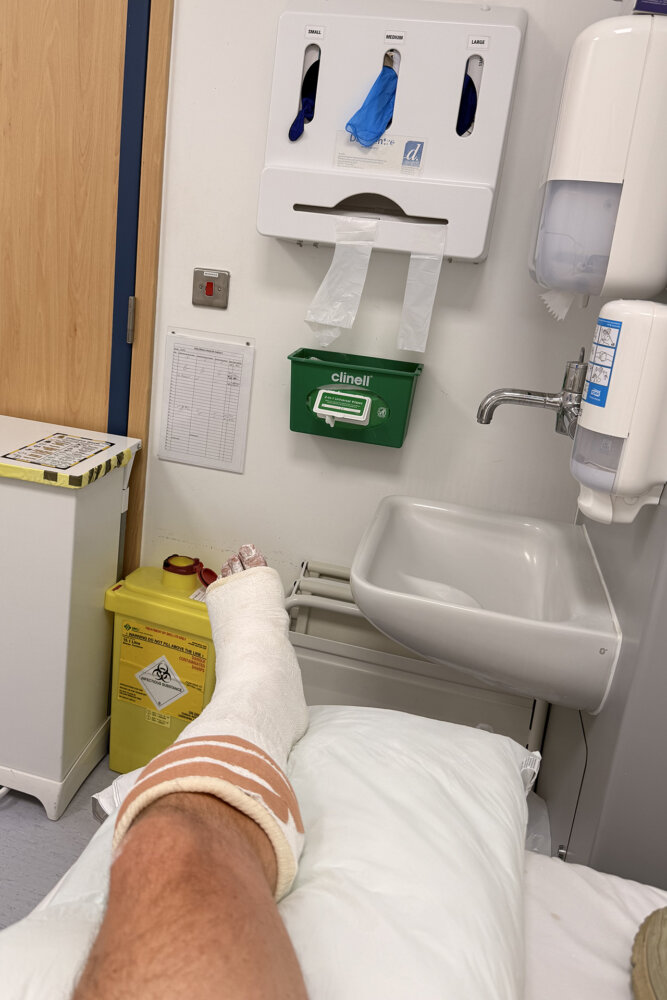
- Operation time
The Long Game
Post-op, I assumed I’d be back at a desk within days. Wrong. The first six weeks are largely spent horizontal, foot up above heart height…let it hang down for any length of time and it swells immediately and painfully, which makes desk work, or much of anything else, genuinely impossible. There’s no significant foot physio in this window either, maybe a bit of toe wiggling!…The job is simply staying occupied without losing your mind. I got very good at sliding up and down the stairs on my backside. I bought an arm exercise bike and made a small gym into the corner of the garage. I worked through every series of Long Way Round and Long Way Down…motorbikes have always been a weakness of mine and spent long stretches planning an imaginary road trip I now fully intend to take for real.
At six weeks I tracked down a specialist foot physio and started with small exercises, building gradually from partial to full weight-bearing. The crutches could be dropped two months after surgery, and from there it was back to the gym properly.
-
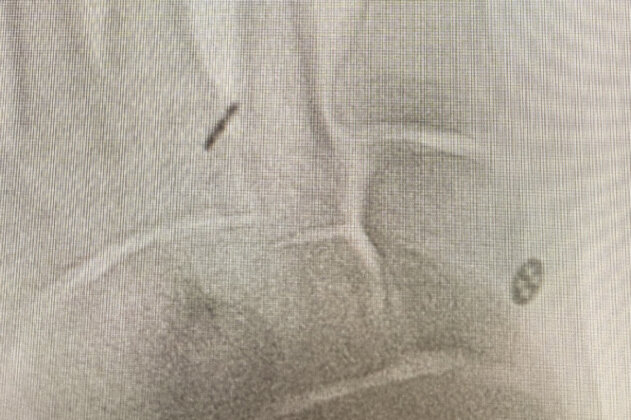
- Lisfranc X ray
The Low Points
The physical pain was never really the hard part…it was keeping your mind focused on positive things, missing an entire summer of running and water-sports and watching sessions from the beach instead of being in the water is hard. Not being able to carry anything, help around the house, or work for weeks on end wears on you in a different way than the injury itself does. I got lucky with timing, at least: there’s not much wave sailing to miss over a UK summer anyway.
-
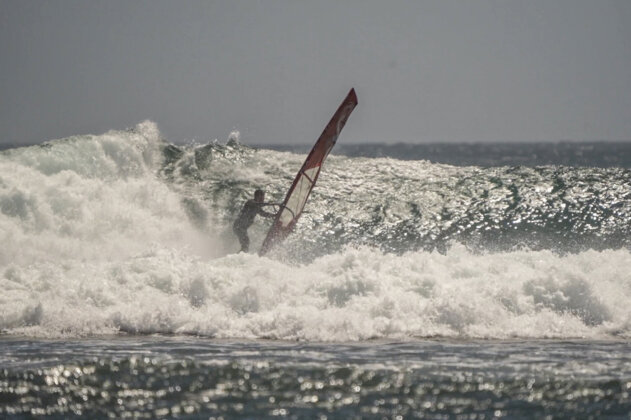
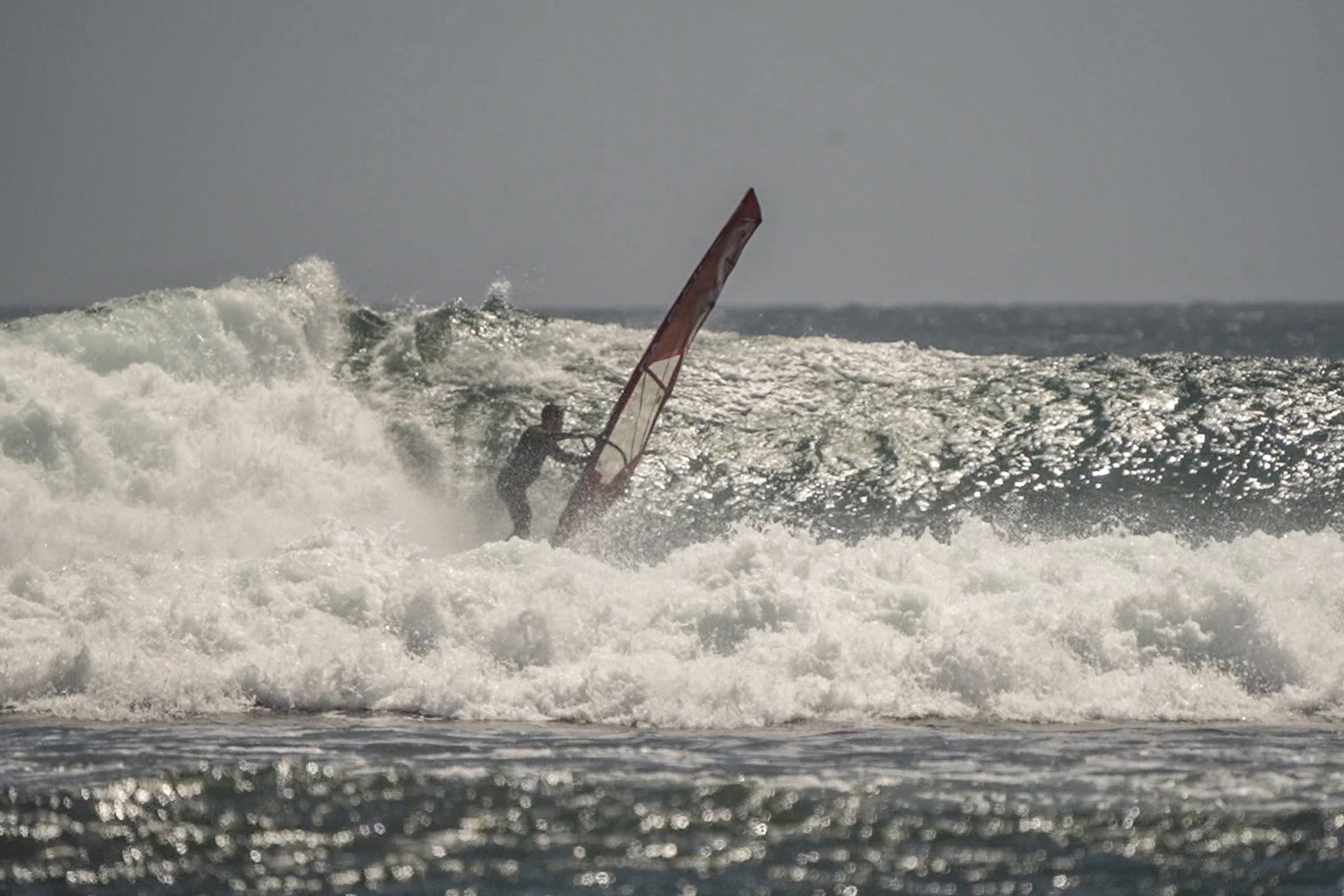
- Dreaming of Chile!
What I’ve Taken From It!
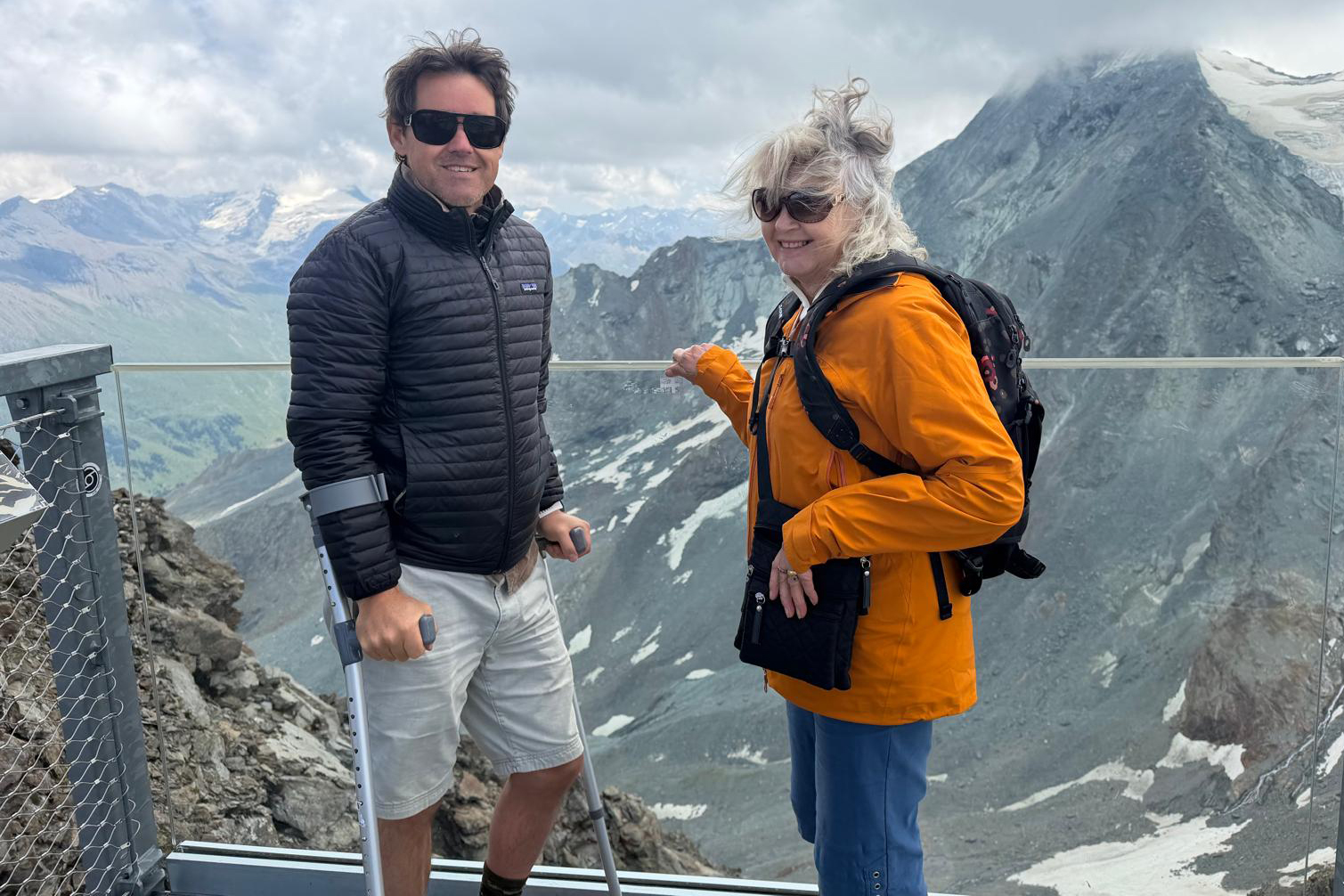
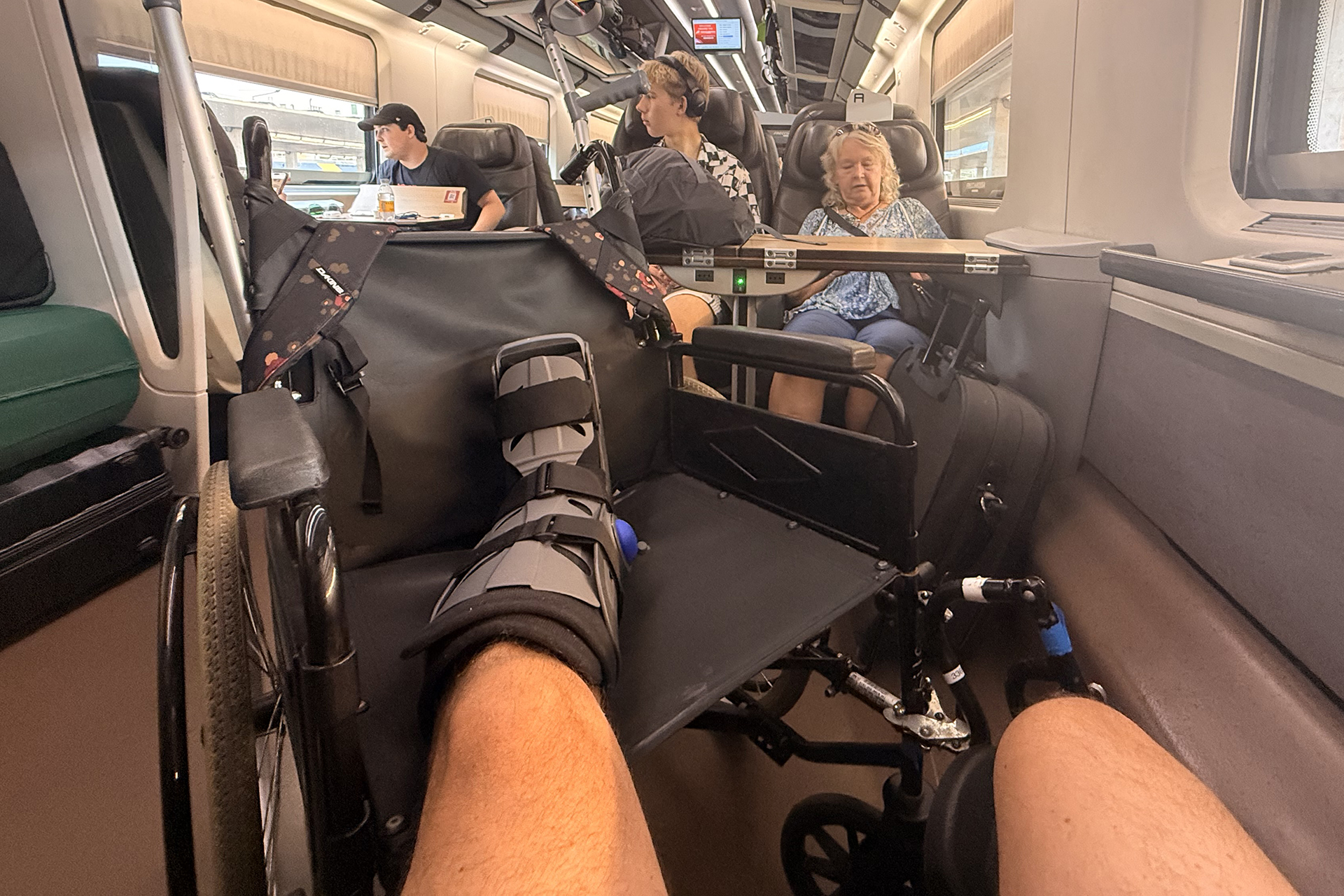
Bouj’s guidance throughout, a properly supportive circle of friends and a wife who’s also a windsurfer and understands exactly what’s being missed made an enormous difference…as did my two teenage kids, who I finally taught to cook properly while I was stuck at home. Rather than stop, I tried to keep doing as much as I possibly could within the limits. I got a wheelchair on free loan from the British Heart Foundation and in June took it round Italy by train with my mum and son. In July I made it out to the mountains on crutches…couldn’t walk far, but could still be outdoors with the family, which counted for a lot.
-
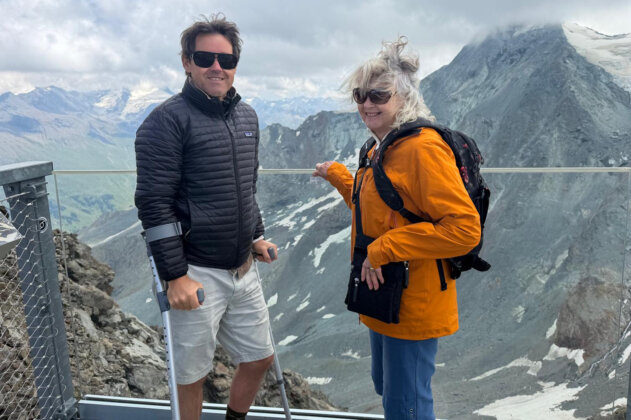
- Matt made it to the mountains in June
The bigger shift has been in how I look at the whole thing. An injury like this, if you let it, is a chance to slow down, spend proper time with the people who matter, and pick up things you’d otherwise never get round to. I’ve started riding trials bikes and am finally learning the guitar. It’s also left me with a much sharper appreciation for health and fitness and how quickly either can be taken away. If anything, it’s made me more inclined to say yes to the trips, take the opportunity, make the most of the moment… most of what looks impossible from the outside is really just difficult.
Months on crutches and in a wheelchair also gave me a small, genuine taste of what full-time wheelchair users and anyone with restricted mobility deal with permanently and a lot more empathy for it. We’re extraordinarily lucky to be fit, healthy and able to windsurf at all: lucky for the sport itself, and for the places and people it brings into our lives. Worth remembering while we still have it.
-
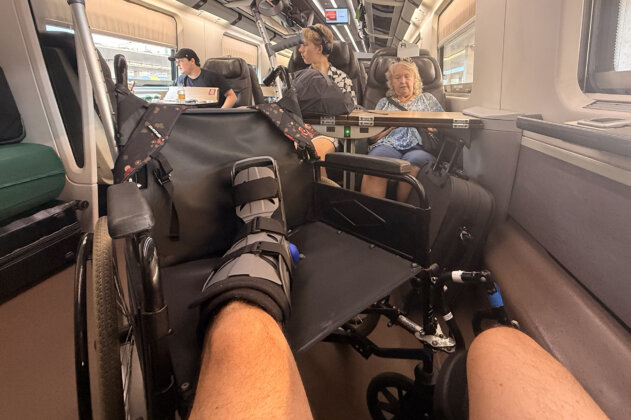
- Matt still managed to travel this summer
Light at the End of the Tunnel
I’ve always been an enthusiast by nature and redirecting that energy into something new turned out to be a reward in its own right, not just a consolation prize. I’m still heading to our regular Brandon Bay trip this October, but may not be sailing, my physio is quietly confident I’ll be back in the water by February 2027 and I’ll take that. What’s actually keeping me going day to day, though, isn’t just that date on the calendar, it’s gratitude for my health, the motivation to come back fitter and sailing better than before and knowing I get to share all of it again with the people who got me through it.
-
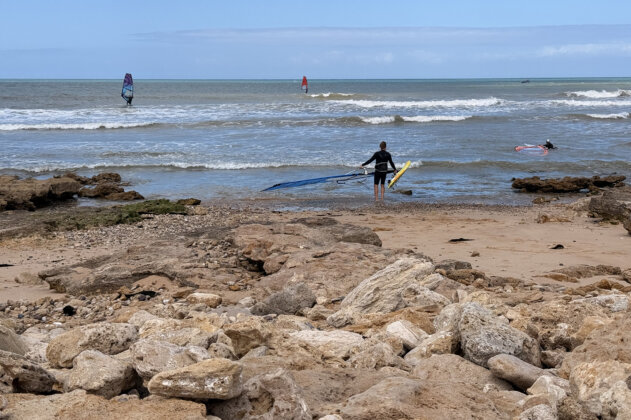
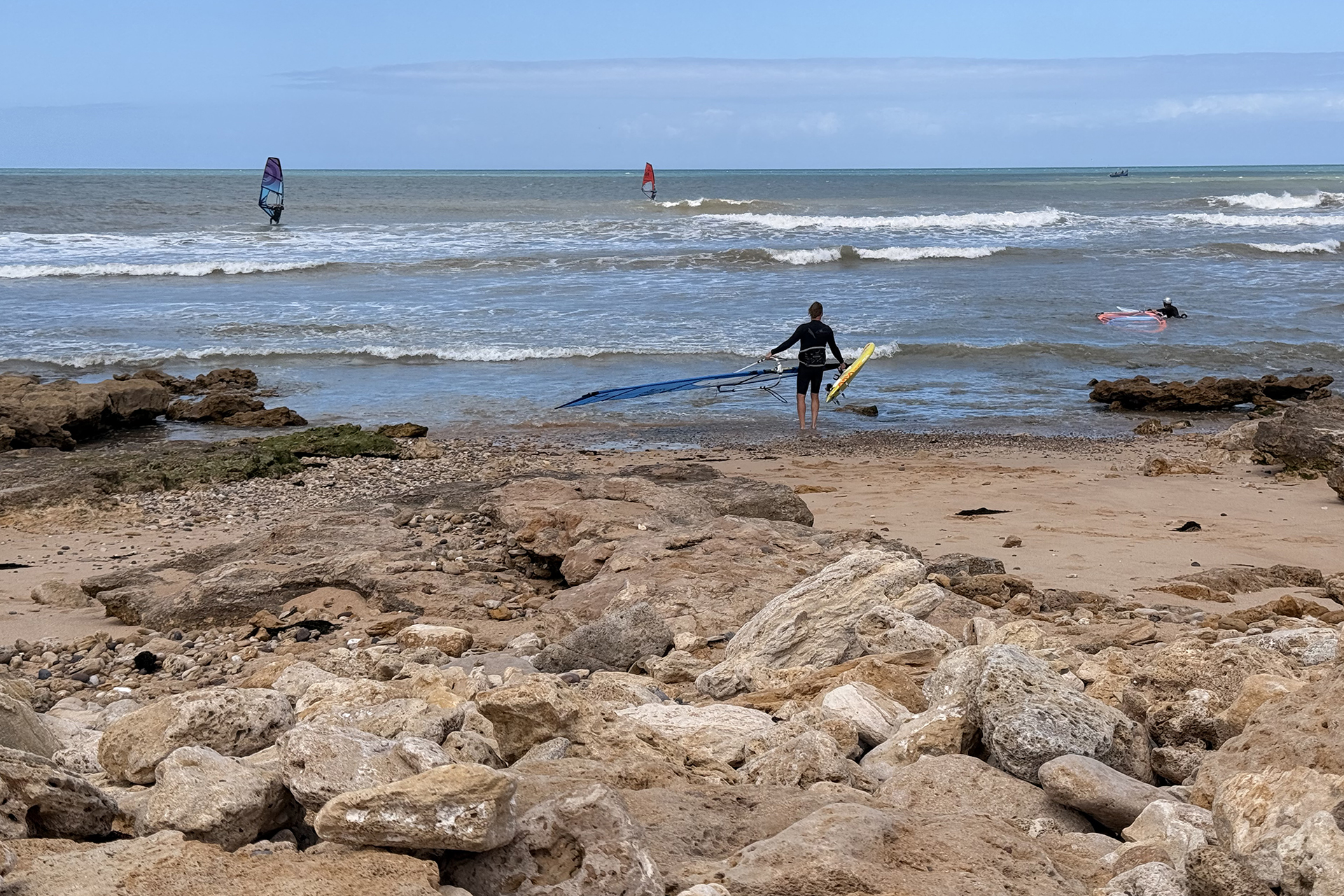
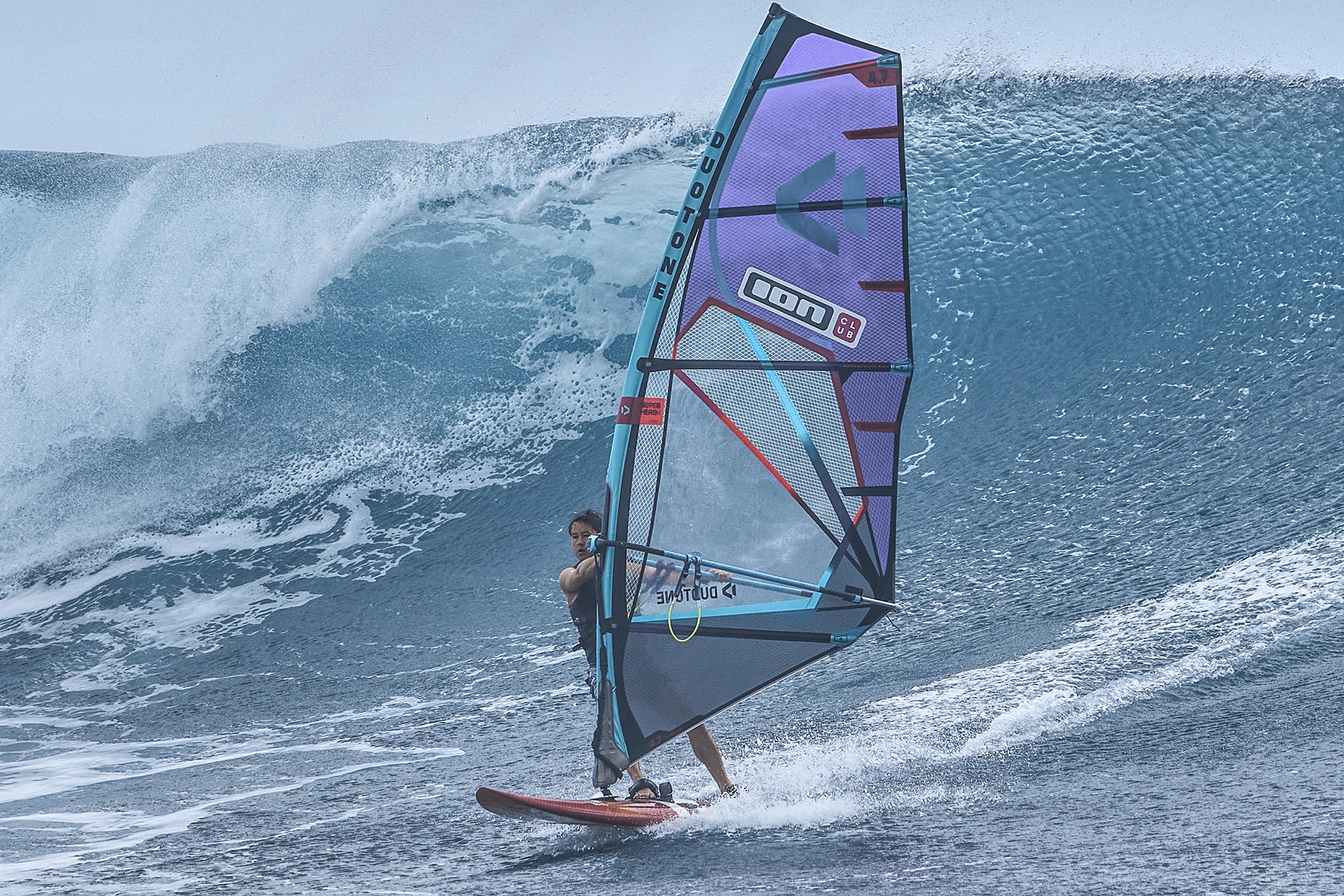
- Hoping to get back to some of this!
Accidents happen, but they’re thankfully a rare part of the sport we love and when this particular one strikes, it’s a long road. With the right care, though, I hope to come back stronger. For inspiration, look no further than Marc Paré, who recovered from his own Lisfranc in five months and went on to win the world title the following year, 2025. You may also have read about Ian Whittaker’s recovery from a separate accident in Morocco. Both of them and plenty of others, came back charging harder than ever. I intend to join them on the other side.